

Imagine yourself beneath a shaft of sunlight, with limestone around you and the jungle reflected above. These are some of the moments freediving photography can capture during your trip.
Freediving photography brings movement and surroundings into the same image. In the Mexican Caribbean, cenotes offer a setting where light, rock and water can become as much a part of the photograph as the person in it.
If photography is part of your travel plans, a few clear creative ideas can help you imagine the images you would like to bring home. Here are three approaches to explore, with comfort and the underwater environment guiding the experience.
What Makes Freediving Photography Different?
Freediving photographs often have an uncluttered appearance. Without a scuba tank in the frame, the shape of the body and the line of the fins become more visible.
That simplicity gives the surroundings room to tell their own story. A small figure against a large rock wall can show the scale of a cenote. A reflection can connect the underwater scene with the world above it.
There are also two different ways to take part: being photographed while freediving, or using a camera underwater yourself. The second adds another task to the dive and requires appropriate experience and supervision. A photography idea should always fit the diver’s abilities.
3 Creative Ideas for Freediving Photography
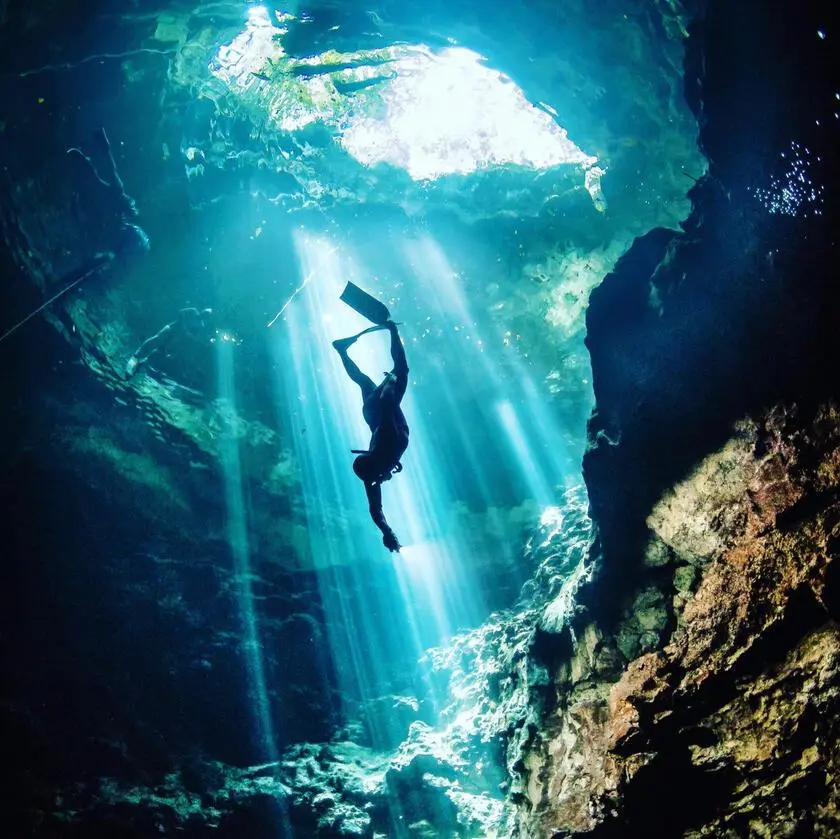
1. Use Light to Shape a Silhouette
A bright area behind a freediver can turn the body and fins into a clear silhouette. Instead of showing every detail, the photograph draws attention to shape and position.
In a cenote, the opening above may create a natural contrast between illuminated water and darker rock. Leaving some space around the diver helps that contrast remain visible.
Let the available light guide the composition. There is no need to make a dive deeper or longer to create a stronger image.
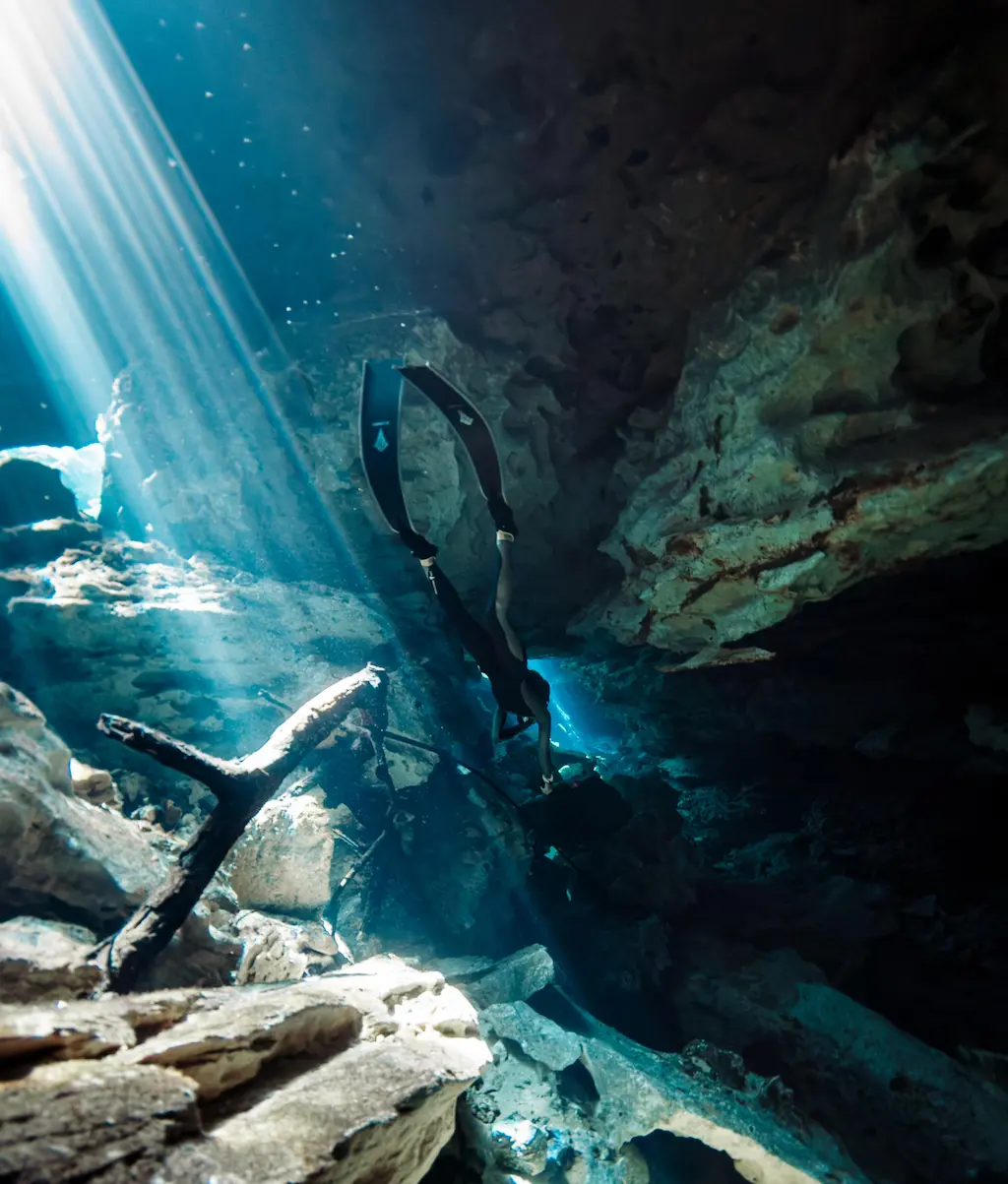
2. Include the Landscape Around the Diver
A close portrait tells one kind of story. A wider view shows where the experience takes place.
Rock walls, submerged branches and the opening of a cenote can give an image texture and a sense of scale. The diver becomes part of the scene rather than filling the entire photograph.
This approach is useful when you want your travel images to preserve the character of the location. Keep the composition simple enough that the person remains easy to find, while leaving room for the surroundings.
3. Explore Reflections Near the Surface
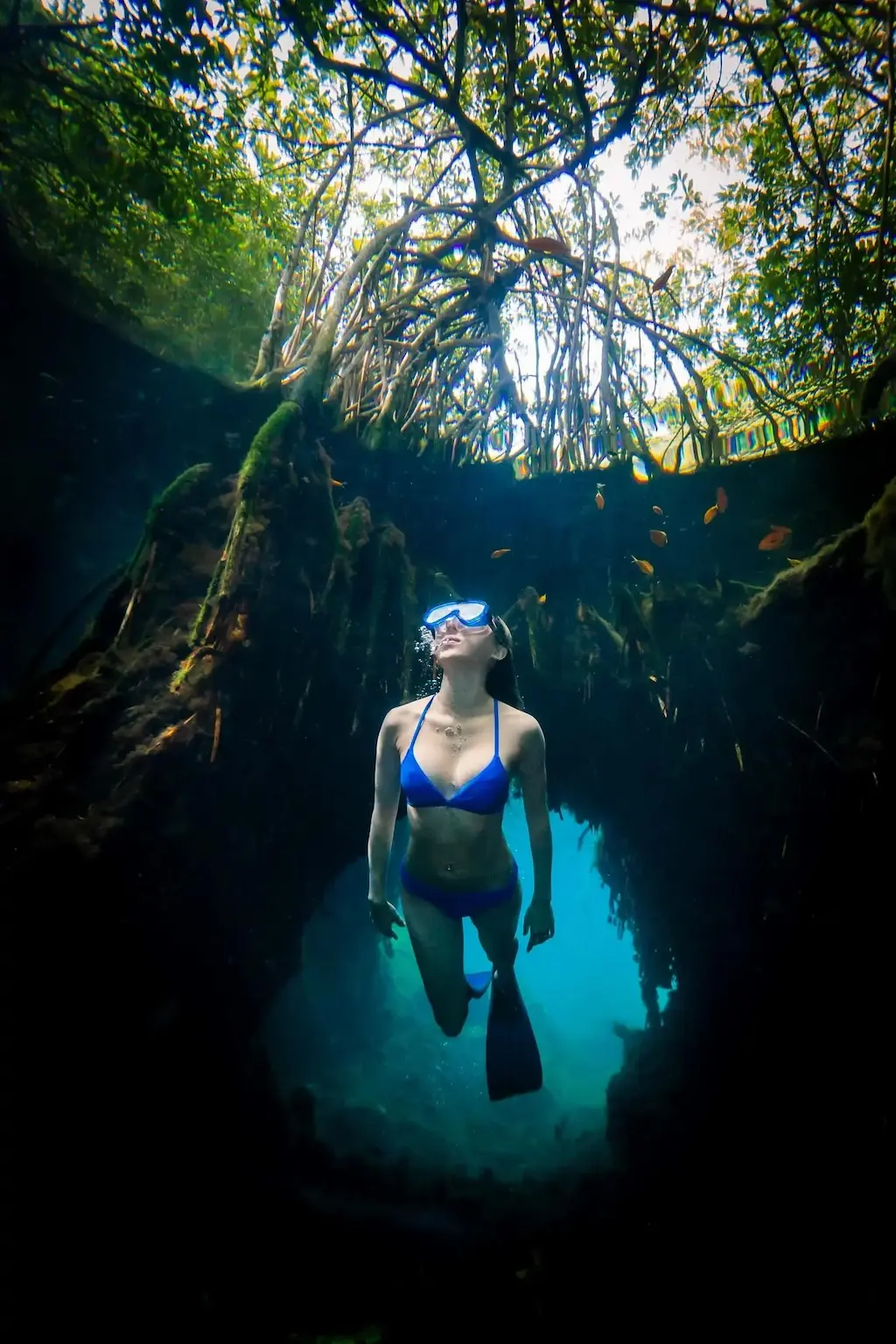
Some interesting underwater compositions happen close to the surface. Reflections, roots and the outline of the jungle can bring different layers into one frame.
A photograph looking upward may include the person underwater and the vegetation above. Another may focus on the reflection itself.
Surface conditions affect the result, so treat the idea as something to explore rather than a photograph that must be recreated exactly.
Cenote Scenery and Open-Water Images
The setting changes the visual character of freediving photography.
| Setting | Elements to explore in the frame |
|---|---|
| Cenote | Limestone, roots, light from the opening and contrasts between bright and shaded water |
| Open water | Blue backgrounds, a sense of space and the outline of the freediver |
| Near the surface | Reflections, changing textures and a connection with the landscape above |
MExplor’s guide to underwater photoshoots in Riviera Maya cenotes explains the portrait-session experience in more detail.
For photographs that include marine life, give animals space and allow them to move naturally. Encounters are unpredictable; the image should never depend on chasing or touching wildlife.
Best Light and Conditions for Underwater Photos
There is no single best hour for every cenote. The position of its opening, surrounding vegetation, cloud cover and the direction of sunlight all affect the scene.
A visible beam of light and a softly lit portrait may require different conditions. Water clarity also changes what the camera can capture.
For open-water photography, wind and sea conditions influence the experience as well as the appearance of the images. Keep the photographic plan flexible, so it can suit the location and conditions that day.
If you are building a wider itinerary around photography, our photography trip planning guide can help you connect your interests with the rest of your visit.
Keep the Experience Comfortable
A successful photograph should fit naturally into the session. Discussing the visual idea before entering the water helps everyone understand the intended composition without making the moment feel rushed.
A few useful starting points are:
Choose one simple composition at a time.
Leave space for breaks and adjustments.
Keep clear of rock formations and fragile surroundings.
Let the diver’s comfort determine when an attempt ends.
Freediving requires proper supervision and established safety procedures. Never dive alone or extend a breath hold for a photograph. If you are carrying the camera, it must not distract you from your responsibilities underwater.
Frequently Asked Questions
Do I need to dive deep for freediving photography?
No. Depth does not determine the quality of an image. Light, framing and reflections near the surface can create an interesting composition. The location and activity should match the participant’s experience.
Is freediving photography the same as an underwater portrait session?
The subjects can overlap, but the emphasis may differ. Freediving photography often highlights the diver’s movement, equipment and relationship with the surroundings. A portrait session may focus more closely on expression, styling and posing.
Can I take the photographs myself?
Using a camera while freediving adds another task. Your training, supervision and the suitability of the location come first. If your main interest is appearing in the images, discuss photography arrangements with the team instead.
Can MExplor help me plan around photography?
Tell us whether you want to take photographs, appear in them, or include photography within a longer trip. We can discuss the relevant options and confirm what can be arranged for your dates and experience.
Bring Your Underwater Ideas to MExplor
Freediving photography can preserve the details that make an underwater experience memorable: the shape of the light, the scale of the landscape and your place within it.
Share the style of images you enjoy with MExplor. We will help you explore an appropriate plan, so you can spend more of your time enjoying the experience.
