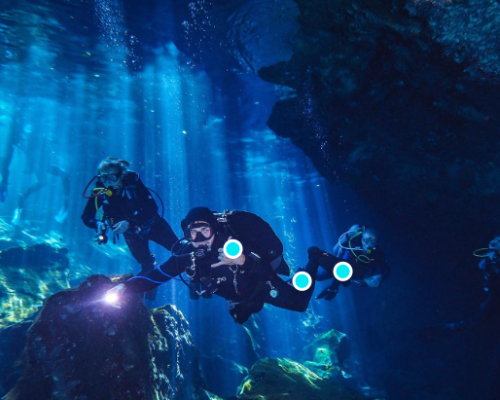
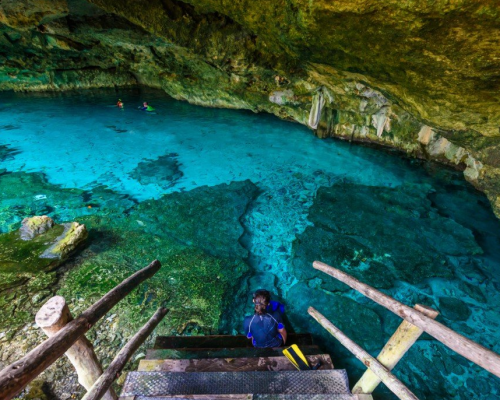
For experienced divers seeking a truly extraordinary adventure, cenote cave diving Playa del Carmen offers one of the most unique underwater environments in the world. Beneath the jungles of the Riviera Maya lies an immense network of flooded limestone caves, forming one of the longest underground river systems on Earth.
These cave systems surround the region of Playa del Carmen and extend throughout the Yucatán Peninsula, attracting technical divers and cave explorers from around the world.
Unlike traditional reef diving, cenote cave diving involves navigating complex underwater tunnels, chambers, and passages that were formed thousands of years ago when sea levels were lower and the caves were dry.
What Is Cenote Cave Diving?
Cenote cave diving is an advanced form of scuba diving that takes place inside submerged cave systems connected to natural sinkholes called cenotes.
These cenotes serve as entry points to the underground cave networks that stretch across the Riviera Maya.
Key features of cenote cave diving include:
- Total overhead environments
- Navigation through cave passages
- Specialized equipment and training
- Permanent guideline systems
- Stunning geological formations
Many of these cave systems belong to the massive underground network known as Sac Actun Cave System, one of the longest underwater cave systems ever explored.

Cave Diving vs Cavern Diving in Playa del Carmen
Many visitors confuse cenote cave diving Playa del Carmen with cavern diving. However, they are very different types of diving experiences.
| Feature | Cavern Diving | Cave Diving |
|---|---|---|
| Natural light visible | Yes | No |
| Certification required | Open Water minimum | Cave Diver certification |
| Distance from entrance | Limited | Extended penetration |
| Equipment | Standard scuba gear | Technical cave equipment |
Cavern dives are available to recreational divers, while cave diving requires specialized technical training
Why Playa del Carmen Is One of the World’s Best Cave Diving Destinations
The region around Playa del Carmen is considered the global epicenter of cenote cave diving.
Several factors make this region ideal:
- Extensive limestone cave systems
- Crystal-clear freshwater visibility
- Stable water temperatures
- Highly developed cave diving community
- Strict safety protocols
These caves were formed millions of years ago when the Yucatán Peninsula was above sea level. When the ice age ended and sea levels rose, the caves flooded, creating the extraordinary underwater landscape divers explore today.
Why Playa del Carmen Is One of the World’s Best Cave Diving Destinations
The region around Playa del Carmen is considered the global epicenter of cenote cave diving.
Several factors make this region ideal:
- Extensive limestone cave systems
- Crystal-clear freshwater visibility
- Stable water temperatures
- Highly developed cave diving community
- Strict safety protocols
These caves were formed millions of years ago when the Yucatán Peninsula was above sea level. When the ice age ended and sea levels rose, the caves flooded, creating the extraordinary underwater landscape divers explore today.
Famous Cenotes for Cave Diving in Playa del Carmen
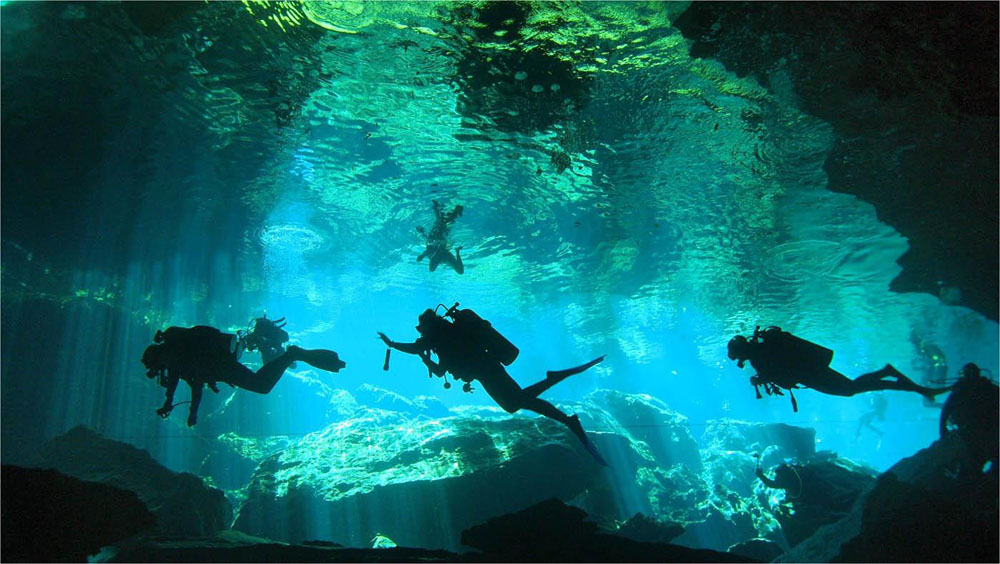
The Riviera Maya is home to hundreds of cenotes, but some are especially famous among cave divers.
| Cenote | Type | Depth | Highlights |
|---|---|---|---|
| Cenote Dos Ojos | Cavern/Cave | 10–20 m | Huge tunnels and passages |
| Cenote Tajma Ha | Cavern/Cave | 6–15 m | Light beams and formations |
| Cenote Angelita | Deep cave | 30+ m | Hydrogen sulfide cloud effect |
| Gran Cenote | Cavern | 5–12 m | Popular beginner cavern dive |
Each cenote offers a unique cave layout, geological formations, and underwater scenery.
Haloclines and Unique Cave Phenomena
Cenote cave systems sometimes contain a phenomenon called a halocline, where freshwater from the jungle mixes with saltwater from the Caribbean Sea.
When divers pass through this layer, it creates a surreal visual distortion that looks like underwater heat waves.
This natural phenomenon is one of the most fascinating experiences in cenote cave diving Playa del Carmen.
Training and Certification for Cave Diving
Cave diving is considered one of the most technical forms of scuba diving and requires specialized training.
Typical certification levels include:
| Certification Level | Skills Learned |
|---|---|
| Cavern Diver | Limited cave penetration |
| Intro to Cave | Basic cave navigation |
| Full Cave Diver | Advanced exploration |
Most training programs in the region follow international technical diving standards and are conducted by experienced instructors.
Best Time of Year for Cenote Cave Diving
One advantage of cenote cave diving is that conditions remain stable year-round.
| Season | Water Temperature | Conditions |
|---|---|---|
| Winter | 24–25°C | Excellent visibility |
| Spring | 25–26°C | Ideal diving |
| Summer | 26°C | Stable conditions |
| Fall | 25–26°C | Consistent visibility |
Because cenotes are protected underground environments, weather and ocean conditions have minimal impact on diving conditions.

Best Time of Year for Cenote Cave Diving
One advantage of cenote cave diving is that conditions remain stable year-round.
| Season | Water Temperature | Conditions |
|---|---|---|
| Winter | 24–25°C | Excellent visibility |
| Spring | 25–26°C | Ideal diving |
| Summer | 26°C | Stable conditions |
| Fall | 25–26°C | Consistent visibility |
Because cenotes are protected underground environments, weather and ocean conditions have minimal impact on diving conditions.
For experienced technical divers, cenote cave diving Playa del Carmen is one of the most extraordinary diving experiences available anywhere on Earth.
Floating through silent cave chambers surrounded by ancient rock formations creates a surreal environment unlike any ocean dive. The clarity of the water, the geological beauty, and the vastness of the underground systems make these dives truly unforgettable.
For those properly trained and prepared, exploring the hidden caves beneath the Riviera Maya is an adventure that reveals an entirely different world beneath the surface of Mexico.