

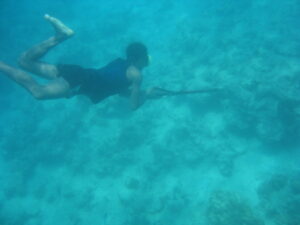
Free diving fishing combines the quiet discipline of freediving with the focus and selectivity of spearfishing. Instead of relying on scuba equipment or casting from the surface, the diver enters the water on a single breath, moves through the marine environment with minimal disturbance, observes fish behavior, and—where local regulations allow—selects a legal target.
The activity is more commonly called freedive spearfishing, but travelers also search for terms such as free diving fishing, breath-hold fishing, underwater fishing, and spearfishing tours. Whatever name is used, the experience sits at the intersection of freediving, marine knowledge, responsible fishing, and adventure travel.
For visitors, the appeal goes far beyond catching a fish. A well-run trip can include time on the boat, reef exploration, wildlife encounters, learning how weather and visibility affect the ocean, understanding local species, and experiencing a destination from a perspective that ordinary snorkeling or fishing charters rarely provide.
What Is Free Diving Fishing?
Free diving fishing is fishing performed while breath-hold diving rather than breathing from a scuba tank. In most tourism contexts, the phrase refers to freedive spearfishing: the diver descends on one breath and uses a legal spearfishing method to harvest permitted fish.
Because the diver has limited underwater time and must return to the surface to breathe, the activity depends heavily on relaxation, efficient movement, fish identification, good decision-making, and conservative safety practices. The goal is not simply to stay underwater as long as possible. In a responsible setting, the priority is to make short, controlled dives while remaining within personal limits and local regulations.
Why Travelers Choose Freedive Spearfishing
For many travelers, free diving fishing feels more immersive than conventional fishing because the participant enters the fish’s environment. You see the reef structure, currents, visibility, baitfish, predators, and habitat directly rather than experiencing the ocean only from a boat.
A closer connection with the marine environment and local ecosystems.
A more active experience than traditional rod-and-reel fishing.
The challenge of combining breath-hold diving, observation, and fish identification.
The opportunity to learn from local guides who understand seasons, legal species, weather, and reef conditions.
A selective approach to harvest: the diver can visually identify a fish before deciding whether it is an appropriate legal target.
A memorable travel experience that can combine boating, snorkeling-style exploration, freediving, and local food culture.
Free Diving Fishing vs. Other Ocean Activities
Activity | Breathing Method | Main Experience | Skill Demand | Typical Traveler |
Free diving fishing | One breath | Selective underwater fishing | Moderate to high | Active adventure traveler |
Recreational freediving | One breath | Depth, relaxation, exploration | Varies by depth | Freediving enthusiast |
Snorkeling | Surface breathing | Wildlife viewing | Low to moderate | Most travelers |
Buceo | Compressed gas | Longer underwater exploration | Training required | Certified divers |
Rod-and-reel fishing | Surface | Fishing from boat or shore | Varies | Anglers and groups |
What to Expect on a Guided Free Diving Fishing Trip
A professional trip should begin before anyone enters the water. The guide needs to understand each guest’s swimming and freediving experience, explain the site, review local regulations, discuss permitted and protected species, and set clear safety procedures.
1. Pre-Trip Briefing
Expect a discussion of weather, current, visibility, entry and exit procedures, buddy roles, communication signals, emergency procedures, and the legal rules that apply to the day’s fishing area.
2. Equipment and Fit
Tour operators commonly provide the basic freediving and spearfishing equipment needed for the activity, although inclusions vary by operator and destination. Travelers who already freedive often prefer to bring their own mask, fins, wetsuit, or other personal equipment because familiarity and fit can improve comfort.
3. In-Water Orientation
First-time participants may begin in shallower or calmer water. The emphasis should be on comfort, controlled descents, staying with the buddy team, identifying marine life, and understanding how the local environment behaves.
4. The Fishing Session
The amount of actual fishing time depends on sea conditions, travel time to the site, experience level, local rules, and the type of trip. A responsible guide should never promise a catch. Wildlife is unpredictable, and good free diving fishing is as much about observation and decision-making as it is about harvesting fish.
Marine Life You May Encounter
One of the strongest reasons to choose a guided freedive fishing experience is the variety of marine life visible along the way. The exact species depend entirely on the destination, season, depth, habitat, and regulations.
In tropical reef environments, travelers may see schools of jacks, snappers, groupers, barracuda, rays, turtles, reef fish, and occasionally larger pelagic species. In Pacific or open-water destinations, encounters may include amberjack, mackerel, mahi-mahi, tuna, or other fast-moving fish. Some species may be legal targets in one area and protected, seasonal, undersized, or completely prohibited in another.
This is why species identification is part of the experience, not an optional extra. A responsible traveler should know what can legally be taken before entering the water and should be prepared to leave a fish untouched if there is any uncertainty.
Best Time for Free Diving Fishing
There is no single worldwide best season for free diving fishing. The ideal period depends on the destination, target species, water visibility, swell, wind, current, water temperature, legal seasons, and local conservation closures.
Planning Factor | Why It Matters | Traveler Priority | What to Check |
Visibility | Helps with navigation, fish identification, and comfort | Very high | Local reports and guide advice |
Wind and swell | Affect boat travel, surface safety, and site access | Very high | Marine forecast |
Current | Changes effort, drift, and suitability of a site | Very high | Local guide assessment |
Water temperature | Determines exposure protection and comfort | Medium-high | Seasonal water temperatures |
Species seasonality | Some fish are more common at certain times | High | Regional fishery information |
Fishing closures | Harvest may be restricted by species, zone, or season | Essential | Current local regulations |
Storm / hurricane season | Can disrupt visibility and boat operations | Destination-specific | Historical climate + forecast |
As a general travel-planning rule, prioritize stable marine conditions over a fixed calendar date. A month that is excellent for one destination may be windy, rainy, cold, or closed to certain species somewhere else.

Weather, Water Temperature, Visibility, and Ocean Conditions
Conditions matter more in freedive spearfishing than many travelers expect. A beautiful sunny day on land does not automatically mean good underwater conditions.
- Wind can create chop and make surface supervision more difficult.
- Swell can reduce comfort and complicate entries, exits, and boat operations.
- Strong current can increase exertion and change how a site should be approached.
- Recent rain can reduce visibility near shore, rivers, or lagoons.
- Water temperature affects wetsuit needs and how long a diver remains comfortable.
- Visibility can change quickly and directly affects fish identification and buddy awareness.
Good operators are willing to change the plan, move to a different site, postpone the trip, or cancel when conditions are not appropriate. That flexibility is a sign of professionalism, not a failure of the experience.
Safety: The Most Important Part of Free Diving Fishing
Freediving carries specific risks, including loss of consciousness related to breath-hold diving. Adding fishing equipment, current, fish, lines, boats, and changing sea conditions increases task loading. Travelers should therefore treat safety as the first criterion when choosing a trip.
- Never freedive alone. Use a trained and attentive buddy system.
- Formal freediving training is strongly recommended before combining breath-hold diving with spearfishing.
- Do not hyperventilate before a breath-hold dive.
- Stay within conservative personal depth and breath-hold limits.
- Use guides who conduct a clear briefing and maintain active in-water supervision.
- Avoid trips that encourage guests to chase depth records or extend breath holds while fishing.
- Stop the session if conditions, fatigue, cold, seasickness, visibility, or marine-life behavior make the activity unsafe.
- When diving from a boat, make sure the boat crew understands the dive plan and emergency procedures.
A tour should feel controlled and deliberate. The best experience is not the one where you stayed down the longest—it is the one where the team remained within safe limits and returned with a better understanding of the ocean.
Rules, Fishing Licenses, Protected Areas, and Conservation
Free diving fishing is regulated differently around the world. Rules may control whether spearfishing is allowed, which species can be harvested, minimum sizes, daily limits, fishing seasons, permitted equipment, licensing, and whether fishing is prohibited inside marine parks or protected zones.
Travelers should never assume that regulations from one destination apply somewhere else. Even neighboring islands, states, provinces, or marine management zones can have different rules. Regulations can also change from year to year.
- Confirm whether a recreational fishing license or permit is required.
- Verify the exact boundaries of marine protected areas and no-take zones.
- Learn protected species and legal size limits before entering the water.
- Respect seasonal closures and daily harvest limits.
- Choose a guide who can explain current rules rather than relying on old information.
- Do not harvest a fish unless identification and legality are certain.
- Take only what can be used responsibly.
Is Free Diving Fishing Sustainable?
Spearfishing can be highly selective because the diver sees the fish before deciding whether to take it. That selectivity can reduce unwanted catch compared with less selective fishing methods, but it does not make every spearfishing trip automatically sustainable.
Responsible practice still depends on accurate species identification, healthy populations, legal harvest, appropriate size, local limits, protected-area rules, and restraint. A selective method is only as responsible as the decisions made by the diver and operator.
Who Is Free Diving Fishing Best For?
This activity can appeal to travelers who already enjoy freediving, fishing, snorkeling, scuba diving, wildlife encounters, or physically active ocean experiences. It is especially well suited to people who are comfortable in open water and enjoy learning rather than simply being transported to an attraction.
It may not be the best choice for someone who is uncomfortable swimming in open water, has no interest in harvesting fish, expects a guaranteed catch, or wants a passive sightseeing tour.
Can Beginners Try Freedive Spearfishing?
Some destinations offer beginner-oriented guided experiences, but ‘beginner-friendly’ should not mean casual about safety. A first-time guest needs more supervision, shallower objectives, simpler conditions, and a conservative plan.
If you have never freedived before, taking a recognized freediving course before a fishing trip is the strongest preparation. It teaches breathing safety, buddy procedures, rescue awareness, equalization, body position, and personal limits—the same foundations that become even more important when additional equipment and fishing decisions are introduced.
What to Bring on a Free Diving Fishing Trip
- Swimwear and a towel.
- Sun protection appropriate for the destination.
- Reusable water bottle and adequate hydration.
- Light food or snacks if the operator does not provide them.
- Any required fishing license or personal identification.
- Your own well-fitting mask or exposure protection if preferred.
- Motion-sickness medication if you are prone to seasickness and can take it safely.
- Dry clothing for the return trip.
- A waterproof action camera only if it will not distract from safety procedures.
Ask the operator exactly what is included before departure. Some trips include all equipment, permits, boat transportation, water, snacks, fish cleaning, and guide services; others provide only guiding.
Weather, Water Temperature, Visibility, and Ocean Conditions
Conditions matter more in freedive spearfishing than many travelers expect. A beautiful sunny day on land does not automatically mean good underwater conditions.
Wind can create chop and make surface supervision more difficult.
Swell can reduce comfort and complicate entries, exits, and boat operations.
Strong current can increase exertion and change how a site should be approached.
Recent rain can reduce visibility near shore, rivers, or lagoons.
Water temperature affects wetsuit needs and how long a diver remains comfortable.
Visibility can change quickly and directly affects fish identification and buddy awareness.
Good operators are willing to change the plan, move to a different site, postpone the trip, or cancel when conditions are not appropriate. That flexibility is a sign of professionalism, not a failure of the experience.
Safety: The Most Important Part of Free Diving Fishing
Freediving carries specific risks, including loss of consciousness related to breath-hold diving. Adding fishing equipment, current, fish, lines, boats, and changing sea conditions increases task loading. Travelers should therefore treat safety as the first criterion when choosing a trip.
Never freedive alone. Use a trained and attentive buddy system.
Formal freediving training is strongly recommended before combining breath-hold diving with spearfishing.
Do not hyperventilate before a breath-hold dive.
Stay within conservative personal depth and breath-hold limits.
Use guides who conduct a clear briefing and maintain active in-water supervision.
Avoid trips that encourage guests to chase depth records or extend breath holds while fishing.
Stop the session if conditions, fatigue, cold, seasickness, visibility, or marine-life behavior make the activity unsafe.
When diving from a boat, make sure the boat crew understands the dive plan and emergency procedures.
A tour should feel controlled and deliberate. The best experience is not the one where you stayed down the longest—it is the one where the team remained within safe limits and returned with a better understanding of the ocean.
Rules, Fishing Licenses, Protected Areas, and Conservation
Free diving fishing is regulated differently around the world. Rules may control whether spearfishing is allowed, which species can be harvested, minimum sizes, daily limits, fishing seasons, permitted equipment, licensing, and whether fishing is prohibited inside marine parks or protected zones.
Travelers should never assume that regulations from one destination apply somewhere else. Even neighboring islands, states, provinces, or marine management zones can have different rules. Regulations can also change from year to year.
Confirm whether a recreational fishing license or permit is required.
Verify the exact boundaries of marine protected areas and no-take zones.
Learn protected species and legal size limits before entering the water.
Respect seasonal closures and daily harvest limits.
Choose a guide who can explain current rules rather than relying on old information.
Do not harvest a fish unless identification and legality are certain.
Take only what can be used responsibly.
Is Free Diving Fishing Sustainable?
Spearfishing can be highly selective because the diver sees the fish before deciding whether to take it. That selectivity can reduce unwanted catch compared with less selective fishing methods, but it does not make every spearfishing trip automatically sustainable.
Responsible practice still depends on accurate species identification, healthy populations, legal harvest, appropriate size, local limits, protected-area rules, and restraint. A selective method is only as responsible as the decisions made by the diver and operator.
Who Is Free Diving Fishing Best For?
This activity can appeal to travelers who already enjoy freediving, fishing, snorkeling, scuba diving, wildlife encounters, or physically active ocean experiences. It is especially well suited to people who are comfortable in open water and enjoy learning rather than simply being transported to an attraction.
It may not be the best choice for someone who is uncomfortable swimming in open water, has no interest in harvesting fish, expects a guaranteed catch, or wants a passive sightseeing tour.
Can Beginners Try Freedive Spearfishing?
Some destinations offer beginner-oriented guided experiences, but ‘beginner-friendly’ should not mean casual about safety. A first-time guest needs more supervision, shallower objectives, simpler conditions, and a conservative plan.
If you have never freedived before, taking a recognized freediving course before a fishing trip is the strongest preparation. It teaches breathing safety, buddy procedures, rescue awareness, equalization, body position, and personal limits—the same foundations that become even more important when additional equipment and fishing decisions are introduced.
What to Bring on a Free Diving Fishing Trip
Swimwear and a towel.
Sun protection appropriate for the destination.
Reusable water bottle and adequate hydration.
Light food or snacks if the operator does not provide them.
Any required fishing license or personal identification.
Your own well-fitting mask or exposure protection if preferred.
Motion-sickness medication if you are prone to seasickness and can take it safely.
Dry clothing for the return trip.
A waterproof action camera only if it will not distract from safety procedures.
Ask the operator exactly what is included before departure. Some trips include all equipment, permits, boat transportation, water, snacks, fish cleaning, and guide services; others provide only guiding.
How to Choose a Good Freedive Spearfishing Tour
A strong operator should make it easy to understand who the trip is for, what experience is required, how safety is handled, what equipment is included, and what happens if conditions are unsuitable.
What to Ask | Good Sign | Red Flag |
What freediving training does the guide have? | Recognized freediving / rescue background | Vague answer |
How is the buddy system managed? | Dedicated supervision and clear roles | Everyone fishes independently |
What happens in bad weather? | Site change, postponement, or cancellation policy | Pressure to go regardless |
Are licenses and local rules explained? | Current rules reviewed before the trip | Guests are expected to guess |
Are protected species covered? | Fish ID and legal harvest briefing | No species discussion |
Is a catch guaranteed? | No—wildlife is unpredictable | Guaranteed fish claims |
What is included? | Clear equipment, boat, food, permit, and fee details | Hidden inclusions or unclear pricing |
Popular Types of Free Diving Fishing Destinations
Tropical Reefs
Warm-water reef destinations can combine accessible depths, abundant visual interest, and a wide range of reef species. They are popular with travelers because a single trip may include coral scenery, turtles, rays, reef fish, and fishing opportunities. However, tropical destinations often contain protected zones, seasonal species rules, and fragile reef habitat that require careful planning.
Blue-Water and Pelagic Trips
More experienced freedivers may look for offshore trips targeting pelagic environments rather than reefs. These trips can involve open water, deeper conditions, stronger currents, longer boat rides, and larger fish. They are generally more appropriate for experienced participants with solid freediving and ocean skills.
Rocky Coasts and Temperate Waters
Temperate destinations offer a different experience, with cooler water, kelp, rocky reef systems, and highly seasonal marine life. Exposure protection and local knowledge become especially important, and visibility can vary dramatically.
Free Diving Fishing in Mexico and the Caribbean
Mexico and the wider Caribbean are frequently associated with freediving and spearfishing travel because the region offers reef, coastal, and offshore environments. In places such as the Mexican Caribbean, guided operators market trips that combine freediving, reef exploration, species identification, and selective fishing.
Conditions and regulations vary substantially between destinations. A trip in the Riviera Maya is not the same as a blue-water experience in Baja California Sur, and protected marine areas may prohibit spearfishing entirely. Travelers should choose the destination first, then research the specific rules and seasons for that location.
Free Diving Fishing and the Traveler Experience
The best freedive fishing trips are not measured only by the number of fish taken. The experience includes the early boat ride, the first look at the water, learning how a local guide reads current and visibility, watching marine life from the surface, making controlled descents, and understanding why one fish is legal while another should be left alone.
That educational layer is what separates a meaningful marine activity from a simple fishing excursion. Travelers leave with knowledge they can apply to future freediving trips and a stronger appreciation for the ecosystem that supports the activity.
Practical Tips Before You Book
Ask the operator whether the trip is designed for complete beginners, certified freedivers, or experienced spearfishers.
Choose the right level rather than the most advanced trip available.
Confirm how far the boat travels and how much in-water time is realistic.
Check whether permits, equipment, transportation, snacks, and fish preparation are included.
Read the cancellation policy for wind, swell, storms, and unsafe visibility.
Tell the operator honestly about your swimming, freediving, and ocean experience.
Avoid scheduling the trip immediately after a late night, heavy drinking, or exhausting travel day.
Leave enough flexibility in your itinerary for weather changes.
If marine conservation is important to you, ask how the operator selects target species and respects local limits.
Frequently Asked Questions About Free Diving Fishing
Is free diving fishing the same as spearfishing?
Usually, yes in a tourism context. The phrase free diving fishing most often refers to spearfishing while freediving. Spearfishing can also be regulated differently depending on whether a diver is breath-hold diving or using compressed gas.
Do I need a freediving certification?
Requirements vary by operator and destination. Even when certification is not legally required, formal freediving training is strongly recommended because it teaches the safety and buddy skills needed for breath-hold diving.
Do I need a fishing license?
Possibly. Licensing rules are location-specific. Some guided trips include the required authorization, while in other places each participant must obtain a permit. Confirm this before the trip.
Is a catch guaranteed?
No. Marine life, weather, visibility, legal restrictions, and fish behavior are unpredictable. Responsible operators should never promise a guaranteed catch.
Is free diving fishing dangerous?
Freediving has real risks, particularly when people dive alone, exceed their limits, or use unsafe breathing practices. Professional training, a capable buddy, conservative diving, good supervision, and suitable conditions are essential.
What is the best season for free diving fishing?
There is no universal season. The best time depends on local weather, visibility, current, water temperature, target species, and fishing regulations. A local guide or fishery authority is the best source for destination-specific timing.
Final Thoughts: Is Free Diving Fishing Worth Trying?
For travelers who enjoy the ocean, active adventures, wildlife, and learning new skills, free diving fishing can be one of the most immersive ways to experience a coastal destination. It combines the quiet challenge of freediving with marine observation, local knowledge, and the tradition of harvesting food directly from the sea.
The most rewarding approach is also the most responsible one: train properly, never freedive alone, choose experienced guides, respect local laws and protected areas, identify species carefully, and accept that the ocean—not the itinerary—decides what you will encounter.
If you are planning a freedive spearfishing trip, choose the destination based on your experience level and travel dates, then compare operators by safety standards, local knowledge, environmental responsibility, and clarity about what the trip includes. A well-planned experience should leave you with more than a catch—it should leave you with a deeper understanding of the sea.
