

Best Freediving Certification: Which Agency Is Right for You?
The first time you watch an experienced freediver disappear beneath the surface with nothing but a mask, fins and one breath, it can look suspiciously easy.
Then you try it.
Suddenly equalizing your ears, relaxing your body, controlling your movement and remembering that breathing is usually quite useful all become part of the equation.
That is exactly why choosing the best freediving certification matters.
A proper freediving course is not simply about learning how to hold your breath longer or reach a certain depth. It teaches you how your body reacts underwater, how to equalize, how to move efficiently, how to recognize problems and, most importantly, how to keep yourself and your buddy safe.
Several major organizations offer internationally used freediving training systems, including AIDA, PADI, SSI and Molchanovs. They all teach the fundamental skills needed to begin freediving, but they approach education, progression and training a little differently.
So which one is the best?
There is no single winner for every diver.
The best freediving certification is the one that matches how you want to freedive, where you plan to travel, how seriously you want to train and—perhaps more importantly than the logo printed on your digital certification card—the quality of the instructor teaching you.
Let’s compare the major options.
Why Get a Freediving Certification in the First Place?
Technically, you do not need a certification card to hold your breath and swim underwater.
That does not mean teaching yourself is a particularly clever idea.
Freediving involves real physiological risks, including hypoxia, loss of motor control, blackout and pressure-related injuries. Divers Alert Network emphasizes formal training, appropriate buddy supervision and never freediving alone. Many incidents happen precisely because divers push their limits without appropriate training or an adequately trained buddy.
A proper course teaches much more than “take a big breath and go down.”
You typically learn:
Relaxation and breathing preparation
Equalization techniques
Duck diving
Efficient finning
Static apnea
Dynamic apnea
Constant-weight diving
Free immersion
Proper weighting and buoyancy
Buddy procedures
Surface safety
Blackout recognition
Rescue techniques
Recovery breathing
That safety component is one of the biggest reasons certification is worth the investment.
You are not simply learning how to go deeper. You are learning how to come back safely.
What Is the Best Freediving Certification?
For most beginners, the main certifications worth comparing are:
| Agency | Typical Beginner Certification | Open-Water Training | General Style |
|---|---|---|---|
| AIDA | AIDA 2 Freediver | Up to 20 m during training | Traditional freediving-focused system |
| PADI | PADI Freediver | Open-water component | Accessible recreational approach |
| SSI | SSI Freediver | Up to 20 m | Structured recreational progression |
| Molchanovs | Wave 1 | 12–20 m | Training-focused and technique-heavy |
All four can provide a strong introduction to freediving.
The difference is less about whether one organization teaches “real freediving” and another does not. They all cover core skills, theory and safety. The bigger differences are course structure, performance standards, continuing education and the culture surrounding the training system.
If you are simply looking for your best freediving certification for beginners, your instructor may matter more than the agency.
If you already know that you want to train regularly, chase depth goals or eventually compete, the training system becomes more important.
AIDA Freediving Certification
AIDA stands for the International Association for the Development of Apnea. The organization has been involved with freediving since 1992 and operates education, instructor and competitive freediving programs.
Its certification ladder is strongly associated with the traditional freediving community.
For most serious beginners, AIDA 2 Freediver is the important starting point.
The current AIDA 2 structure includes theory, confined-water training and multiple open-water sessions. Its 2024 course guidelines allow training to a maximum of 20 meters and include buddy supervision and rescue practice as part of certification.
What You Learn in AIDA 2
The course generally introduces:
Freediving physiology
Relaxation
Equalization
Static apnea
Dynamic apnea
Constant weight
Free immersion
Duck diving
Proper weighting
Buddy techniques
Blackout rescue
Recovery breathing
The emphasis is not only reaching depth. Technique and safety are fundamental parts of the certification.
Who Is AIDA Best For?
AIDA can be a particularly good choice if you already suspect freediving will become more than something you try once on vacation.
Its connection to both recreational and competitive freediving makes the pathway easy to understand if you eventually want to move into deeper training.
AIDA may suit you if you:
Want a freediving-specific organization
Plan to continue through advanced certifications
Are interested in competitive freediving
Want significant emphasis on technique and safety
Expect to train with freediving communities internationally
For someone who wants a solid foundation and expects to stay involved in the sport, AIDA is a strong candidate for the best freediving certification.
PADI Freediver Certification
PADI is probably the name most familiar to recreational scuba divers.
Its freediving system includes Basic Freediver, Freediver, Advanced Freediver and Master Freediver, along with professional-level instructor training.
The full PADI Freediver course combines independent knowledge development, confined-water practice and open-water sessions. PADI recommends about 15 hours of training and states that certification is based on demonstrating the required knowledge and skills rather than simply completing a certain number of hours.
What You Learn in PADI Freediver
The course includes skills such as:
Breath-hold techniques
Static apnea
Dynamic apnea
Free immersion
Constant-weight freediving
Equalization
Buddy procedures
Surface recovery
Safety and rescue
PADI’s current published course information lists a 90-second static apnea goal, 25-meter dynamic apnea goal and approximately 10-meter constant-weight depth goal for the introductory Freediver certification.
These numbers are training objectives, not an invitation to race your classmates.
Freediving is one of those sports where being relaxed usually gets you farther than being competitive during your first weekend.

Who Is PADI Freediver Best For?
PADI may be particularly convenient for recreational travelers because its training ecosystem is already familiar to many divers.
It can be a good choice if you:
Already have PADI scuba certifications
Want an accessible introduction to freediving
Travel frequently and prefer a familiar training organization
Want structured eLearning before your water sessions
Plan to combine freediving with recreational ocean exploration
PADI also recognizes qualifying certifications from other freediving organizations when entering certain advanced courses, which can make future progression more flexible.
SSI Freediving Certification
SSI also has a substantial international diving education system and offers several levels of freediving training.
There is an important distinction between SSI Basic Freediver and the full SSI Freediver course.
SSI Basic Freediver is a shorter introduction. SSI currently lists a maximum training depth of 5 meters, two confined-water sessions and approximately six to eight suggested training hours.
The full SSI Freediver certification goes considerably further. SSI describes it as its primary entry-level program for learning to freedive with a buddy in open water, with training reaching up to 20 meters.
What SSI Freediver Focuses On
Training includes:
Breath-hold preparation
Equalization
Efficient movement
Pool skills
Open-water freediving
Buddy techniques
Rescue skills
Freediving safety
SSI also uses its MySSI platform for training materials, certification cards and dive records, which can be convenient if you already use SSI for scuba diving.
Who Is SSI Best For?
SSI can make sense for travelers who want a structured progression without necessarily entering the competitive side of freediving immediately.
Consider SSI if you:
Already dive through SSI
Like structured digital learning
Want recreational open-water freediving skills
Want a 20-meter beginner-level pathway
Have a strong local SSI freediving instructor available
SSI itself recommends progressing directly toward its full Freediver certification if your goal is recreational open-water freediving rather than stopping with the shorter Basic Freediver program.

Molchanovs Freediving Certification
Molchanovs is a little different from the large recreational diving organizations.
Its education system is heavily centered on freediving training and continued development.
For beginners, the main qualification is Molchanovs Wave 1.
Wave 1 combines theory, pool training and depth sessions. Molchanovs currently lists open-water performance training between 12 and 20 meters, along with a 30-meter dynamic bifins requirement, a 1:30 static breath hold and dedicated buddy and rescue skills.
Students can also separate the training into components.
Molchanovs offers:
Theory 1 for theory and dry training
Lap 1 for theory and pool training
Wave 1 for theory, pool and open-water depth training
That modular structure makes it possible to begin training even when you do not immediately have access to deep water.
Who Is Molchanovs Best For?
Molchanovs becomes particularly interesting if you enjoy the training side of freediving.
Its system is built around continuing practice rather than simply completing a course and placing another certification card in your phone.
It may be the best freediving certification for you if you:
Want to train freediving regularly
Enjoy structured workouts
Want detailed technique development
Are interested in improving pool and depth performance
Expect to progress to more advanced freediving
The next level, Wave 2, for example, introduces deeper performance targets, more advanced equalization, freefall, no-fins diving and more advanced safety skills.
For someone who already knows they want freediving to become a serious hobby, Molchanovs deserves a close look.
AIDA vs PADI vs SSI vs Molchanovs
Here is the simpler version.
| Certification | Particularly Good For | Beginner Depth Training | Training Personality |
|---|---|---|---|
| AIDA 2 | Traditional freediving progression | Up to 20 m | Freediving-focused, technique and safety |
| PADI Freediver | Recreational divers and travelers | Introductory open-water depth | Accessible and familiar |
| SSI Freediver | Recreational progression | Up to 20 m | Structured and flexible |
| Molchanovs Wave 1 | Dedicated training and progression | 12–20 m | Technique and performance focused |
There is quite a bit of overlap.
Nobody finishes one of these courses and magically becomes half dolphin.
Every certification is a beginning.
Your actual ability develops through practice, experience, good coaching and conservative progression after the course.
Which Freediving Certification Is Most Recognized?
This question comes up constantly, especially among travelers.
PADI and SSI have extremely familiar names within the wider recreational diving industry, while AIDA and Molchanovs are highly recognizable within dedicated freediving communities.
But recognition should not be confused with exclusivity.
Freediving education systems often provide crossover routes or accept equivalent certifications for higher-level training. For example, PADI states that qualifying certifications from another freediving organization can meet prerequisites for its Advanced Freediver course, while Molchanovs offers crossover evaluations for divers arriving from other systems.
That means choosing AIDA today does not necessarily lock you into AIDA forever.
Individual schools and instructors can still have their own requirements, so always verify equivalency before booking an advanced course.
Best Freediving Certification for Complete Beginners
For a complete beginner, agency rankings become much less important than instructor quality.
A patient, highly experienced instructor teaching SSI can give you a dramatically better introduction than a rushed instructor teaching your preferred certification agency.
Look for an instructor who:
Explains safety clearly
Keeps groups reasonably small
Gives individual feedback
Does not pressure students into depth
Teaches rescue procedures seriously
Gives enough time for equalization practice
Encourages relaxation instead of competition
Has strong knowledge of local conditions
Your first freediving course should make you feel safer and more comfortable underwater.
If you finish thinking only about the number you reached on the dive line, something important may have been missed.
Best Freediving Certification for Travelers
If your goal is primarily travel and underwater exploration, choose a certification with open-water training rather than a pool-only introduction.
A full beginner certification such as AIDA 2, PADI Freediver, SSI Freediver or Molchanovs Wave 1 gives you much more useful experience for actual ocean adventures.
Once certified, freediving can transform the way you experience destinations.
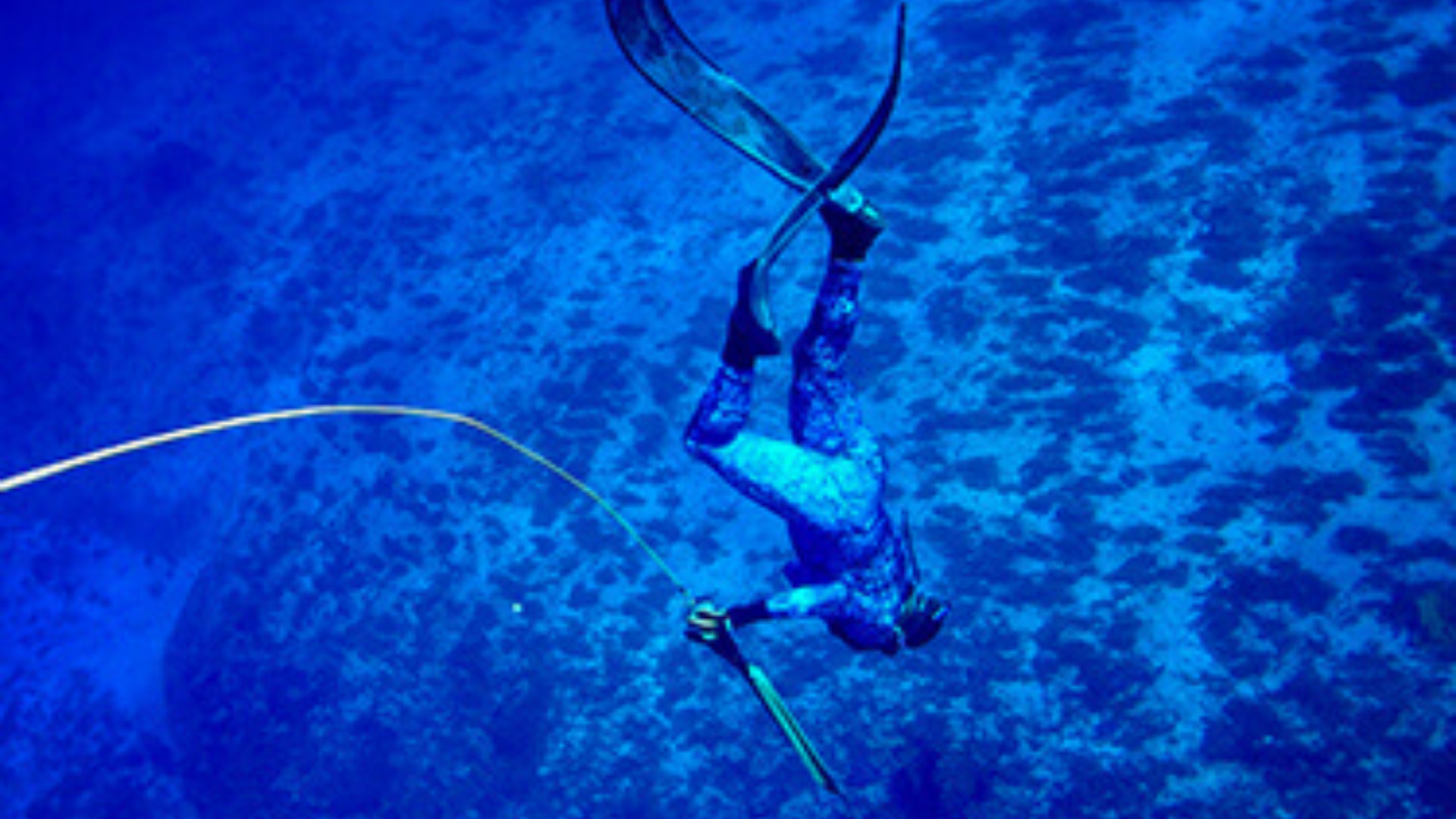
Instead of observing the ocean only from the surface, you can quietly descend toward reefs, swim alongside tropical fish and explore underwater environments without carrying a scuba tank.
You are still a visitor underwater, but a much quieter one.
That makes freediving particularly attractive to travelers interested in marine wildlife, underwater photography and destinations built around clear water.
Best Freediving Certification for Advanced Training
If you already know that your goal involves serious depth development, regular training or competition, AIDA and Molchanovs are particularly worth comparing.
Both systems have clear advanced pathways.
AIDA moves through its multi-level freediver system, while Molchanovs progresses through the Wave and Lap system.
That does not make PADI or SSI poor choices. Both also offer advanced freediving programs.
The difference is largely cultural.
AIDA and Molchanovs are strongly rooted in communities where freediving itself is often the primary sport rather than one activity within the broader diving industry.
For someone interested in performance, that environment can be valuable.
The Best Freediving Certification for Marine Exploration
Not everyone cares about personal depth records.
Some people want to learn freediving because they want to spend more time around reefs, turtles, rays, tropical fish or other marine life.
For this type of diver, technique matters because efficiency means less splashing, less effort and a calmer underwater experience.
Freediving can allow wildlife encounters that feel very different from scuba.
There are no bubbles constantly announcing your arrival.
You descend quietly, observe and return to the surface.
Of course, certification does not give anyone permission to chase, touch or harass wildlife. Good marine encounters depend on patience and respecting the animal’s space.
The goal is to become better at moving through the environment—not to make the environment perform for your GoPro.
Where Should You Take Your Freediving Certification?
Location can affect your experience almost as much as the certification agency.
Warm water, good visibility and protected training areas can make learning much more comfortable.
Popular freediving destinations often offer access to:
Calm bays
Deep-water training lines
Clear tropical seas
Cenotes
Protected lagoons
Dedicated freediving schools
Mexico’s Caribbean region is particularly interesting because students can combine open-water training with very different environments.
The Caribbean offers warm blue water and marine life, while the cenotes of the Yucatán Peninsula provide remarkably clear freshwater environments.
PADI currently lists freediving training in the Yucatán Peninsula that combines confined-water preparation with open-water sessions in cenotes, showing how certification can easily become part of a larger travel experience.
Best Time to Take a Freediving Certification
There is no universal freediving season because conditions depend completely on the destination.
For beginners, however, calmer conditions usually make training easier.
Look for periods with:
| Condition | Why It Helps Beginners |
|---|---|
| Calm surface | Easier breathing and relaxation |
| Good visibility | Less stress underwater |
| Warm water | More comfortable training |
| Low current | Easier line diving |
| Stable weather | Fewer canceled sessions |
| Moderate tourism | Smaller groups may be available |
A slightly less crowded shoulder season can sometimes be better than the absolute peak tourism period.
You are there to relax underwater.
Sharing your training buoy with half the population of the airport terminal does not exactly improve the Zen.
How Long Does a Freediving Certification Take?
Beginner freediving courses commonly take several sessions spread across roughly two or three days, although formats vary significantly.
PADI recommends approximately 15 hours for its Freediver course and notes that students progress according to competency rather than a rigid clock.
Molchanovs Wave 1 includes theory, pool training and three depth sessions, while AIDA 2 requires multiple confined- and open-water training sessions.
SSI structures its programs somewhat differently depending on whether you take Basic Freediver or the full Freediver qualification.
If you are traveling specifically to get certified, leave a little flexibility in your itinerary.
Ocean conditions occasionally have their own vacation schedule.
What to Expect During Your First Freediving Course
Most certifications combine three basic elements.
Teoria
You will learn how pressure affects the body, why equalization is necessary, what happens during a breath hold and how hypoxia can lead to loss of motor control or blackout.
This is not filler before the fun part.
Understanding what is happening inside your body makes you a safer diver.
Confined-Water Training
Pool or shallow-water sessions allow you to practice breath holds, recovery breathing, dynamic swimming and safety techniques in controlled conditions.
This is where many students discover they can comfortably hold their breath much longer than expected once they stop fighting themselves.
Open-Water Training
This is where everything starts feeling like freediving.
You will practice skills such as duck diving, free immersion, constant weight, equalization, turning at depth and returning calmly to the surface.
Depth should develop gradually.
A good instructor never treats the course as a race to the bottom.
Do You Need to Be a Strong Swimmer?
You should be comfortable in the water, although you do not need to be an elite swimmer.
Certification organizations generally include swimming or water-fitness requirements.
Molchanovs Wave 1, for example, requires a 200-meter nonstop unassisted swim, while PADI uses a basic water-skills assessment for its full Freediver program.
More important than swimming speed is water confidence.
Freediving depends heavily on relaxation.
If simply being in deep water makes you anxious, working first on general water confidence may make your eventual freediving course much more enjoyable.
Freediving Certification Safety: The Part You Should Take Seriously
Freediving feels peaceful.
That does not mean it is risk-free.
A diver can experience hypoxia and blackout even after a dive that initially felt comfortable. DAN specifically warns against freediving alone and against hyperventilating before a dive.
One of the most important things your certification teaches is how to function as a proper freediving buddy.
That means actually monitoring your partner and knowing how to respond if something goes wrong.
A friend floating somewhere nearby while checking Instagram is not a freediving safety system.
Proper buddy training is.
How to Choose the Best Freediving School
Once you decide which certification interests you, research the school itself.
Do not choose entirely on price.
Ask:
How large are the classes?
Who is the instructor?
How long have they been teaching?
Where does open-water training happen?
How many water sessions are included?
Is equipment included?
What happens if you cannot meet a performance requirement immediately?
How is safety handled?
Is rescue training included?
Can the instructor offer additional coaching afterward?
You should also read reviews specifically mentioning the instructor rather than relying only on the overall rating of the dive center.
Freediving training is personal.
The person holding the instructor certification matters.
Is the Cheapest Freediving Certification Worth It?
Sometimes.
A lower price does not automatically mean lower quality, particularly in destinations where operating costs are lower.
But compare what is actually included.
A cheaper course might exclude:
Certification fees
Digital learning materials
Equipment rental
Transporte
Entrance fees
Additional training sessions
Meanwhile, a slightly more expensive course may include everything.
Compare the entire experience rather than only the number beside the booking button.
Especially when the subject is teaching someone how to safely hold their breath underwater, bargain shopping probably should not be the only strategy.
Can You Switch Freediving Certification Agencies Later?
Usually, yes.
Many higher-level courses allow students from another recognized training system to enter through equivalent certification requirements or crossover assessments.
You may need to demonstrate certain skills before continuing.
That is normal.
The instructor needs to know that your previous training matches the prerequisites for the next level.
So do not obsess over choosing one organization for the rest of your freediving life.
Choose a high-quality first course.
You can adjust the path later.
Frequently Asked Questions About the Best Freediving Certification
What is the best freediving certification for beginners?
AIDA 2, PADI Freediver, SSI Freediver and Molchanovs Wave 1 are all solid beginner pathways. The best choice depends heavily on instructor quality, course structure and your long-term goals.
Is AIDA better than PADI for freediving?
Not universally. AIDA is deeply focused on freediving and has strong links to the competitive community. PADI offers an accessible recreational pathway and may be especially convenient for travelers already familiar with PADI diving. Neither is automatically better for every student.
Is Molchanovs better than AIDA?
Molchanovs is particularly attractive to freedivers interested in structured ongoing training and performance development. AIDA has a long-established freediving education and competition system. Your goals and local instructor options should drive the decision.
Is SSI Freediver a real certification?
Yes. SSI offers both a shorter Basic Freediver program and a full Freediver program. The full SSI Freediver certification includes open-water training and qualifies divers for recreational freediving with a buddy within their training limits.
How deep do beginner freedivers go?
It depends on the course. Beginner-level depth requirements and limits vary by agency. For example, AIDA 2 and Molchanovs Wave 1 can include training approaching 20 meters, while other introductory programs may use shallower targets.
Do I need a freediving certification to freedive?
There is generally no universal certification requirement simply to enter the water and freedive recreationally. However, formal training is strongly recommended because of risks such as blackout, barotrauma and inadequate buddy procedures.
Can I freedive alone after getting certified?
No. Certification does not make solo freediving safe. DAN describes never freediving alone as a fundamental safety principle, and trained buddy supervision remains essential.
Which freediving certification is best for travel?
PADI and SSI can be convenient because of their large recreational diving networks, while AIDA and Molchanovs are commonly found in established freediving destinations. More important than the agency is finding a reputable instructor at your destination.
Can I change from PADI to AIDA or Molchanovs later?
Often yes. Agencies may recognize equivalent training or offer crossover evaluations. Requirements vary, so check with the instructor conducting your next course before booking.
So, What Is the Best Freediving Certification?
If you were hoping for one dramatic winner, freediving refuses to make things that simple.
AIDA 2 is an excellent option for someone who wants a traditional freediving-focused education with a clear path toward advanced and competitive training.
PADI Freediver makes sense for recreational divers, travelers and people already comfortable inside the PADI education system.
SSI Freediver provides a structured recreational pathway with open-water training and easy integration with SSI’s broader diving ecosystem.
Molchanovs Wave 1 is particularly attractive for someone who wants structured continuing training and expects to take performance development seriously.
But the best freediving certification ultimately combines three things: a reputable training system, a skilled instructor and an environment where you feel comfortable enough to learn properly.
And if certification is going to be part of a trip anyway, make the trip worth remembering.
With a MExplor Custom Camp, you can build an adventure around freediving training while combining it with the experiences that make the Mexican Caribbean special—from cenotes and clear Caribbean water to marine adventures and other activities tailored around your trip.
Because getting certified is useful.
Getting certified somewhere you actually want to dive afterward is much better.
Also you are interested
5 días en Cancún: qué hacer cada día
5 días en Cancún: qué hacer para aprovechar tu viaje ¿Tienes 5 días en Cancún y no sabes qué hacer? Puedes pasar todo el viaje
Playa del Carmen Fishing Trips: Your Guide to a Caribbean Fishing Adventure
Playa del Carmen Fishing Trips: Your Guide to a Caribbean Fishing Adventure There is a different side to the Riviera Maya beyond beach clubs, shopping

Dive in La Paz: Diving Courses and Tours Not to Be Missed
Best Scuba Diving in La Paz Mexico: A Journey Under the Sea Have you ever wondered what secrets lie beneath the waves of La Paz,
