

Cancun Scuba Diving: Complete Guide to Reefs, MUSA and Caribbean Marine Life
Cancun may be famous for white-sand beaches and lively resorts, but some of its most memorable landscapes are found beneath the Caribbean Sea. Warm tropical water, accessible coral reefs, unusual underwater sculptures and diverse marine life make Cancun scuba diving suitable for beginners, certified divers and groups planning a complete diving vacation in Mexico.
The destination offers much more than a single type of dive. Visitors can explore the sculptures of MUSA, swim above shallow coral gardens, experience stronger currents at advanced sites or combine ocean diving with cenote diving elsewhere in the Yucatan Peninsula.
Cancun is also a convenient base for divers. Its international airport receives direct flights from major cities, while dive boats depart from the Hotel Zone and nearby marinas. This combination of accessibility and underwater variety makes it possible to include one or several diving days in almost any Caribbean itinerary.
Why Choose Cancun for Scuba Diving?
The principal advantage of scuba diving in Cancun is its accessibility. You do not need to travel to a remote island or spend several days on a liveaboard to reach interesting dive sites. Many reefs and underwater attractions are accessible by relatively short boat rides.
Cancun also provides experiences for different certification levels. Shallow reefs can be appropriate for introductory experiences, while deeper reefs, current dives and wrecks offer more challenging conditions for experienced divers.
Reasons to choose Cancun include:
- Warm Caribbean water throughout the year
- Dive sites for beginners and certified divers
- Natural reefs and artificial reef habitats
- Easy access from Cancun International Airport
- Opportunities to see tropical fish, rays, turtles and moray eels
- Proximity to Isla Mujeres, Puerto Morelos and the Riviera Maya
- The possibility of combining reef diving with cenote diving
- Professional dive centers offering equipment, instruction and guided trips
Much of the local diving takes place within or near the Costa Occidental de Isla Mujeres, Punta Cancun and Punta Nizuc National Park. This protected area belongs to the Mesoamerican Reef System and contains coral habitats, artificial galleries and submerged vessels. Mexico’s National Commission of Natural Protected Areas identifies scuba diving as one of the activities available in the park and recommends visiting throughout the year.

Best Cancun Scuba Diving Sites
Cancun has shallow reefs, deeper formations, underwater sculptures and wreck-diving possibilities. The exact sites visited depend on weather, currents, certification level and the dive operator’s daily schedule.
| Dive area | Approximate depth | Recommended level | Main features |
|---|---|---|---|
| MUSA and Manchones | 8–10 m / 26–33 ft | Beginner to certified | Sculptures, coral growth and tropical fish |
| Punta Nizuc | 3–10 m / 10–33 ft | Snorkelers and beginners | Shallow water, artificial habitats and reef life |
| Chitales Reef | 8–12 m / 26–39 ft | Beginner to certified | Coral formations and colorful fish |
| Grampin Reef | 15–18 m / 49–59 ft | Certified divers | Deeper reef scenery and marine life |
| Punta Cancun reefs | 12–25 m / 39–82 ft | Certified and advanced | Currents, deeper reefs and larger species |
| Local shipwrecks | Varies by site | Advanced certification may be required | Wreck structure, fish schools and deeper conditions |
Depths and access conditions can vary. A responsible operator should select the site according to the diver’s training, recent experience and the conditions on the day.
MUSA Cancun Underwater Museum
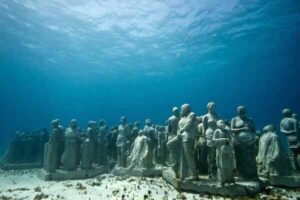
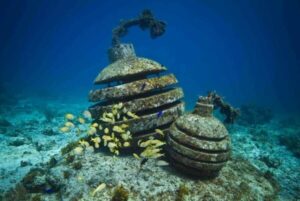
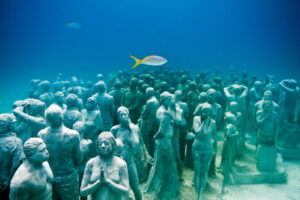
MUSA, the Museo Subacuático de Arte, is Cancun’s best-known underwater attraction. Its galleries contain hundreds of submerged sculptures created to develop into artificial habitats as marine organisms colonize their surfaces.
The largest concentration of sculptures is in the Manchones area, between Cancun and Isla Mujeres. Many of its installations are approximately 8–10 meters deep, making the site accessible to certified divers and, under professional supervision, some beginner programs.
Diving at MUSA is different from visiting an art museum on land. The sculptures change continuously as algae, corals and other organisms grow around them. Fish swim between human figures, while sunlight, visibility and water movement create a different atmosphere on every visit.
What to Expect During a MUSA Dive
A typical trip may combine one dive at MUSA with a second dive at a nearby natural reef. This gives divers an opportunity to compare an artificial habitat with the Caribbean’s natural coral formations.
During the dive, visitors may encounter:
- Schools of grunts and snappers
- Angelfish and butterflyfish
- Parrotfish
- Sergeant majors
- Barracudas
- Moray eels
- Stingrays
- Occasional sea turtles
Divers must avoid touching, standing on or holding the sculptures. Although they may look solid, marine growth on their surfaces can be delicate.
Cancun Coral Reef Diving
Natural reef diving remains one of the main reasons to explore Cancun underwater. The area forms part of the wider Mesoamerican Reef System, an ecologically significant network of reefs extending through the western Caribbean.
Cancun’s reefs feature coral structures, sandy channels and small ledges that provide shelter for marine animals. Shallow sites are often selected for new divers because they offer abundant light and manageable depths. Deeper sites may have more current and require better buoyancy control.
Some reef dives are relaxed explorations, while others have elements of drift diving. The boat may follow the divers and collect them at the end of the dive instead of requiring everyone to return to a fixed mooring.
Conditions can change quickly, so divers should follow the local guide rather than assuming every Cancun reef is an easy dive.
Marine Life in Cancun
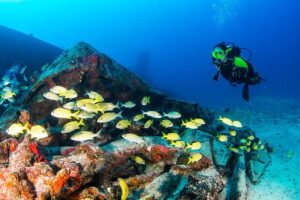
The marine life seen during Cancun scuba diving varies with the season, location, depth and natural conditions. No encounter can be guaranteed, but the region supports a wide variety of Caribbean species.
Common sightings may include:
- Queen, French and gray angelfish
- Stoplight and rainbow parrotfish
- Butterflyfish
- Trumpetfish
- Squirrelfish
- Grunts and snappers
- Barracudas
- Southern stingrays
- Spotted eagle rays
- Green and hawksbill sea turtles
- Nurse sharks
- Moray eels
- Caribbean spiny lobsters
- Crabs, shrimp and other small reef animals
Coral species in the protected area include elkhorn and staghorn coral.
Can You See Whale Sharks While Scuba Diving in Cancun?
Whale sharks visit waters north of Cancun and around Isla Mujeres seasonally, generally during the warmer months. However, these encounters are normally conducted as regulated snorkeling excursions rather than scuba dives.
A whale shark tour should therefore be considered a separate activity from a standard Cancun diving package. Choose an authorized operator that follows approach distances, group limits and wildlife-protection regulations.
Best Time for Cancun Scuba Diving
Diving is available throughout the year, but each season offers different advantages. Water temperature remains comfortable in every season, while wind, rain and visibility are more variable.
| Season | Typical conditions | Advantages | Considerations |
|---|---|---|---|
| December–February | Mild air temperatures and water around 24–26°C / 75–79°F | Comfortable weather and generally pleasant diving | Wind and cold fronts can occasionally cancel trips |
| March–May | Warmer water and relatively stable conditions | Excellent balance of weather, visibility and warmth | Popular travel dates may require early booking |
| June–August | Water around 28–30°C / 82–86°F | Very warm dives and longer daylight hours | Higher heat, humidity and occasional rain |
| September–November | Warm water with more variable weather | Fewer visitors at certain times | Greater tropical-storm risk and possible cancellations |
The national park can be visited all year, but there is no completely predictable “perfect” month. Divers who prioritize stable weather often prefer spring or the drier part of winter. Those who prefer the warmest water may choose summer.
Cancun Water Temperature and Weather
Sea temperature generally ranges from approximately 24°C to 30°C (75°F to 86°F) during the year. Winter usually brings the coolest water, while late summer and early autumn are the warmest periods.
For many divers, a 3 mm wetsuit is sufficient for ocean diving. Divers who become cold easily may prefer a full 3 mm or additional thermal protection during winter. Exposure protection should be chosen according to personal comfort, dive duration and the number of dives planned.
Air temperatures are warm or hot for most of the year. Summer also brings higher humidity and a greater possibility of afternoon showers.
Visibility and Currents
Visibility may range considerably depending on rain, wind, waves, plankton and the selected site. On favorable days, Cancun can offer clear Caribbean water, but visitors should be cautious about websites that promise one fixed visibility range.
Currents also vary. Some shallow dives may be calm, while offshore and deeper locations can have moderate or strong water movement. Local professionals evaluate these factors before departure and may change the planned site when necessary.
Hurricane Season and Diving Conditions
The Atlantic hurricane season officially affects the wider Caribbean from June through November, with the greatest tropical activity often occurring later in the season. This does not mean diving is unavailable for six months. Many days during this period have suitable conditions.
Nevertheless, travelers should consider:
- Purchasing appropriate travel insurance
- Choosing flexible reservations when possible
- Monitoring official weather reports
- Leaving some flexibility in the itinerary
- Avoiding a flight immediately after the final scheduled dive
- Understanding the operator’s weather-cancellation policy
Dive operators may cancel or relocate an excursion even when the weather looks acceptable from the beach. Offshore wind, port restrictions and wave conditions can be different from those visible at a resort.
Cancun Scuba Diving for Beginners
Cancun can be a good place to try scuba diving because several popular sites are relatively shallow. Travelers without certification may be able to book an introductory program with a qualified instructor.
A beginner experience generally includes:
- A medical questionnaire and program explanation
- Basic theory about breathing, pressure and underwater communication
- Equipment orientation
- Practice of essential skills in confined or shallow water
- A supervised open-water dive within the program’s limits
Introductory diving is not the same as earning a scuba certification. It provides a controlled first experience but does not qualify the participant to dive independently or join all certified-diver excursions.
Anyone who wants to continue diving should consider completing an internationally recognized entry-level certification.
Diving in Cancun for Certified Divers
Certified divers have access to a wider selection of reefs, depths and conditions. Operators commonly request proof of certification and may ask when the diver last entered the water.
Cancun Reef Diving vs. Cenote Diving
Cancun gives travelers access to two very different underwater environments. Ocean dives depart from Cancun and nearby coastal areas, while most cenote experiences require transportation south or inland toward the Riviera Maya.
| Feature | Cancun ocean diving | Cenote diving |
|---|---|---|
| Environment | Caribbean reefs, sand channels and open water | Freshwater sinkholes and flooded cave systems |
| Marine life | Tropical fish, rays, turtles and reef species | Limited aquatic life; formations are the main attraction |
| Water movement | Currents and surface waves may occur | Usually little current |
| Water temperature | Approximately 24–30°C / 75–86°F | Commonly cooler and more constant |
| Main attraction | Coral ecosystems and marine encounters | Light beams, limestone and exceptional clarity |
| Recommended protection | Often a 3 mm wetsuit | A thicker full wetsuit may be more comfortable |
| Training considerations | Depends on depth and current | Cavern routes require certification, suitable skills and a specialized guide |
What Is Included in a Cancun Diving Trip?
Inclusions vary, so compare the complete experience rather than selecting an operator only by price. A diving excursion may include:
- Boat transportation
- Tanks and weights
- Professional dive guide
- One or two dives
- Rental equipment
- Drinking water and light refreshments
- Marine park access or conservation fees
- Photos or videos
Do not assume that equipment, wetsuits, park fees, transportation or underwater media are included. Request a written list before paying.
Practical Tips for a Better Diving Experience
Reserve Early
During busy travel periods, small-group excursions and preferred departure times can fill in advance. Early booking is especially useful for groups, private guides and specialized diving.
Avoid Alcohol Before Diving
Alcohol contributes to dehydration and can impair judgment. Arrive rested, hydrated and prepared for the day’s conditions.
Prevent Seasickness
If you are susceptible to motion sickness, discuss suitable preventive options with a medical professional. Take any approved medication at the recommended time rather than waiting until the boat is already moving.
Protect the Reef
Practice good buoyancy and keep your fins away from coral. Secure gauges, alternate air sources and cameras so they do not drag across the reef.
Divers should never:
- Touch or stand on coral
- Chase turtles or rays
- Feed marine animals
- Collect shells, coral or other natural objects
- Hold onto underwater sculptures
- Apply harmful products immediately before entering the water
Bring Reef-Conscious Sun Protection
Physical protection such as a rash guard, hat and shaded clothing can reduce dependence on sunscreen. Follow all current national park and operator requirements regarding sun-care products.
Frequently Asked Questions About Cancun Scuba Diving
Can you scuba dive in Cancun without certification?
Yes, eligible beginners can participate in an introductory scuba program under direct professional supervision. However, this is not a substitute for certification, and available sites and depths will be limited.
Is Cancun suitable for beginner divers?
Yes. Several shallow reefs and the Manchones area can provide beginner-friendly conditions. Suitability still depends on weather, current and the participant’s comfort in the water.
How warm is the water in Cancun?
Ocean temperatures generally range from approximately 24°C to 30°C (75°F to 86°F), depending on the month.
What can you see while diving in Cancun?
Possible sightings include parrotfish, angelfish, grunts, snappers, barracudas, moray eels, rays, turtles, lobsters and other Caribbean species.
How deep is MUSA?
Frequently visited scuba sections near Manchones are generally around 8–10 meters deep, although MUSA includes different galleries and depths.
Can beginners dive at MUSA?
Some introductory programs visit suitable shallow areas under instructor supervision. Access depends on conditions, operator procedures and the participant’s ability to complete the required skills.
When is the best visibility in Cancun?
Visibility is often favorable during periods of stable, dry weather, but it cannot be guaranteed. Wind, rain, waves and plankton can change conditions from one day to the next.
How many diving days should I plan?
One day is enough for an introduction or a standard two-dive trip. Two to four diving days provide more variety and allow travelers to explore MUSA, natural reefs and potentially a cenote
