

Landscape Photography Tours: Travel for the View, Stay for the Photograph
There is sightseeing, and then there is standing in the dark at 5:20 in the morning wondering whether the clouds are going to cooperate.
Welcome to landscape photography.
Landscape photography tours are built for travelers who do not simply want to visit beautiful places. They want enough time to actually photograph them. That means thinking about sunrise, weather, seasons, viewpoints, access, tides, clouds, reflections, foregrounds, and sometimes returning to the same place because yesterday the light was terrible.
For photographers, this is an entirely different way to travel.
A normal tour might arrive at a spectacular viewpoint at noon because it fits conveniently between breakfast and lunch. A photography tour might bring you there before sunrise because that is when the landscape actually comes alive.
You slow down. You notice how the light changes. You watch weather move through the scene. You start seeing shapes, textures, shadows, and layers that most visitors walk straight past.
And yes, occasionally you travel halfway across the world for a sunset that produces absolutely nothing.
Nature does not read itineraries.
That unpredictability is also part of what makes landscape photography tours so rewarding.
What Are Landscape Photography Tours?
Landscape photography tours are travel experiences designed around photographing natural environments.
Rather than treating photography as something you do between attractions, the itinerary is created with photography in mind.
That can influence:
Where you travel
What season you visit
What time you leave each morning
How long you remain at a location
Which viewpoints you explore
How much equipment you carry
How flexible the schedule needs to be
Whether local guides are involved
The subjects can vary enormously.
A landscape photography tour might focus on mountains, coastlines, deserts, forests, waterfalls, cenotes, jungle, wetlands, beaches, caves, or dramatic weather.
Some tours are highly educational and resemble traveling workshops. Others are designed for experienced photographers who mainly need local knowledge, transportation, and access to strong locations.
The best ones offer a little of both.
Why Landscape Photography Tours Are Different From Regular Sightseeing
Most sightseeing itineraries are designed around efficiency.
Landscape photography is usually designed around patience.
Imagine both groups visiting the same beach.
The sightseeing group arrives at 11 a.m., takes several photos, walks around for twenty minutes, and leaves.
The photography group might arrive before sunrise, scout several compositions, wait for the color to change, photograph reflections as the tide moves, and stay another thirty minutes after sunrise because the clouds suddenly became interesting.
Same beach.
Completely different experience.
That is one of the biggest advantages of landscape photography tours. They give photographers time.
Time to look.
Time to move.
Time to wait.
Time to discover that the first obvious composition was not actually the best one.
Who Should Join a Landscape Photography Tour?
You do not need to be a professional landscape photographer.
These trips can work for many different experience levels.
They are particularly useful for:
Beginner photographers
Hobby photographers
Experienced landscape photographers
Travel photographers
Nature photographers
Content creators
Smartphone photographers
Couples who photograph together
Solo travelers
Photographers building a portfolio
Travelers who prefer slow, nature-focused experiences
The important thing is choosing a trip suited to your expectations.
A beginner may want hands-on help with camera settings and composition.
An experienced photographer may want fewer lessons and more access to difficult-to-find locations.
Both can enjoy the same landscape.
They simply need different kinds of support.
Landscape Photography Tours for Beginners
For beginners, photographing landscapes in real environments can be one of the fastest ways to understand photography.
You immediately see why settings matter.
Maybe the waterfall looks too frozen.
Change the shutter speed.
Maybe the foreground is dark while the sky is bright.
Now you have an exposure problem to solve.
Maybe the entire photograph looks flat.
Time to think about composition and light rather than buying another lens.
A beginner-friendly landscape photography tour can help you practice:
Aperture
Shutter speed
ISO
Focus
Depth of field
Exposure
Composition
Filters
Tripod technique
Long exposures
Sunrise and sunset photography
The advantage is context.
You are learning the technique while standing in front of something you actually want to photograph.
That tends to make the lesson easier to remember than practicing exclusively inside a classroom.
Landscape Photography Tours for Experienced Photographers
Experienced photographers often need something different.
They probably already know how aperture works.
What they want is access.
Where should we be at sunrise?
Which road reaches the location?
When does the light hit that canyon?
Is the cenote accessible at this time?
Which beach works with the current wind direction?
Can we return tomorrow if conditions improve?
Local knowledge can save enormous amounts of time on landscape photography trips, particularly when photographers only have a few days in a destination.
A good guide allows experienced photographers to concentrate on creating images rather than solving logistics.
What Makes the Best Landscape Photography Tours?
A beautiful destination alone does not create a good photography tour.
The itinerary matters just as much.
Look for tours that consider the realities of photography rather than simply attaching the word “photography” to a normal sightseeing package.
| Feature | Why It Matters |
|---|---|
| Small groups | More room to photograph and easier movement |
| Flexible itinerary | Allows changes based on weather and light |
| Photography-focused timing | Gets you to locations when conditions are strongest |
| Local knowledge | Helps identify viewpoints, access and seasonal changes |
| Enough shooting time | Prevents rushed photography |
| Expert guidance | Useful for technique and composition |
| Varied landscapes | Produces a more diverse portfolio |
| Rest periods | Prevents sunrise-to-sunset exhaustion |
That final point is underrated.
A photography trip can become surprisingly tiring.
Wake before sunrise.
Walk with equipment.
Photograph all morning.
Scout in the afternoon.
Photograph sunset.
Back up files.
Charge everything.
Repeat.
By day four, even the tripod looks tired.
Landscape Photography Tours vs. Photography Travel Tours
The terms overlap, but the emphasis is different.
A general photography travel tour may include street photography, culture, portraits, food, wildlife, architecture, and landscapes.
A landscape photography tour is more focused on natural spaces.
| Landscape Photography Tours | General Photography Travel Tours |
|---|---|
| Natural scenery is the priority | Several photography genres |
| Sunrise and sunset are often central | Timing depends on subjects |
| Weather heavily influences planning | Greater variety of indoor/outdoor options |
| Tripods and filters are common | Lighter setups may work |
| Often involves remote locations | Can be urban or rural |
| More emphasis on light and terrain | More emphasis on broad storytelling |
If landscapes are the main reason you travel with a camera, a dedicated landscape trip usually gives you more time in the environments you care about.
Choosing the Right Landscape Photography Destination
The best destination is not automatically the most famous one.
Ask what kind of landscape actually interests you.
Do you want:
Tropical coastlines?
Mountains?
Desert?
Jungle?
Cenotes?
Waterfalls?
Lakes?
Mangroves?
Forests?
Volcanic scenery?
Caves?
Dramatic weather?
Your answer should shape the trip.
A photographer obsessed with minimalist desert landscapes does not need the same itinerary as someone who wants tropical water and lush vegetation.
The goal is not to collect famous destinations.
It is to photograph environments that inspire you.
Landscape Photography in Mexico
Mexico gives landscape photographers an unusually broad range of environments.
Depending on the region, you can photograph deserts, mountains, volcanoes, jungle, beaches, cenotes, mangroves, waterfalls, caves, coastlines, and tropical forests.
The Mexican Caribbean and Yucatán Peninsula offer particularly interesting opportunities for photographers who want several types of landscapes within one trip.
You can move between:
Caribbean shoreline
Tropical jungle
Cenotes
Mangroves
Coastal wetlands
Beaches
Lagoons
Underground environments
MExplor’s current Photography Camp in Puerto Morelos is built around nature photography in this region and combines photography workshops with Caribbean experiences including cenote exploration and snorkeling.
For landscape photographers, that variety means you can create a very different image at sunrise than you create later the same afternoon.
Landscape Photography in the Yucatán Peninsula
The Yucatán Peninsula is not a traditional mountain-landscape destination.
That is exactly what makes it interesting.
The landscape is defined by water, limestone, jungle, coastlines, wetlands, and the enormous network of cenotes beneath the region.
Instead of photographing dramatic alpine peaks, you may work with:
Jungle openings
Reflections
Limestone walls
Coastal vegetation
Caribbean horizons
Mangroves
Natural pools
Clouds and tropical storms
Underwater landscapes
This creates opportunities for both traditional landscape photography and more experimental work.
The environment rewards photographers who look for layers, texture, reflections, and light rather than relying solely on giant panoramic vistas.
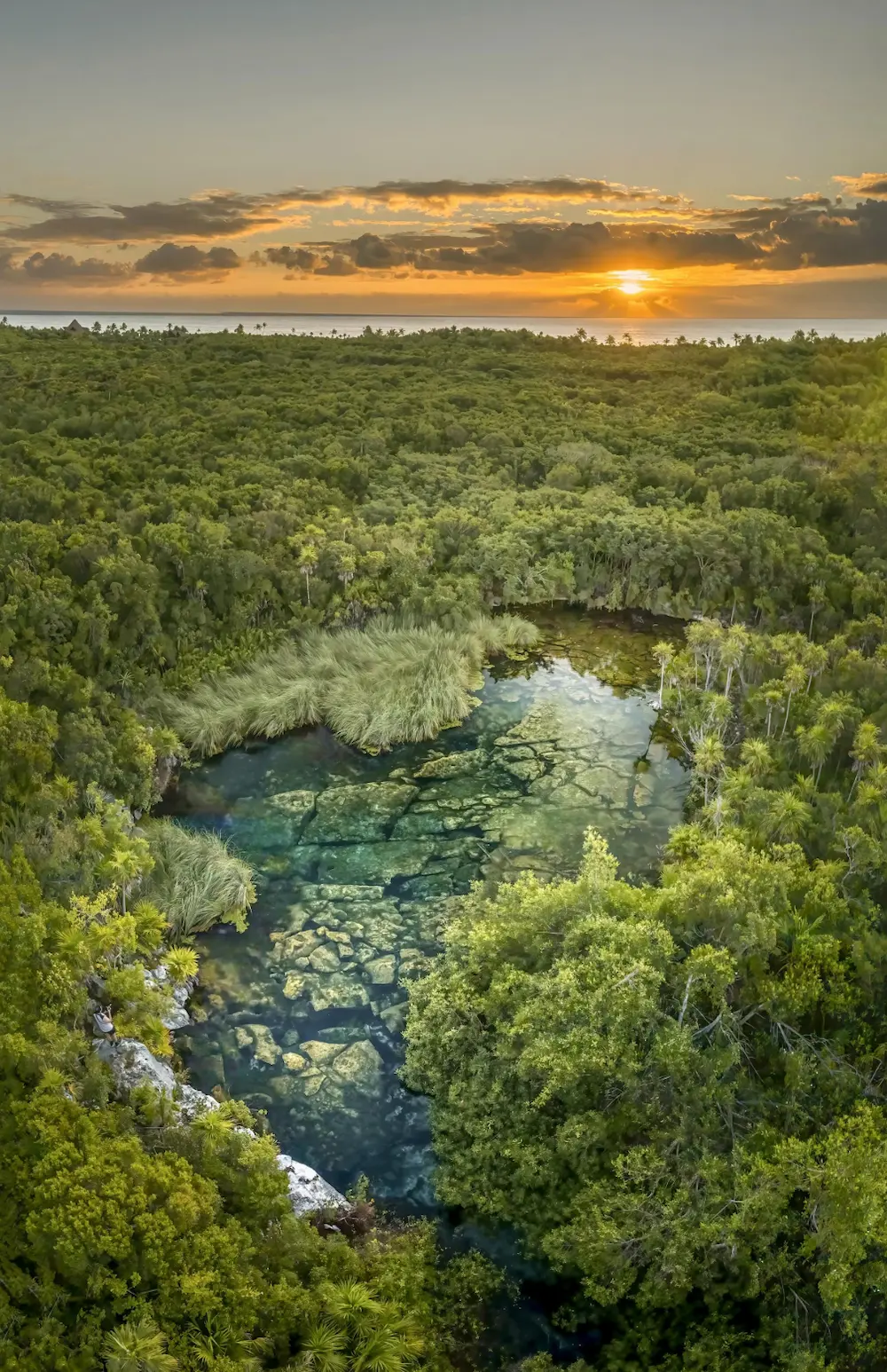
Cenotes as Landscape Photography Locations
Cenotes are some of the most distinctive landscapes in southeastern Mexico.
Some are completely open to the sky.
Others are partially enclosed by limestone.
Some feel like jungle pools.
Others resemble enormous underground chambers.
For photographers, cenotes offer an unusual combination of:
Rock formations
Agua
Reflections
Vegetation
Light beams
Shadow
Underwater scenery
Human scale
The same cenote can look completely different depending on the time of day.
Direct sunlight may illuminate the water dramatically at one hour and disappear later.
That is why landscape photography tours built around cenotes should consider light rather than simply arriving whenever transportation happens to be convenient.
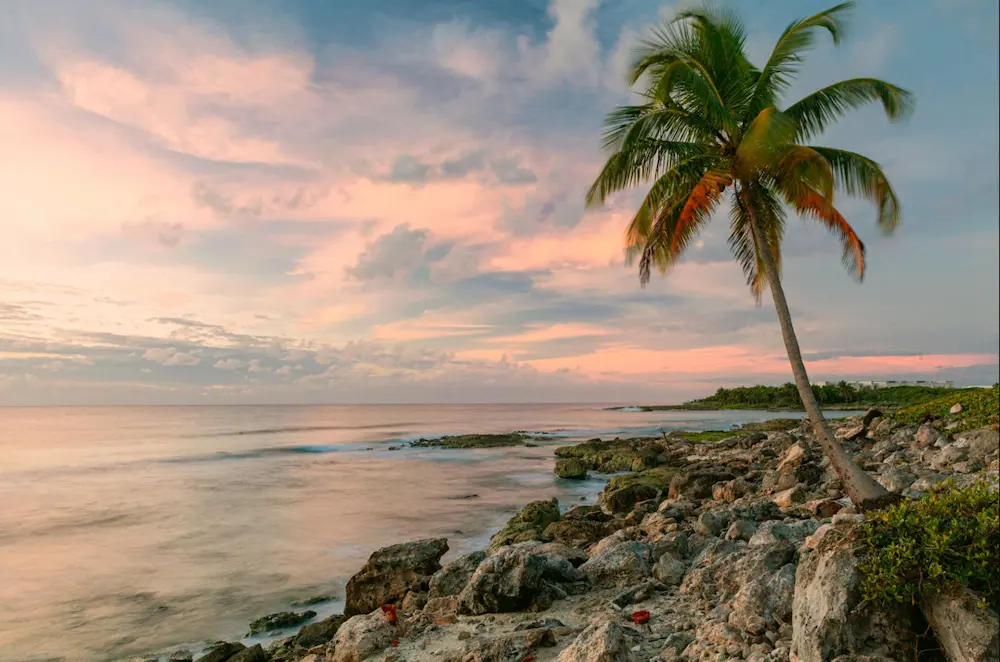
Caribbean Coastal Landscape Photography
A tropical beach may seem easy to photograph.
Water.
Sand.
Palm tree.
Done.
Not quite.
Coastal landscape photography becomes much more interesting when you start working with changing conditions.
Look for:
Cloud formations
Waves
Reflections
Rock formations
Driftwood
Coastal vegetation
Long exposures
Storm light
Sunrise color
Minimalist compositions
The Mexican Caribbean is especially suitable for sunrise photography because much of the Quintana Roo coastline faces east.
That means the alarm may be unpleasant.
The view generally helps.
Mangroves and Wetland Landscapes
Mangroves produce a very different type of image.
Instead of enormous open landscapes, photographers can focus on:
Reflections
Repeating roots
Water channels
Mist
Wildlife within the landscape
Trees against changing skies
Minimal compositions
Wetlands are also excellent places to combine landscape photography and wildlife photography.
A wide photograph might show the habitat first, with birds or other animals becoming part of the broader scene rather than filling the frame.
These environmental wildlife images often tell a richer story than an isolated animal portrait.
Best Time of Day for Landscape Photography
Light determines much of the mood in landscape photography.
That does not mean good photographs only exist for twenty minutes at sunrise.
But certain periods offer particularly useful conditions.
Sunrise
Sunrise often provides:
Soft directional light
Lower temperatures
Fewer visitors
Calm water
Mist in some environments
Warm color
Long shadows
There is another advantage.
Once you have successfully photographed sunrise, breakfast feels like a genuine achievement.
Golden Hour
Golden hour occurs when the sun is relatively low, creating warmer, softer light.
This can help reveal texture in:
Rock
Sand
Trees
Mountains
Buildings within landscapes
Waves
Side lighting is especially useful because it creates shadows that give terrain more depth.
Blue Hour
The period before sunrise and after sunset produces cooler tones and softer contrast.
Blue hour works beautifully around:
Coastlines
Agua
Lagoons
City-meets-landscape scenes
Reflections
Do not pack your camera immediately when the sun disappears.
Photographers who leave at sunset often miss some of the most interesting light.
Can You Photograph Landscapes at Midday?
Yes.
Despite what photography forums occasionally imply, cameras continue functioning at noon.
Midday simply creates different challenges.
Strong overhead sunlight can produce harsh contrast, but it can also work well for:
Cenotes
Underwater landscapes
Graphic scenes
Tropical water
Clouds
Minimal compositions
Black-and-white photography
In cenotes, stronger overhead sunlight can sometimes be exactly what creates dramatic shafts of light.
The question is not:
Is this good light?
It is:
What type of photograph works in this light?
Why Weather Matters on Landscape Photography Tours
Landscape photographers develop a slightly strange relationship with weather.
Most tourists see clouds and become disappointed.
Photographers sometimes see clouds and start running toward the camera bag.
Weather can create:
Dramatic skies
Reflections
Changing light
Mist
Waves
Color
Texture
Atmosphere
A perfectly clear sky can actually be less interesting photographically than a day with moving weather.
That does not mean dangerous conditions should be ignored.
The official Atlantic hurricane season runs from June 1 through November 30, which matters when planning photography travel around the Mexican Caribbean.
Travelers visiting during that period should keep itineraries flexible and follow current weather information.
A dramatic sky is useful.
A hurricane is not a photography accessory.
Best Seasons for Landscape Photography in the Mexican Caribbean
Different seasons create different opportunities.
There is no single “best” month for every photographer.
| Period | Photography Experience | Good For |
|---|---|---|
| December–April | Generally popular travel period with comfortable conditions | Beaches, sunrise, general landscapes |
| May | Hotter temperatures and changing seasonal conditions | Coastal landscapes and tropical scenes |
| June–September | Wetter, greener and more variable | Dramatic skies, lush landscapes |
| October–November | Transitional weather | Atmospheric landscapes and flexible travelers |
| Year-round | Cenotes and jungle remain available | Water, rock, reflections and nature photography |
Photographers should decide whether they want predictability or drama.
Drier conditions may make travel easier.
Wetter conditions can produce richer vegetation, clouds, reflections, and more atmospheric skies.
Photography occasionally rewards the weather that tourism brochures try to hide.
Landscape Photography and the Rainy Season
Rain does not automatically ruin a photography trip.
It changes it.
Wet vegetation becomes richer.
Roads and stone reflect light.
Clouds become more interesting.
Puddles create foregrounds.
Waterfalls become stronger in some destinations.
The challenge is protecting your equipment and remaining flexible.
During wetter periods, build alternative locations into the itinerary.
If a sunrise does not happen, photograph jungle.
If ocean conditions are poor, explore a cenote.
If heavy rain arrives, scout another location and return later.
Flexibility may be the most useful piece of landscape photography equipment you bring.
What Gear Do You Need for Landscape Photography Tours?
Landscape photographers are particularly talented at bringing too much equipment.
The landscape is wide.
Surely this means every lens is necessary.
It usually does not.
A practical travel setup may include:
Camera body
Wide-angle lens
Standard zoom
Telephoto lens if distant details matter
Tripod
Spare batteries
Multiple memory cards
Lens cloth
Rain protection
Camera bag
Portable storage
The exact equipment depends on the trip.
Do not bring something simply because landscape photographers on YouTube appear morally obligated to own it.
Bring the tools you will actually use.
Do You Need a Wide-Angle Lens?
Wide-angle lenses are extremely useful for landscape photography because they can capture large scenes and emphasize foreground elements.
But not every landscape needs to look enormous.
Telephoto lenses can be excellent for:
Compressing distant layers
Isolating trees
Photographing mountains
Creating abstract landscapes
Capturing details
Separating sections of coastline
Some of the strongest landscape photographs barely look like landscapes at first.
Do not let the phrase landscape photography convince you that every image needs to fit the entire horizon inside the frame.
Why a Tripod Is Useful
A tripod allows photographers to work with slower shutter speeds and maintain consistent framing.
It is especially useful for:
Sunrise
Sunset
Blue hour
Long exposures
Waterfalls
Waves
Night landscapes
Bracketing exposures
It also forces you to slow down.
Once the camera is on a tripod, you tend to think more carefully about composition instead of producing thirty almost identical handheld frames.
The disadvantage is obvious.
You have to carry it.
Landscape photography is full of artistic compromises.
Filters for Landscape Photography
Filters can be extremely useful when used intentionally.
Circular Polarizing Filter
A polarizer can reduce certain reflections and help manage glare from foliage or water.
Neutral Density Filter
ND filters reduce the amount of light reaching the camera, allowing longer exposures in brighter conditions.
This can be useful for smoothing:
Waves
Waterfalls
Moving clouds
Graduated Neutral Density Filters
These can help balance a bright sky with a darker foreground, although modern editing and exposure blending provide other options as well.
Do not buy every filter before your first photography trip.
Learn what problem each one solves first.
Smartphone Landscape Photography
A dedicated camera is useful.
It is not mandatory.
Modern phones can create very strong landscape photographs, particularly in good light.
Smartphone photographers should focus on:
Composition
Clean foregrounds
Leading lines
Reflections
Exposure
Light direction
Timing
Use different focal lengths when your phone offers them.
Avoid automatically using the widest possible lens for every scene.
And clean the camera lens.
Seriously.
Mexico can provide the most beautiful sunrise of your life.
Your fingerprint does not need to become part of the composition.
Composition Tips for Landscape Photography Tours
Beautiful scenery does not automatically produce a beautiful photograph.
Composition matters.
Build a Strong Foreground
A foreground can help pull the viewer into the image.
Look for:
Rocks
Plants
Agua
Sand patterns
Roots
Reflections
Do not include foreground simply because someone told you landscapes require one.
It should help the photograph.
Look for Leading Lines
Roads, shorelines, rivers, branches, and shadows can guide the eye through the scene.
These are especially useful when photographing large environments where the viewer needs visual direction.
Use Layers
Think:
Foreground.
Middle ground.
Background.
Layers create depth and help a two-dimensional photograph feel more three-dimensional.
Mist, vegetation, mountains, coastlines, and changing light can all create natural separation.
Include People for Scale
Landscape photographs do not always have to exclude humans.
A single person can communicate the enormous scale of:
A cenote
A cliff
A forest
A beach
A waterfall
This works especially well in adventure photography, where the relationship between the traveler and environment becomes part of the story.
Photograph Vertically Too
Landscape photographers have an unfortunate tendency to assume landscapes require horizontal photographs.
They do not.
Vertical compositions are excellent for:
Waterfalls
Tall trees
Cenotes
Leading lines
Dramatic skies
Social-media formats
The landscape will forgive you.
Landscape Photography Tours and Long Exposure Photography
Long exposures can completely change how a landscape feels.
Moving water becomes smooth.
Clouds stretch.
Waves blur.
Busy environments can become quiet.
To experiment with longer exposures, you may need:
Tripod
Low ISO
Smaller aperture
ND filter in brighter conditions
Stable ground
Do not assume longer automatically means better.
A little texture in moving water can sometimes create more energy than turning the entire Caribbean into fog.
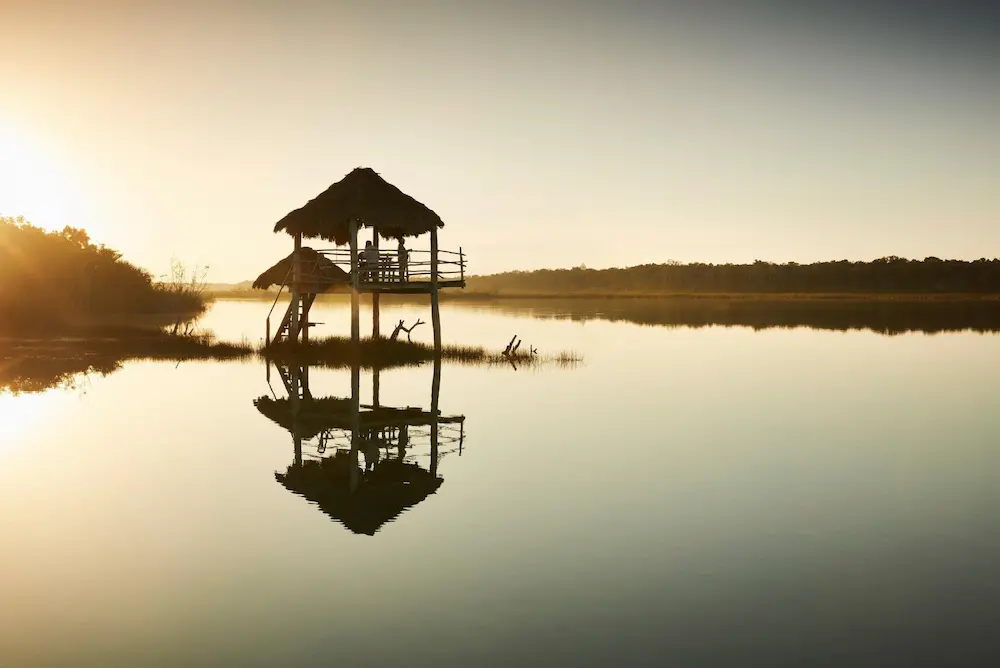
Photographing Reflections
Water is one of the most useful elements in landscape photography.
It can create symmetry, depth, texture, and additional color.
Look for reflections in:
Cenotes
Lagoons
Calm ocean water
Wet sand
Mangroves
Puddles after rain
Early morning is often useful because wind can be lighter and water surfaces calmer.
Sometimes the reflection becomes more visually interesting than the subject itself.
Landscape Photography and Drone Photography
Drones can reveal landscapes that are impossible to understand from ground level.
Coastlines, cenotes, jungle, mangroves, and lagoons can become almost abstract from above.
But drone photography introduces legal and environmental responsibilities.
Rules vary according to country, protected area, archaeological site, property, and type of operation.
Always verify current requirements before flying.
Do not assume that because you can physically launch the drone, you are permitted to do so.
And avoid disturbing wildlife or other visitors simply because the aerial composition looks good.
Landscape Photography Tours Should Leave Room for Scouting
One of the most useful things professional landscape photographers do is scout.
You visit without expecting the final photograph.
You look at:
Sun direction
Foreground options
Access
Parking
Safety
Tides
Potential compositions
Alternative viewpoints
Then you return when the conditions are right.
On shorter landscape photography tours, local guides can dramatically reduce scouting time because they already understand many of these variables.
That can mean the difference between spending sunrise looking for the viewpoint and spending sunrise actually photographing from it.
Group Landscape Photography Tours vs. Private Trips
Both formats have advantages.
Group Photography Tours
Best for:
Meeting other photographers
Sharing costs
Learning as a community
Following a prepared itinerary
The downside is flexibility.
If eight photographers are involved, changing the entire schedule becomes harder.
There is also the fascinating phenomenon where eight photographers independently discover exactly the same tripod position.
Private Landscape Photography Tours
Best for:
Specific portfolio goals
Flexible scheduling
Couples
Experienced photographers
Changing plans based on weather
Combining photography with other interests
Private trips can be adapted more easily to the photographer’s pace.
If sunrise is extraordinary, stay.
If the light disappears, move.
If you want another hour at the cenote, take it.
That flexibility can be extremely valuable.
How Long Should a Landscape Photography Trip Be?
For one concentrated destination, a long weekend can work.
For a region with varied landscapes, five to seven days usually provides much more flexibility.
A sample itinerary could look like:
| Day | Photography Focus |
|---|---|
| Dia 1 | Arrival, orientation and scouting |
| Dia 2 | Coastal sunrise and landscape workshop |
| Dia 3 | Jungle and cenote photography |
| Dia 4 | Mangrove or wetland landscapes |
| Dia 5 | Caribbean coastline and long exposures |
| Dia 6 | Flexible weather day and sunset |
| Dia 7 | Final sunrise and departure |
Notice the flexible day.
That is intentional.
Weather will eventually disagree with your spreadsheet.
Build room for it.
Landscape Photography Workshops vs. Landscape Photography Tours
A workshop usually emphasizes learning.
A tour may emphasize access and travel.
| Landscape Photography Workshop | Landscape Photography Tour |
|---|---|
| Strong educational component | Destination-focused |
| Structured teaching | More independent shooting |
| Technical exercises | Greater emphasis on locations |
| Usually instructor-led | May be guide-led |
| Ideal for skill development | Ideal for exploration |
Many good experiences combine both.
MExplor’s current Photography Camp does this by combining photography instruction with guided nature experiences, cenote visits and Caribbean activities in Puerto Morelos.
For travelers, that balance can be particularly useful because you learn something without spending the entire vacation inside a classroom.
Responsible Landscape Photography
Landscape photographers depend on beautiful environments.
Protecting them should be part of the activity.
Basic principles include:
Stay on permitted trails
Respect protected areas
Do not damage vegetation for a clearer composition
Avoid disturbing wildlife
Follow drone restrictions
Do not enter closed areas
Take your waste with you
Respect local communities and private property
No photograph needs to exist badly enough to damage the place being photographed.
Sometimes the composition simply is not available.
Take another one.
Landscape Photography Tours and Sustainable Travel
Small photography groups can have advantages because they often move more slowly and concentrate on fewer locations.
Working with local guides also keeps more tourism spending within the destination and can improve understanding of fragile environments.
For photographers, local knowledge also adds context.
A landscape is more interesting when you understand what you are looking at.
The geological history, ecosystems, seasonal changes, and local relationship with a place can all influence how you photograph it.
How to Choose the Best Landscape Photography Tour
Before booking, ask specific questions.
How many photographers are in the group?
How much actual shooting time is included?
Are sunrise and sunset sessions planned?
How flexible is the itinerary?
Who leads the photography component?
What fitness level is required?
How far do you walk?
Is transportation photography-gear friendly?
Are tripods permitted at the locations?
What happens if weather changes?
Are workshops included?
Is the tour appropriate for your skill level?
A photography tour should be designed for photographers.
You do not want to discover on day two that “photography tour” actually meant “regular tour where everyone is allowed to bring a camera.”
What to Pack for Landscape Photography Tours
Your exact packing list depends on climate and terrain, but a practical starting point includes:
Camera
Appropriate lenses
Tripod
Extra batteries
Memory cards
Portable backup
Lens-cleaning supplies
Rain protection
Comfortable walking shoes
Lightweight clothing
Agua
Sunscreen
Hat
Small towel
Dry bag near water
The most important non-photography item?
Comfortable shoes.
The camera does not care if your feet hurt.
The photographer definitely does.
Back Up Your Landscape Photos While Traveling
Do not spend five days waking before sunrise and then trust the entire trip to one memory card.
Create backups regularly.
A simple system might include:
Keep original images on the cards.
Copy files to a laptop or portable drive.
Make a second copy when possible.
Store copies separately.
If internet access is reliable, cloud backup can add another layer.
The best photograph of the trip should not disappear because a memory card decided it had completed its personal journey.
Landscape Photography Tours With MExplor
MExplor’s Photography Camp in Puerto Morelos is designed around nature and photography in the Mexican Caribbean.
The current program combines guided photography experiences and workshops with opportunities to explore natural environments, including a cenote excursion and snorkeling in Puerto Morelos. The published program includes 14 hours of photography workshops covering fundamentals, composition and editing.
For photographers interested specifically in landscapes, the region provides access to Caribbean coastlines, jungle, cenotes, beaches and other nature-based environments.
Travelers who want a more personalized experience can also use MExplor’s Campamentos Personalizados format. The current Custom Camp program is built around individual interests, experience level and preferred length of stay, with photography among the activities that can be incorporated into the itinerary.
That means a trip can be more heavily weighted toward landscape photography instead of following a fixed photography schedule.
Build a Custom Landscape Photography Trip
A custom trip makes particular sense for photographers with specific goals.
Maybe you want:
Several sunrise shoots
Cenote landscapes
Tropical coastline photography
Mangroves and nature
Underwater landscapes
Drone photography where permitted
Editing sessions
Wildlife within landscapes
A combination of photography and adventure
You may also be traveling with someone who does not want to spend every waking hour waiting for clouds.
A custom itinerary can leave room for both.
Photograph sunrise.
Explore a cenote.
Have lunch.
Go snorkeling.
Return for sunset.
That is still a photography trip.
It just remembers that you are also on vacation.
Frequently Asked Questions About Landscape Photography Tours
What are landscape photography tours?
Landscape photography tours are trips designed around photographing natural scenery. They typically consider light, weather, seasons, viewpoints and enough time at each location for photographers to create images rather than simply visit.
Are landscape photography tours suitable for beginners?
Yes. Many tours and workshops welcome beginners and teach camera settings, composition, exposure and practical landscape techniques in real locations.
Do I need an expensive camera?
No. Good landscape photography depends heavily on light, composition and timing. Dedicated cameras offer additional control, but smartphones and entry-level cameras can also produce excellent landscape images.
What lens is best for landscape photography?
Wide-angle lenses are popular, but standard zooms and telephoto lenses are also extremely useful. The best lens depends on the landscape and composition.
Do I need a tripod on a landscape photography tour?
Not always, but tripods are useful for sunrise, sunset, long exposures, waterfalls, blue hour and low-light photography.
What is the best time of day for landscape photography?
Sunrise and late afternoon often offer softer directional light, while blue hour provides cooler atmospheric conditions. Midday can still work well for certain subjects, including tropical water, cenotes and high-contrast compositions.
What happens if the weather is bad?
Good photography tours adapt. Clouds, rain and changing weather can create excellent images, although unsafe conditions should always take priority over photography.
Is Mexico good for landscape photography tours?
Yes. Mexico has extremely varied landscapes, while the Yucatán Peninsula and Mexican Caribbean offer coastlines, jungle, cenotes, mangroves, wetlands and tropical water within a relatively compact region.
When is hurricane season in the Mexican Caribbean?
The official Atlantic hurricane season runs from June 1 through November 30. Travelers visiting during this period should monitor forecasts and keep plans flexible.
Can landscape photography tours include underwater photography?
Yes. In destinations such as the Mexican Caribbean, a photography itinerary can combine land-based landscapes with cenotes, snorkeling, diving or underwater photography.
Can I create a private landscape photography trip?
Yes. MExplor’s Custom Camp format allows experiences to be built around a traveler’s interests and pace, including photography and nature-focused activities.
Landscape Photography Is Really About Learning to Look
The camera matters.
The lens matters.
The tripod occasionally matters more than you would like while carrying it uphill.
But the most valuable skill in landscape photography is learning how to look at a place.
You notice where the light falls.
You recognize layers.
You watch the weather.
You wait for movement.
You begin seeing that the landscape you photographed at 6 a.m. is not really the same landscape at 4 p.m.
That is what makes landscape photography tours different from normal travel.
You do not simply arrive, take the photograph and leave.
You spend enough time with a place to understand why you wanted to photograph it in the first place.
And sometimes the weather cooperates.
Sometimes it does not.
Either way, you came home having seen the destination more carefully.
Explore Landscape Photography With MExplor
If your ideal trip involves chasing light, exploring nature and actually having time to create photographs, MExplor’s Photography Camp offers a way to combine photography learning with the natural environments of the Mexican Caribbean.
For photographers who want more control over locations, pace and photographic goals, MExplor Custom Camps can build photography into a personalized itinerary alongside cenotes, snorkeling, underwater experiences and other adventures.
Contact MExplor to start planning a photography experience built around the landscapes, light and natural environments you actually want to capture.
Also you are interested

Glamping in the Riviera Maya
Glamping Mexico Glamping in the Riviera Maya A Vacation with Nature! Table of Contents For the outdoorsy types and nature lovers alike, camping is always
The 3 best All-inclusive resorts in Playa del Carmen
All-inclusive resorts in Playa del Carmen What do all-inclusive hotels have that makes us never want to leave? Oh, we know, between endless drinks and
Islas Hormigas diving, exploring the underwater treasures
Dive into the serene world of Islas Hormigas, a marine utopia!
