

Fishing in La Paz Mexico: A Complete Guide to the Sea of Cortez
There are fishing destinations where you spend most of the day staring at an empty horizon and convincing yourself that patience is part of the experience.
Then there is fishing in La Paz Mexico.
Sitting on the eastern side of the Baja California Peninsula, La Paz opens directly onto the Sea of Cortez, a body of water famous for an extraordinary variety of marine life. Sport fishing is deeply connected to the tourism culture of Baja California Sur, and the state government lists La Paz alongside Los Cabos and Loreto as one of its principal fishing destinations.
Depending on when you visit, a day on the water can mean chasing powerful yellowtail around rocky structure, watching dorado flash electric green and gold beside the boat, searching the coastline for roosterfish or heading farther offshore for tuna, wahoo and billfish.
The scenery is not bad either.
Desert mountains rise behind intensely blue water, islands break up the horizon and dolphins, rays, seabirds and other marine life regularly remind you that fishing is only one part of what makes the Sea of Cortez special.
Whether you are an experienced angler or someone whose previous fishing career consists of holding a rod twice as a child, fishing in La Paz Mexico can easily become one of the most memorable parts of a Baja adventure.
Why Is Fishing in La Paz Mexico So Popular?
Geography gives La Paz a serious advantage.
The city sits beside the southern Sea of Cortez, where rocky islands, reefs, deep water, coastal shallows and changing water temperatures create habitat for many different gamefish. Official tourism information for Baja California Sur highlights dorado, tuna, yellowtail, wahoo, roosterfish, cabrilla and marlin among the species sought by sport anglers in the region.
That variety matters because you are not visiting a destination built around one short fishing season.
Instead, the experience changes throughout the year.
Cooler months can bring strong yellowtail opportunities. As the water warms, dorado, roosterfish and pelagic species become increasingly important. During summer and early fall, warm-water species can turn a fishing day into a very different adventure from one you would have had only a few months earlier.
This makes La Paz particularly interesting for travelers who enjoy fishing but also want a real vacation around it. You can fish in the morning and spend the rest of the trip snorkeling, diving, exploring beaches, visiting islands or simply recovering from the fish that nearly removed your arms from your shoulders.
What Fish Can You Catch in La Paz Mexico?
One of the strongest reasons to plan fishing in La Paz Mexico is variety.
Local fishing reports regularly show a mix of warm- and cool-water species depending on the season, sometimes even during the same week. Recent regional reports have included dorado, roosterfish, yellowtail, tuna, wahoo, marlin, sailfish, amberjack, pargo, cabrilla, snapper, bonito, pompano and jack crevalle.
Dorado
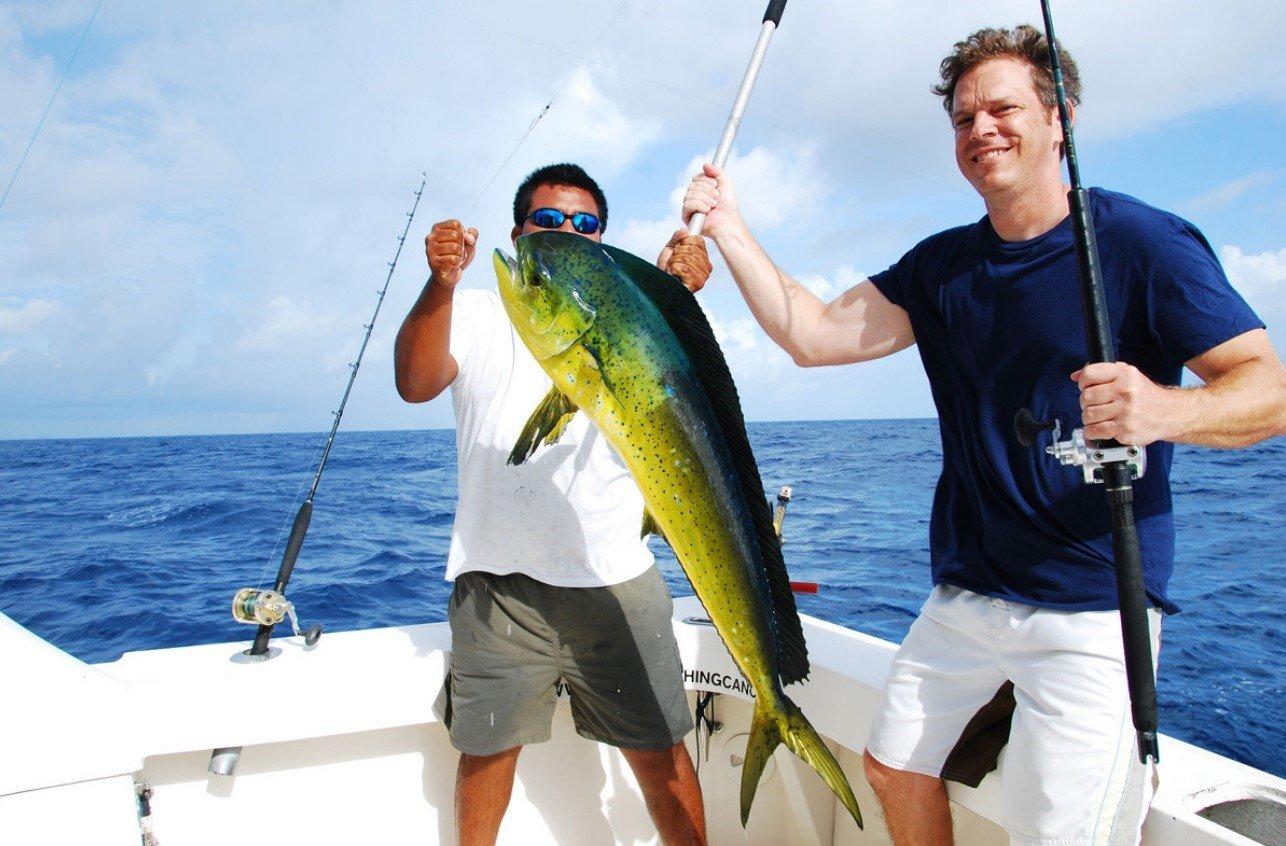
Dorado, also known as mahi-mahi, are among the most recognizable fish in Baja.
They are fast, acrobatic and almost absurdly colorful when they first come alongside the boat. Bright yellows, blues and greens flash across their bodies, which makes a dorado look considerably more tropical than something that just spent several minutes trying to destroy your fishing tackle.
Dorado generally become more prominent as the Sea of Cortez warms. Summer and fall can produce excellent opportunities, with October fishing reports around La Paz regularly showing dorado as an important part of the catch.
Yellowtail
Yellowtail are powerful fish associated with cooler water and are particularly popular with anglers who enjoy strong fights near structure.
Spring can be an excellent transition period. Reports around La Paz in April and May have documented yellowtail in the 10–30 pound range and sometimes larger, with anglers catching them on live bait and jigs.
As summer water temperatures climb, the yellowtail bite usually becomes less dependable, although changing thermoclines can sometimes keep fish around longer than expected.
Roosterfish
Few fish look quite like a roosterfish.
Their long comb-like dorsal fin gives them their name, and they are one of Baja’s most iconic inshore sportfish.
Roosterfish often move through shallower coastal areas and can provide spectacular light-tackle fishing. They are particularly exciting because you may be fishing relatively close to beaches rather than heading miles offshore.
Spring and early summer can bring increasingly strong roosterfish opportunities as the water warms, with local reports documenting fish ranging from small juveniles to specimens weighing dozens of pounds.
Wahoo
Wahoo are built for speed.
Long, streamlined and powerful, they are among the fish that can turn a peaceful trolling session into complete chaos in approximately two seconds.
They are not equally predictable every year, but fall can produce strong runs. An October 2024 La Paz-area report described an unusually active wahoo bite around the north and south ends of Cerralvo Island, with fish commonly caught while trolling diving lures.
Tuna
Yellowfin tuna can also appear in the waters around La Paz, particularly during warmer periods.
Tuna fishing can involve trolling, live bait or locating areas where feeding activity is concentrated. Size varies dramatically, which means the fish on the other end of the line may be manageable—or may suddenly turn your relaxing vacation activity into cardio.
Marlin and Sailfish
Billfish add another level of excitement to fishing in La Paz Mexico.
Striped, blue and other marlin species can occur in the region, along with sailfish. Their presence varies with water temperature, bait and seasonal conditions, but summer and fall reports frequently include billfish among the offshore species encountered around southern Baja.
These fish are also among the species specifically protected within Mexico’s sport-fishing framework.
Pargo, Cabrilla and Other Reef Fish
Not every great fishing day requires chasing something halfway across the Sea of Cortez.
Rocky areas around Baja support species such as pargo, snapper and cabrilla. These fish often hold around reefs, underwater structure and rocky shorelines and can provide excellent action using bait or jigs.
They are particularly useful when offshore conditions are less cooperative or when anglers simply want variety.
Best Time for Fishing in La Paz Mexico
There is no single best month for every angler because the answer depends on what you want to catch.
That is actually one of La Paz’s strengths.
Instead of asking, “When is fishing good?” it is more useful to ask, “What do I want to fish for?”
Fishing Seasons in La Paz Mexico
| Season | Common Fishing Opportunities | General Conditions |
|---|---|---|
| January–March | Yellowtail, sierra, pargo, cabrilla | Cooler water, possible northern winds |
| April–May | Yellowtail, roosterfish, dorado beginning to appear, wahoo possibilities | Transition season, warming water |
| June–July | Dorado, roosterfish, marlin, sailfish, tuna, some yellowtail | Warm weather and increasing blue-water activity |
| August–September | Dorado, tuna, billfish, wahoo, roosterfish | Very warm water and hot weather |
| October | Dorado, wahoo, tuna, billfish, some cooler-water species returning | Excellent variety, seasonal transition |
| November–December | Yellowtail, sierra, amberjack, pargo and remaining warm-water species | Cooling conditions and increasing wind |
These are broad seasonal patterns rather than promises. Fish are annoyingly uninterested in tourism calendars.
Sea temperatures, wind, bait concentrations and currents can move a bite earlier or later from one year to the next. Local reports illustrate this clearly: yellowtail were still being caught into June during one recent season because cooler water remained beneath the surface even as summer temperatures increased.
Fishing in La Paz Mexico During Spring
Spring is one of the most interesting seasons because the fishery begins changing.
Cooler-water yellowtail can still be active while warming conditions begin bringing roosterfish, dorado, wahoo and other species into the picture. April and May reports around the La Paz and Las Arenas zones have shown impressive mixtures of species during this transitional period.
Weather is also generally easier to tolerate than the hottest months of summer.
For anglers who enjoy variety and do not need one specific trophy fish, spring can be an excellent choice.
Summer Fishing in La Paz
Summer is when the Sea of Cortez really begins feeling tropical.
Water temperatures rise, dorado become increasingly common and billfish, tuna and roosterfish can all become part of the conversation. June fishing reports around La Paz have recorded a particularly broad mix of warm-water species while yellowtail sometimes remain around deeper cool-water layers.
The tradeoff is heat.
Daytime temperatures can become intense, particularly by July and August. Early departures are common for a reason. The sunrise is beautiful, fishing conditions are often more comfortable, and nobody wants to discover at noon that sunscreen was the one item they forgot at the hotel.
Fall Fishing in La Paz Mexico
For anglers who want warm-water action and species variety, fall deserves serious attention.
Dorado can remain a major target, while wahoo, tuna and billfish may also be present. An October La Paz-area fishing report described strong dorado catches alongside an unusually productive wahoo run and encounters with sailfish, striped marlin and blue marlin.
As temperatures eventually begin cooling, species associated with cooler water start appearing again.
Fall does overlap with the eastern Pacific hurricane season, however, so weather flexibility matters. A perfect fishing plan still loses arguments with tropical storms.
Winter Fishing in La Paz
Winter changes the personality of the fishery.
Water becomes cooler, some warm-water species become less reliable and anglers increasingly focus on fish such as yellowtail, sierra, pargo, cabrilla and other cooler-season targets.
Wind becomes one of the more important factors.
Northern winds can create rougher conditions in the Sea of Cortez during winter. Historical and contemporary Baja fishing reports regularly mention windy periods limiting access to open water during cooler months.
That does not mean winter fishing is bad.
It means choosing the right day—and listening to a local captain—becomes particularly important.
Best Fishing Areas Around La Paz
Fishing grounds extend well beyond the city’s waterfront.
Official tourism information from Baja California Sur identifies the waters around Espíritu Santo Island and Cerralvo Island as important sport-fishing areas accessible from La Paz.
Espíritu Santo Island Area
The waters surrounding Espíritu Santo offer dramatic scenery as well as fishing opportunities.
Rocky coastline, channels and deeper water create varied habitat, and local fishing reports have documented yellowtail around the island during spring.
The wider area is also known for its exceptional marine biodiversity, which means a fishing trip can include far more than fish on the line.
Cerralvo Island
Cerralvo Island, officially known as Jacques Cousteau Island, sits farther southeast and is surrounded by productive fishing grounds.
Depending on the season, anglers may encounter wahoo, dorado, roosterfish, tuna and other gamefish in the area. Cerralvo is especially associated with some of the more adventurous fishing trips from the La Paz and Las Arenas region.
Las Arenas and Bahía de los Muertos
Traveling south from La Paz opens access to the Las Arenas and Bahía de los Muertos fishing zone.
This area is popular because of the variety available around Cerralvo and nearby waters. Recent spring fishing reports have shown yellowtail, roosterfish, dorado, wahoo, pargo, cabrilla and tuna within the broader Las Arenas fishery.
If variety matters more than targeting one exact species, this area is worth discussing with your charter operator.
What Is a Fishing Trip in La Paz Actually Like?
Expect an early alarm.
Fishing trips commonly begin around sunrise because morning conditions can be cooler and calmer, and reaching productive fishing grounds may take time.
You may leave from La Paz itself or travel by road to another launch point depending on the target species and season.
Once aboard, your captain will usually decide whether to begin trolling, search for bait, run toward structure or head into deeper water based on recent fishing activity.
Then comes the part every angler understands.
You wait.
You talk.
You watch birds.
Someone eats something.
You begin wondering whether fish even exist.
And then a reel starts screaming.
That sudden shift is what makes sport fishing addictive. Ten quiet minutes can disappear instantly when a dorado jumps behind the boat or a yellowtail heads directly for rocky structure.
Panga Fishing vs. Larger Sportfishing Boats
One of the distinctive parts of fishing in Baja is the panga.
Pangas are relatively small open boats used throughout Mexico and are extremely common for local sport fishing. They are practical, maneuverable and often more affordable than large offshore vessels.
A larger sportfishing boat may offer more shade, storage, comfort and amenities, especially for longer trips.
| Panga | Larger Sportfishing Boat |
|---|---|
| Smaller and more traditional | More space and comfort |
| Often more affordable | Usually more expensive |
| Great for 1–3 anglers | Better for larger groups |
| Close-to-the-water experience | More protection from sun and spray |
| Excellent for inshore and offshore fishing | Comfortable for longer offshore runs |
Neither is automatically better.
If you want a simple, authentic Baja fishing day, a panga can be perfect.
If someone in your group hears the phrase “six hours without a bathroom” and immediately stops smiling, a larger boat may be the wiser decision.
Fishing Techniques Used in La Paz
The technique depends largely on the species being targeted.
Live Bait Fishing
Live sardinas, mackerel and other baitfish are widely used for species such as yellowtail, roosterfish and dorado.
A good local captain understands how bait is moving and where predatory fish have been feeding.
Trolling
Trolling allows anglers to cover water while pulling lures or bait behind the boat.
This method is frequently used for pelagic species such as dorado, wahoo, tuna and marlin.
Jigging
Jigs can be particularly effective around deeper structure for species such as yellowtail, pargo and amberjack.
It is also a very efficient way to discover muscles in your shoulders that apparently did not exist before the trip.
Inshore Fishing
Roosterfish, jack crevalle and other coastal species can sometimes be targeted relatively close to shore using live bait, casting or trolling.
For travelers who would rather see land somewhere on the horizon, inshore fishing can be an excellent option.
Marine Life You May See While Fishing in La Paz
Fishing trips in the Sea of Cortez often double as wildlife experiences.
The region supports an extraordinary diversity of marine animals. Depending on location and season, travelers may encounter dolphins, rays, sea lions, seabirds, turtles and other marine wildlife while traveling between fishing grounds.
That is part of what makes fishing in La Paz Mexico different from simply spending a day trying to catch something.
You are moving through an ecosystem.
Some mornings, the fish you catch will be the story.
On others, it may be a pod of dolphins crossing the bow or rays moving through clear water beside the boat.
Keeping some attention away from the fishing rod is usually worth it.
Weather and Conditions for Fishing in La Paz
La Paz has a dry desert climate, which means plenty of sunshine throughout the year.
But the Sea of Cortez has its own personality.
Summer can be extremely hot, while winter can bring strong northerly winds. Tropical weather becomes a bigger consideration from late summer into fall.
The most comfortable fishing conditions usually involve:
Light wind
Manageable swell
Clear weather
Stable barometric conditions
Appropriate water temperature for the target species
A reputable charter operator should always prioritize conditions over a rigid schedule.
When a local captain says the water is too rough, this is rarely the moment to demonstrate your optimism.
Do You Need a Fishing License in La Paz Mexico?
Yes, if you are fishing from a boat.
Baja California Sur’s official sport-fishing permit information states that permits are personal and non-transferable and are required when participating in sport fishing aboard a vessel or when practicing underwater fishing.
FONMAR also states that sport anglers are required to carry the appropriate permit while participating in recreational fishing.
Many charter operators can help organize licenses, but you should confirm whether the permit is included before your trip.
Rules and fees can change, so check the current FONMAR or Baja California Sur government information rather than relying on an old blog post.
Fishing Rules and Catch Limits in Mexico
Mexico regulates sport fishing, and some of Baja’s most famous gamefish receive specific protection.
Under Mexico’s sport-fishing regulations, marlin, sailfish, swordfish, tarpon, roosterfish and dorado are reserved for recreational sport fishing within a coastal zone extending 50 nautical miles from shore.
General daily catch rules use a point-based system. FONMAR explains that anglers may not keep more than five fish of the same standard species, while stricter limits apply to species such as billfish, dorado and roosterfish.
Catch cannot legally be commercialized.
Because regulations can be updated and individual species may have additional restrictions or closures, always confirm the current rules with FONMAR and your captain before fishing.
Catch and Release in La Paz
You do not have to keep everything you catch.
Catch and release is particularly important for large sportfish and species that anglers may want future generations to encounter.
Mexican sport-fishing regulations specifically allow anglers to continue fishing beyond retention limits when excess fish are returned in conditions suitable for survival.
Proper release practices matter.
Keep handling time short, avoid unnecessary damage to the fish and follow your captain’s instructions. Circle hooks and other release-friendly practices may also help reduce injuries depending on the fishing method.
The photograph usually lasts longer than the fish taco anyway.
What Should You Bring on a La Paz Fishing Trip?
A good charter usually provides the major fishing equipment, but there are several things you should bring yourself.
Consider packing:
Polarized sunglasses
Reef-conscious sunscreen
Hat
Lightweight long-sleeve shirt
Water
Snacks
Motion-sickness medication if needed
Camera or waterproof phone case
Light jacket during cooler months
Comfortable non-slip shoes
Ask whether food, drinks, tackle, bait, licenses and fish cleaning are included before departure.
It is much easier to ask the night before than to discover at sunrise that everyone assumed somebody else was bringing lunch.
Is Fishing in La Paz Good for Beginners?
Absolutely.
You do not need to know how to tie complicated knots or identify every species before stepping aboard.
A good captain can handle most of the technical work and show beginners how to use the equipment.
For first-time anglers, the most important things are listening to instructions and being prepared for some waiting between periods of action.
Fishing is not an amusement-park ride.
There may be quiet stretches.
That is also part of the experience: open water, mountains in the distance and absolutely no email notifications unless you make the questionable decision to check them.
Is La Paz Fishing Good for Families?
Fishing can be an excellent family activity if the trip is chosen carefully.
Shorter inshore trips may work better for children or anyone unfamiliar with being on boats. Experienced anglers may prefer longer excursions targeting offshore species.
Before booking, consider:
Ages of children
Experience on boats
Seasickness
Shade
Bathroom availability
Trip duration
Typical sea conditions
Distance from shore
The biggest fish is not necessarily what makes the best family trip.
Sometimes staying comfortable enough that everyone still likes each other when you return to the marina is the more important victory.
How Long Should a Fishing Charter Be?
Half-day trips can work well for casual anglers and families.
Full-day trips give experienced anglers more flexibility to reach distant fishing grounds and change targets if the first plan does not work.
| Trip Length | Best For |
|---|---|
| 4–5 hours | Beginners, families, casual fishing |
| 6–8 hours | Serious fishing and broader range |
| Full day | Offshore targets and distant fishing grounds |
| Multiple days | Dedicated fishing vacations |
If fishing is one activity within a larger Baja trip, a half or three-quarter day can be enough.
If catching a specific species is one of the main reasons you came to La Paz, give yourself more time.
Fishing in La Paz vs. Los Cabos
Travelers often compare these two Baja fishing destinations.
Los Cabos is internationally famous for offshore sport fishing and has a large charter fleet focused heavily on pelagic species.
La Paz feels different.
The Sea of Cortez setting, nearby islands, smaller fishing communities and access to locations such as Espíritu Santo, Cerralvo and Las Arenas create a more relaxed experience.
Neither destination is automatically better.
Choose La Paz if you want fishing to feel like part of a broader Sea of Cortez adventure rather than simply another offshore charter from a large resort destination.
Fishing in La Paz as Part of an Adventure Vacation
This is where La Paz becomes particularly attractive.
You do not need to build an entire vacation around fishing.
A morning on a panga can be followed by snorkeling, diving, island exploration, photography, beaches or simply walking along the Malecón with the satisfaction of having spent your morning somewhere considerably more interesting than a hotel breakfast buffet.
That combination works especially well for groups or couples where not everyone is equally obsessed with fishing.
One person can chase yellowtail.
Another can go snorkeling.
Everybody still gets the Sea of Cortez.
Frequently Asked Questions About Fishing in La Paz Mexico
What is the best month for fishing in La Paz Mexico?
There is no single best month for every species. Spring is excellent for transitional fishing, summer and early fall favor many warm-water species, and cooler months can be strong for yellowtail and other seasonal fish. If variety is your priority, late spring through fall can be particularly interesting.
What fish are La Paz Mexico known for?
Common sport-fishing targets include dorado, yellowtail, roosterfish, tuna, wahoo, marlin, sailfish, pargo and cabrilla. Availability changes throughout the year.
When is dorado season in La Paz?
Dorado generally become more prominent as water warms, with summer through fall often providing strong opportunities. Local reports have shown productive dorado fishing continuing into October.
When can you catch roosterfish in La Paz?
Roosterfish become increasingly active as coastal waters warm during spring and summer, although exact timing changes from year to year.
Can beginners go fishing in La Paz?
Yes. Many fishing charters welcome beginners and provide rods, tackle and instruction. Choosing an experienced local captain is more important than arriving with fishing expertise.
Do I need a fishing license in La Paz?
If you are fishing from a boat, you should have a valid individual sport-fishing permit. Baja California Sur’s official permit system treats these licenses as personal and non-transferable.
Can I keep the fish I catch?
Some fish can be retained within legal catch limits, while other circumstances may call for release. Sport-fishing regulations establish daily limits and additional restrictions for species including marlin, dorado and roosterfish.
Is fishing in La Paz available year-round?
Yes, but the target species change with water temperatures and weather. Winter may favor yellowtail and other cooler-water fish, while summer and fall bring more warm-water species.
Is La Paz good for deep-sea fishing?
Yes. Offshore waters can produce tuna, dorado, wahoo, marlin and sailfish depending on the season, while islands and coastal structure also create excellent inshore and reef fishing opportunities.
Fishing in La Paz Mexico Is About More Than the Catch
The fish are obviously important.
You did bring a fishing rod, after all.
But one of the reasons fishing in La Paz Mexico is such a rewarding travel experience is everything surrounding the fishing.
You are spending the day on the Sea of Cortez with desert mountains on the horizon, islands nearby and some of Mexico’s most diverse marine life beneath the boat. One season might put you onto yellowtail around rocky structure. Another might have you chasing bright dorado across warm blue water or watching a roosterfish race through the shallows.
Some days produce trophy fish.
Some produce smaller fish.
Some produce stories about the enormous one that definitely would have been your personal record if it had not mysteriously escaped ten feet from the boat.
That uncertainty is part of the adventure.
If you want to build fishing in La Paz Mexico into a larger Baja experience, MExplor can create a Custom Camp around the way you want to travel. Combine fishing with snorkeling, diving, photography, marine adventures and other experiences instead of trying to squeeze everything into disconnected day trips.
Come for the Sea of Cortez.
Just be prepared for it to give you several reasons to stay on the water a little longer.
