

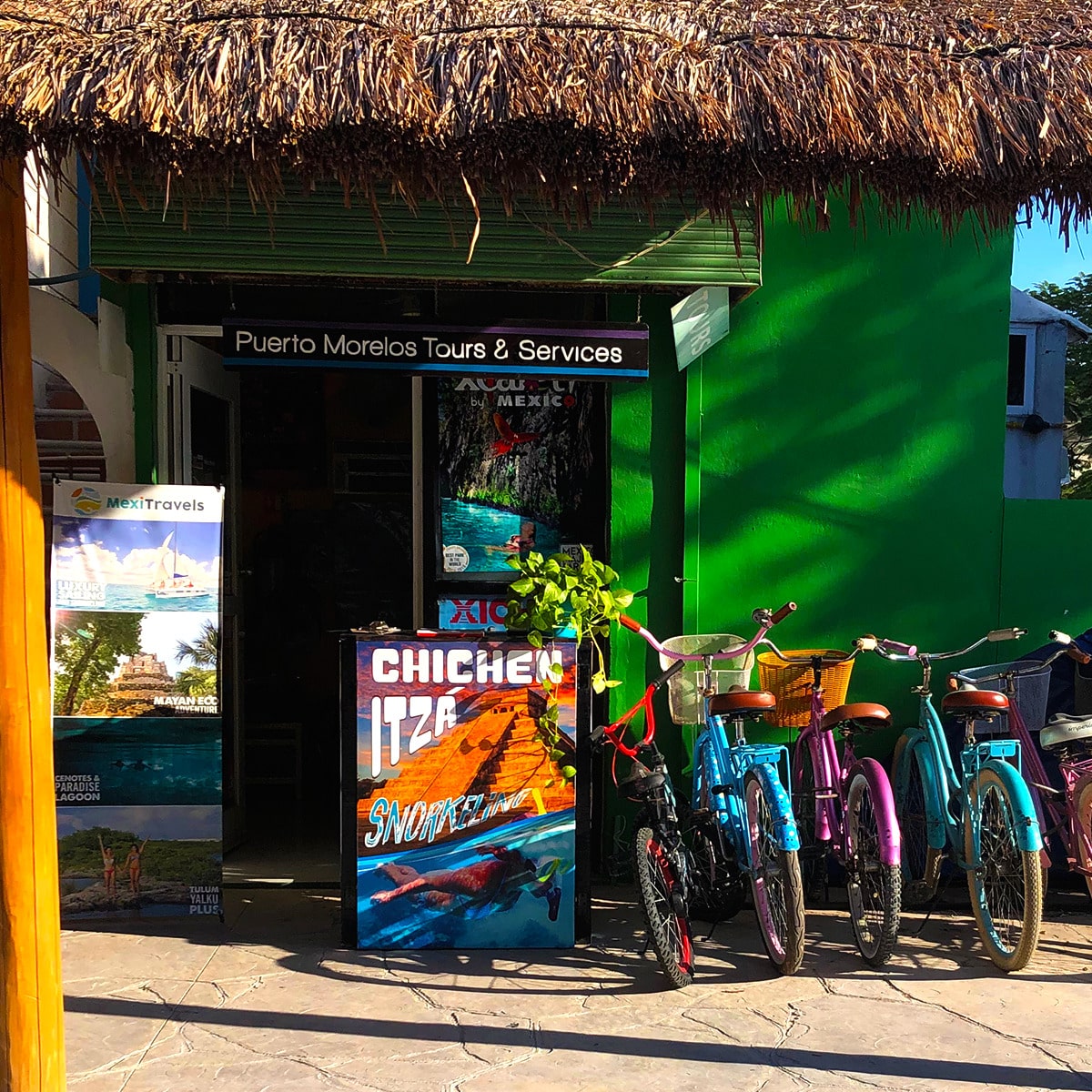
A row of colourful bicycles outside a shop. Handmade pieces arranged at a market stall. Someone crossing a square as the afternoon light reaches the pavement. These everyday scenes can become some of the photographs you remember most from a trip.
Mexico street photography begins with paying attention to the places and people around you. You do not need an elaborate setup or a packed schedule. A camera or phone, a little patience and an interest in your surroundings can give you a starting point.
Here, we explore five creative ways to approach street photography, using scenes from the Mexican Caribbean as inspiration. The aim is to enjoy discovering a place while bringing home photographs that say something about your time there.
What Is Street Photography?
Street photography explores everyday life in shared spaces. People often appear in the frame, but a photograph can also tell a story through objects, signs, architecture or traces of human activity.
A bicycle beside a doorway might suggest a daily routine. A market display can reveal colour, craftsmanship and the way a space is used. The interest comes from noticing how these details relate to their surroundings.
During a trip, this approach encourages you to look beyond the main attraction. A familiar landmark can become part of the background while something small and unexpected becomes the subject.
1. Start With an Everyday Scene
Give yourself time to look before lifting the camera. What first catches your attention: a colour, a gesture, a repeated shape or the way people move through a space?
Choose one element and build your photograph around it. At a market, that might be a display of handmade objects with enough of the stall visible to show their setting. In a square, it could be the relationship between a person and the open space around them.
You do not need to include everything you can see. A clear subject often makes a photograph easier to understand.
For Mexico street photography, everyday scenes offer a useful starting point because they invite you to observe rather than rush between locations. Stay curious about what is happening, while leaving room for people to carry on with their day.

2. Let Colour and Light Guide Your Composition
Colour can help you notice a scene before you know exactly how to photograph it. A green wall, a bright bicycle or a painted doorway may give your image a natural focal point.
Look at what surrounds that colour. Does the background help it stand out? Would taking a small step to one side remove a distracting sign or bring two shapes together?
Light changes the mood too. Direct sunshine can create strong shadows and sharp contrasts. Shade can make it easier to see details without the same difference between bright and dark areas.
Try photographing the same scene from two positions. Compare what changes, then choose the version that best expresses what caught your attention. This small experiment is often more useful than taking many nearly identical pictures.
3. Include People With Consideration
People bring movement and context to street photography, but their comfort matters more than completing a photograph.
When someone will be the clear focus of your image, a friendly conversation and a request for permission are a considerate starting point. If they decline or seem uncomfortable, move on. A pleasant encounter can be part of the memory even when it does not lead to a photograph.
At markets and shops, avoid interrupting work or blocking access. Ask before photographing a vendor’s display at close range, particularly if you are stepping into their space.
You can also photograph everyday life without making a person identifiable. Objects, shadows, doorways and wider scenes provide other ways to tell the story of a place.
Respectful photography leaves people free to enjoy their own day.
4. Look Beyond the Landmark
A landmark helps viewers recognise a destination. The surrounding scene can make your photograph more personal.
In a public square, look at how the structure relates to the people around it. You might include someone walking across the foreground, the shadow of a palm or a small detail that gives a sense of scale.
The photograph of Playa del Carmen’s seaside sculpture is one example: the monument establishes the setting, while the people and open space show how the place is experienced.
For more local inspiration, our Puerto Morelos photography guide introduces different settings around the town. Use it to get to know the area, then look for your own perspective when you visit.

5. Build a Small Photo Story
Instead of treating every photograph as a separate result, try making a short sequence. Three different views can communicate more about your experience than several versions of the same scene.
| Photograph | What to look for |
|---|---|
| A wider view | Enough of the surroundings to establish the place. |
| An everyday moment | An interaction, movement or arrangement that draws your attention. |
| A detail | A texture, colour or object that adds something specific to the story. |
You might begin with a view of a market, follow it with a stall photographed with permission, and finish with a detail that attracted you.
Review the sequence later. Keep the images that each contribute something different. This approach gives your Mexico street photography a sense of connection without turning your walk into a long checklist.

Make Photography Part of Your Trip With MExplor
Photography can fit naturally into the way you enjoy a destination. Perhaps you like exploring with your phone, or you would welcome time to practise composition with your camera.
At MExplor, tell us what you enjoy photographing, where you will be staying and when you plan to visit. We can discuss suitable options and explain what each proposed experience includes.
If you are considering a more guided approach, our guide to photography tours and workshops explains the differences between formats. It can help you decide what kind of support would make the experience worthwhile for you.
There is no need to arrive with a finished shot list. Sharing a few interests gives us somewhere to begin.
Mexico Street Photography: Frequently Asked Questions
Do I need a professional camera?
No. A phone can help you practise observation, framing and timing. Use equipment you feel comfortable carrying and operating so that it supports your experience.
Does street photography always include people?
No. Objects and surroundings can suggest everyday life without showing a person. A shopfront, a bicycle or a market display can all become subjects, depending on how you frame them.
Can I practise during a relaxed trip?
Yes. You can spend a short part of a walk noticing a scene rather than planning an entire day around photography. Leave time to enjoy the place without looking through a screen.
Does MExplor offer a dedicated street photography workshop?
Ask the team about the current options for your dates and destination. This article offers creative guidance; a dedicated workshop, instructor or itinerary should be confirmed as part of the experience you choose.
Bring Home a Story You Noticed
Mexico street photography gives you a reason to look more closely at everyday surroundings. The image you value most may come from a brief conversation, an interesting arrangement of colours or a detail you nearly walked past.
Take your time, be considerate and leave space for discovery. If photography is part of what you would love to explore on your trip, tell MExplor what interests you.
Also you are interested

Diving into the Wonders: Your Ultimate Guide to Sea of Cortez Diving
Discover the Marine Majesty: Your Sea of Cortez Diving Experience Begins Here Have you ever imagined diving into a world filled with vibrant marine life,

Cabo Pulmo Diving Prices : Plan Your Underwater Adventure
Beneath the azure surface of Cabo Pulmo lies an underexplored world brimming with life, an untouched paradise that beckons the bold and the curious. But
9 ingredientes prehispánicos mexicanos y sus usos en la actualidad
Un pedacito de nuestro México prehispánico. Conoce el antiguo legado de los ingredientes nativos del país Existe una infinidad de platillos que han adornado nuestra mesa desde tiempos inmemorables. Algunos platillos esconden ingredientes que,
