

Photography Walking Tour: See a Destination Differently Through Your Camera
Most travelers walk through a beautiful place trying to see as much as possible.
Photographers tend to do the opposite.
They stop.
They notice the reflection in a window, the way afternoon light hits an old doorway, the person selling fruit beneath a brightly colored umbrella, or the tiny street that everyone else walked past because it was not marked as an attraction on Google Maps.
That is the idea behind a photography walking tour.
Instead of racing from landmark to landmark, you explore a destination slowly with your camera or phone in hand. Along the way, you learn how to work with light, improve composition, photograph architecture and people, and notice scenes you probably would have missed on a normal sightseeing tour.
And no, you do not need an expensive camera hanging around your neck.
Current photography walking tours in destinations such as London, Florence, Paris and Cartagena regularly welcome everything from smartphones to mirrorless and DSLR cameras, with instruction adjusted to the photographer’s experience level.
A photography walking tour can therefore be part photography lesson, part cultural exploration and part excuse to wander slowly through a place that deserves more than a quick selfie.
What Is a Photography Walking Tour?
A photography walking tour is a guided experience where you explore a neighborhood, historic center, natural area or other destination on foot while practicing photography.
Unlike a traditional sightseeing tour, photography is not something you squeeze in between explanations.
It is the point of the experience.
You stop when the light is interesting. You wait for someone to walk through the frame. You experiment with angles. You may photograph the same building five different ways before realizing the first photograph was probably not the best one.
Many tours are led by professional photographers or local photographers who combine technical instruction with knowledge of the area. Current tour formats commonly include practical coaching in composition, exposure, light and camera settings while participants photograph real locations rather than learning inside a classroom.
That makes the learning much easier to understand.
Instead of hearing someone explain leading lines on a slide, you find them in an actual street.
Instead of talking theoretically about difficult light, you photograph it.
Why Take a Photography Walking Tour While Traveling?
There are approximately seventeen million ways to photograph a famous landmark exactly like everyone else.
A photography tour encourages you to find the eighteenth.
When you travel independently, it is natural to concentrate on the obvious attractions. You arrive, take the classic photograph, move to the next place and repeat.
A photography walking tour slows the process down.
You begin looking for:
Interesting light
Street scenes
Architecture
Patterns and textures
Local details
Reflections
Movement
People
Markets
Small cultural moments
Different perspectives of familiar landmarks
That shift can completely change how you experience a destination.
You are not simply documenting where you went.
You are trying to tell a visual story about what being there actually felt like.
Photography Walking Tour vs. Regular Walking Tour
The two experiences may cover some of the same streets, but the priorities are different.
| Regular Walking Tour | Photography Walking Tour |
|---|---|
| Focuses primarily on history and information | Focuses on photography and visual storytelling |
| Moves between major attractions | Stops wherever photographic opportunities appear |
| Photos are usually quick stops | Time is deliberately allowed for shooting |
| Guide is generally a tourism specialist | Guide may be a professional photographer |
| Route follows important landmarks | Route may include alleys, markets and overlooked locations |
| Main goal is learning about the destination | Main goal is seeing and photographing the destination |
This does not mean you learn nothing about the place during a photography tour.
A good local photography guide can provide cultural context while showing you where to photograph.
But photography remains the main event.
If you want a two-hour lecture on architectural history, book a historical tour.
If you want to spend ten minutes waiting for exactly the right person to walk beneath an archway, you have found your people.
Do You Need Photography Experience?
No.
One of the biggest misconceptions about a photography walking tour is that it is only for serious photographers with expensive equipment.
In reality, many photography tours specifically welcome beginners and smartphone photographers. Current walking tours in several major destinations explicitly accommodate phones, compact cameras, mirrorless cameras and DSLRs while adapting instruction to different experience levels.
A complete beginner might work on:
Framing
Composition
Finding better angles
Understanding light
Basic exposure
Focus
Holding the camera steadily
A more experienced photographer might focus on:
Manual exposure
Street photography
Visual storytelling
Layered compositions
Creative shutter speeds
Working with difficult lighting
Developing a more consistent photographic style
The most important equipment you bring is curiosity.
Yes, that sentence sounds suspiciously inspirational.
Unfortunately, it is also true.
Can You Do a Photography Walking Tour With a Smartphone?
Absolutely.
Modern smartphones are more than capable of producing excellent travel photographs, especially in good light.
More importantly, composition does not suddenly become irrelevant because you are using a phone.
You can still practice:
Framing
Perspective
Light
Symmetry
Reflections
Color
Silhouettes
Storytelling
Foreground and background relationships
Several current photography tours openly encourage participants to bring smartphones if that is the camera they normally use.
In some ways, a phone can actually make street photography easier.
It is lightweight, discreet and always ready.
The best camera for a walking tour is not necessarily the most expensive camera.
It is the one you know how to use quickly enough that the interesting moment does not disappear while you are searching through menus.
What Do You Learn on a Photography Walking Tour?
A good photography walk should leave you with more than a memory card full of pictures.
You should understand why some photographs work better than others.
The specific lessons depend on your experience level, but several ideas appear repeatedly across photography walking experiences.
Learning Composition in Real-Life Situations
Composition is simply how you arrange everything inside the frame.
Beginners often point the camera at the subject, place it directly in the center and press the button.
Sometimes that works.
Sometimes it produces a photograph that looks exactly like the 4,000 other photographs taken at that location before lunch.
During a photography walk, you can experiment with concepts such as:
Rule of thirds
Leading lines
Symmetry
Frames within frames
Negative space
Foreground elements
Layers
Repetition
Perspective
Balance
The advantage of practicing outside is that the environment changes constantly.
Cars move.
People appear.
Light changes.
A boring composition can suddenly become interesting because someone with a red umbrella walked into exactly the right place.
Photography teaches patience in some surprisingly specific ways.
Understanding Light During a Photo Walk
Photography is essentially an elaborate way of collecting light.
So learning to notice light is one of the most valuable skills you can develop.
During a photography walking tour, you may work with:
Soft Light
Cloud cover or shade can create gentle, even illumination that works beautifully for people, details and colorful streets.
Hard Light
Strong midday sun produces deep shadows and bright highlights.
Many photographers complain about it.
Creative photographers start looking for interesting geometry, contrast and silhouettes.
Backlighting
Placing your subject between the camera and the light can produce glowing edges, silhouettes and atmospheric images.
Reflected Light
Sunlight bouncing from walls, pavement, water or windows can create softer illumination in places where direct light would be harsh.
Once you begin noticing these differences, walking through a city becomes a completely different visual experience.
You stop thinking, “That street looks nice.”
You start thinking, “That light will be incredible from the other side.”
Golden Hour Photography Walking Tours
One of the most popular times for photography is golden hour, the period around sunrise or before sunset when the sun is lower in the sky.
The exact character and duration depend on latitude, season and weather, but the softer directional light frequently creates attractive conditions for landscapes, streets, portraits and architecture.
A late-afternoon photography walk can be especially enjoyable because the appearance of the same location changes rapidly as the sun gets lower.
A plain wall suddenly catches warm light.
Windows begin reflecting the sky.
Long shadows create lines across the street.
Then sunset arrives and everybody on the tour quietly begins photographing everything.
Blue Hour and Evening Photography
Do not immediately put your camera away when the sun disappears.
The period after sunset can produce some of the most atmospheric travel images.
Street lamps turn on.
Restaurants begin glowing.
Building lights appear.
The sky may hold deep blue tones while the city becomes warmer and brighter below it.
An evening photography walking tour can introduce you to:
Low-light photography
Night street scenes
Light trails
Reflections
Illuminated architecture
Creative shutter speeds
This is where understanding camera stability and shutter speed becomes more useful.
Or, if you are using a phone, where finding a conveniently placed wall suddenly becomes an advanced photography technique.
Street Photography on a Walking Tour
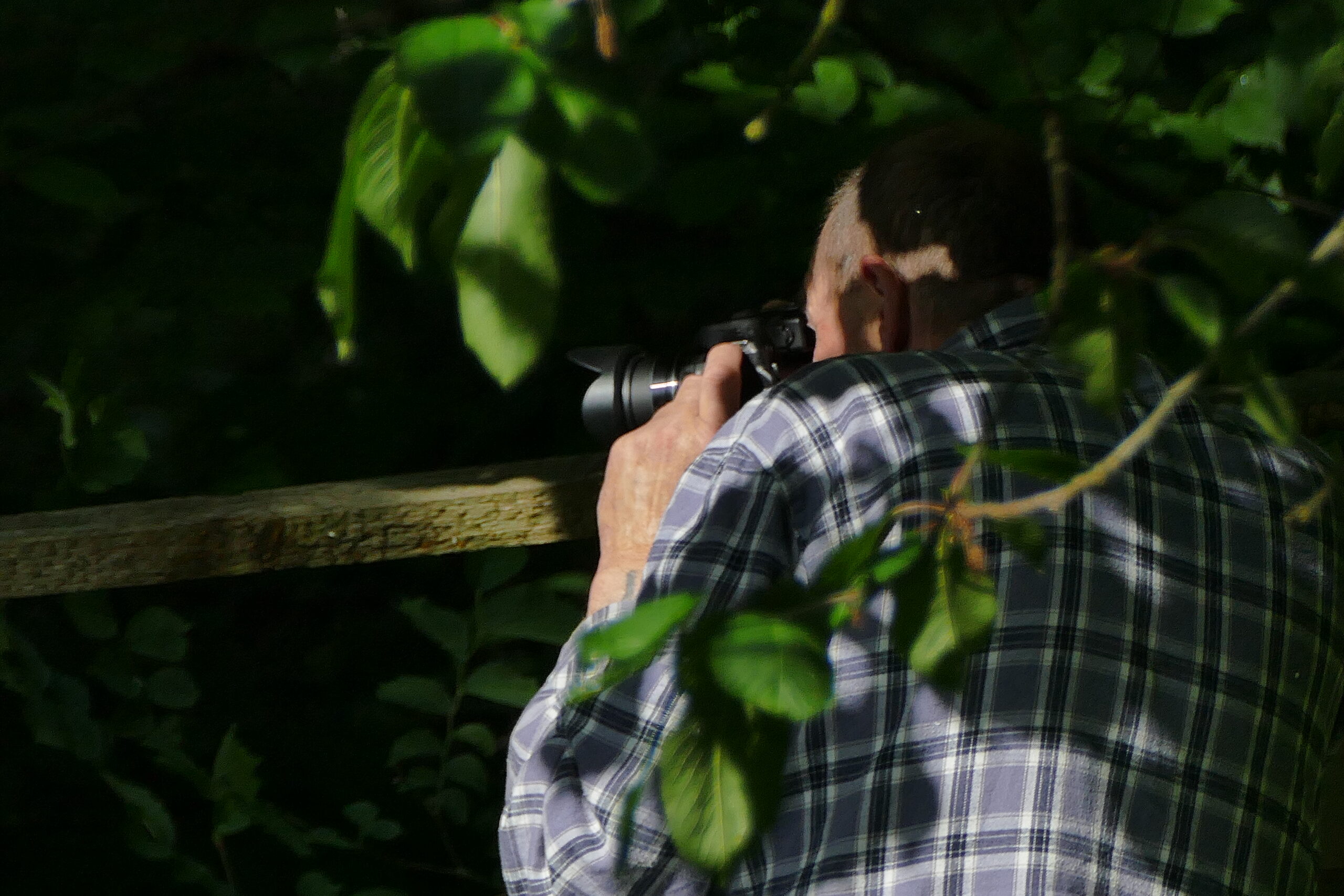
Street photography is one of the most natural subjects for a photography walk.
Instead of photographing only monuments, you begin observing daily life.
That might include:
Street vendors
Cafés
Cyclists
Markets
Musicians
People commuting
Families
Local businesses
Street art
Small interactions
The goal is not necessarily photographing strangers’ faces from ten centimeters away.
Street photography can also focus on gestures, shadows, silhouettes, environments and scenes where people become part of a larger story.
A knowledgeable local guide can be particularly useful here because they understand which areas are appropriate to photograph and when asking permission is the respectful choice.
Photographing Local People Respectfully
Travel photography comes with responsibility.
Just because something looks interesting does not automatically mean you should point a camera at it without thinking.
When someone is clearly identifiable and becomes the main subject of the photograph, asking permission can often be the respectful approach, particularly in intimate situations.
Markets and public streets can be more complicated because customs differ by destination.
A local photography guide can help you understand what is appropriate.
And if someone clearly does not want to be photographed, the solution is extraordinarily simple.
Do not photograph them.
There will be another interesting scene approximately thirty seconds later.
Architecture Photography During a Walking Tour
Architecture is ideal for practicing composition because buildings do not usually walk away while you adjust your settings.
Historic districts can offer:
Doorways
Arches
Balconies
Churches
Old facades
Modern buildings
Staircases
Courtyards
Repeating windows
Interesting shadows
The challenge is finding a way to photograph familiar architecture differently.
Try moving closer.
Look upward.
Use another building as a frame.
Photograph only a detail.
Include people for scale.
Use reflections.
Walking tours are perfect for this because changing your position by only a few meters can completely transform the composition.
Photographing Markets and Local Life
Markets can be photographic chaos.
That is part of their appeal.
Colors, food, hands, signs, movement and interactions are all happening simultaneously.
Instead of trying to photograph everything, choose small stories.
A pile of fruit.
Someone preparing food.
Steam rising from a pan.
A merchant arranging products.
A customer reaching across the counter.
The difference between a tourist snapshot and an interesting travel photograph is often not expensive equipment.
It is deciding what the photograph is actually about.
Landscape and Nature Photography Walking Tours
Not every photography walking tour needs city streets.
Photo walks can also follow beaches, coastal paths, parks, jungle trails or rural landscapes.
In these environments, you can focus on:
Landscapes
Plants
Wildlife
Coastlines
Mountains
Water
Details in nature
Environmental portraits
Nature-based photography walks can be particularly useful for travelers who want to learn how to create a sense of scale.
A beautiful view does not automatically become a beautiful photograph.
Sometimes you need a person, tree, road or foreground element to give the scene structure.
What Camera Should You Bring?
Bring the camera you are comfortable carrying.
A photography walking tour involves the word walking for a reason.
Carrying three camera bodies and seven lenses may sound professionally impressive at 8:00 a.m.
By 11:00 a.m., it may feel like you packed for a Himalayan expedition.
For most travelers, a simple setup works better.
| Photographer | Practical Setup |
|---|---|
| Smartphone user | Phone + portable battery |
| Beginner camera user | Camera + one versatile lens |
| Travel photographer | Mirrorless camera + zoom or compact prime |
| Street photographer | Small camera + 28–50 mm equivalent lens |
| Advanced photographer | Camera + 1–2 lenses based on goals |
Current photography tour guidance also frequently recommends spare batteries, memory cards and comfortable equipment for walking.
You rarely need your entire photography collection.
Best Lens for a Photography Walking Tour
If you use an interchangeable-lens camera, one versatile lens is usually enough.
A standard zoom can be useful because it lets you photograph architecture, details, people and wider scenes without changing lenses constantly.
Prime lenses can also be excellent for street photography because they are smaller and encourage you to physically move to improve your composition.
A 35 mm or 50 mm equivalent field of view is popular for everyday travel photography, while a wider lens can work well for architecture and tight streets.
The real answer depends on how you like to photograph.
If you own seventeen lenses but always reach for the same one when traveling, you already know which lens to bring.
What Else Should You Bring?
Photography gear is only part of the packing list.
Remember that you will also be walking outside.
Bring:
Comfortable walking shoes
Water
Sunscreen
Hat
Spare camera battery
Extra memory card
Small cleaning cloth
Lightweight rain protection when necessary
Portable phone battery
Small backpack or camera bag
Avoid carrying unnecessary equipment.
The more exhausted you become, the less interested you will be in walking three blocks to investigate an interesting street.
How Long Is a Photography Walking Tour?
Many commercial photography walks currently run roughly two to four hours, although formats vary considerably by destination and whether the tour is private or group-based. Current examples include two-hour, three-hour and four-hour photography walks.
Around three hours often provides enough time to explore several areas without turning the experience into an endurance event.
Longer tours may include:
Breaks
Multiple neighborhoods
Different lighting conditions
More personalized instruction
More time for experimentation
A short walk can still be extremely productive if the route is carefully chosen.
Photography has very little to do with how many kilometers you cover.
Private vs. Group Photography Walking Tours
Both formats have advantages.
| Private Photography Tour | Group Photography Tour |
|---|---|
| Personalized instruction | More social atmosphere |
| Flexible pace | Usually more affordable |
| Route may adapt to interests | Meet other photographers |
| More time for questions | Learn by watching others |
| Excellent for beginners | Fun for solo travelers |
| Ideal for specialized photography | Shared creative experience |
A private tour works particularly well if you have a specific goal.
Maybe you want to understand manual exposure.
Maybe you want street portraits.
Maybe you only photograph with your phone and do not want a two-hour discussion about aperture.
Small-group tours can be excellent if you enjoy learning around other creative travelers.
Current photography walks often deliberately keep groups small to preserve hands-on instruction and give participants time to ask questions.
Photography Walking Tours for Solo Travelers
A photography tour is almost perfectly designed for solo travel.
You do not need a companion because the activity already gives the group something in common.
Everyone is looking for images.
Everyone stops unexpectedly.
Nobody complains when you spend five minutes photographing the same doorway.
For solo travelers, guided photography walks can also provide a comfortable way to explore areas you might not discover independently.
And unlike some group tours, silence is not awkward.
Sometimes everyone is simply concentrating.
Photography Walking Tours for Couples
Couples can enjoy a photography tour even if only one person considers themselves a photographer.
You can photograph together, take turns modeling for each other or turn the experience into a creative way of documenting the trip.
A private tour can also combine photography instruction with portraits of the couple.
Some current photography walking experiences explicitly offer both photography coaching and opportunities for portraits during the walk.
The result is more personal than returning from vacation with 400 photographs where one person is missing because they were always holding the camera.
Photography Walking Tours for Beginners
Beginners are often the people who benefit most.
When you teach yourself photography, it is easy to spend hours watching tutorials and still have no idea why your photographs look different from the examples.
During a walk, the instructor can see exactly what you are doing.
They can say:
Move two steps left.
Lower the camera.
Wait for that person.
Try a slower shutter speed.
Do not photograph the trash can.
That immediate feedback can save enormous amounts of trial and error.}
Photography Walking Tours for Experienced Photographers
Experienced photographers can benefit too, especially when visiting somewhere unfamiliar.
Instead of focusing on basic settings, the tour can become more about access and visual discovery.
A local photographer may know:
Which streets catch early morning light
Where markets become active
Interesting viewpoints
Less obvious architecture
Areas with strong street life
Quiet locations away from crowds
Even experienced photographers can become visually lazy when they do not know a destination.
A good local guide helps shorten the search.

Best Time of Day for a Photography Walking Tour
There is no universally perfect time because different light creates different photographs.
| Time | Best For |
|---|---|
| Sunrise | Quiet streets, soft light, landscapes |
| Morning | Markets, local life, comfortable temperatures |
| Midday | Strong shadows, architecture, bright colors |
| Afternoon | Street photography and activity |
| Golden hour | Portraits, landscapes, warm architecture |
| Blue hour | City lights and atmosphere |
| Night | Street lights, motion and creative exposure |
If your main goal is beautiful travel imagery, early morning and late afternoon are often excellent starting points.
But do not automatically avoid midday.
Strong tropical sunlight can create fantastic shadow patterns, saturated colors and high-contrast street scenes.
Good photographers do not wait for perfect light.
They learn what to do with the light they have.
Weather and Photography Walking Tours
Clouds are not necessarily bad news.
Rain is not necessarily bad news either.
Different weather produces different photographic opportunities.
Sunny Weather
Look for shadows, strong colors and reflections.
Cloudy Weather
Soft light can be excellent for portraits, architecture and details.
Rain
Wet streets create reflections, umbrellas add color and cities often feel dramatically different.
Fog
If you are lucky enough to get it, fog can simplify backgrounds and create atmospheric scenes.
Several current photography walking tours operate in varied weather, which is another reason participants are generally advised to dress appropriately rather than assuming perfect conditions.
Your camera may dislike water.
Your photographs do not necessarily have to.
How a Photography Walking Tour Improves Travel Photography
The biggest improvement usually has nothing to do with changing camera settings.
You begin learning to see photographs before taking them.
That means noticing:
Better backgrounds
Cleaner compositions
Interesting light
Layers
Repeated shapes
Moments developing before they happen
Eventually, you stop taking photographs only because something is famous.
You photograph because something visually interests you.
That skill follows you home.
You may discover that your own neighborhood becomes more interesting once you start looking at it the same way.
Turning a Photo Walk Into a Travel Story
Try thinking in groups of images rather than individual photographs.
If you are walking through a neighborhood, capture:
A wide image that establishes the place
Architecture
People
Details
Food or objects
Movement
A quiet moment
A closing image
Suddenly you have a visual story rather than twenty unrelated pictures.
This approach is especially helpful for travel photography, blogs, social media and personal photo books.
It also forces you to pay attention to more than landmarks.
Photography Walking Tour in Mexico
Mexico is almost unfairly good for photography walks.
Historic architecture, colorful streets, markets, tropical vegetation, coastlines, local food, murals and dramatic light create opportunities that change dramatically between destinations.
A photography walk might take you through a historic district in the morning, a busy market later in the day or a coastal area as the light begins to soften.
The key is not trying to photograph “Mexico” as though the entire country were one visual style.
Each destination has its own rhythm, architecture, people and landscape.
A good photography walking tour should encourage you to notice those differences rather than collect the same predictable images everyone else already has.
Combining a Photography Walking Tour With a Photography Trip
One walking tour can teach you a lot.
Several days of photography can change how you shoot.
That is where a photography-focused trip becomes interesting.
Instead of concentrating on a single neighborhood, you can practice in different environments:
Historic streets
Beaches
Markets
Landscapes
Wildlife areas
Underwater environments
Local communities
Sunrise and sunset locations
Changing environments forces you to adapt.
The settings that worked beautifully on a quiet street may be useless for wildlife.
The composition techniques you used for architecture change when photographing people.
That variety helps turn photography knowledge into actual experience.
Practical Tips Before Your Photography Walking Tour
A little preparation makes the experience much more useful.
Charge your equipment.
Clear space on your memory card.
Wear comfortable shoes.
Check the weather.
But also decide what you want to improve.
Maybe your goal is:
Better composition
Understanding manual mode
Street photography
Smartphone photography
Portraits
Architecture
Travel storytelling
Getting comfortable photographing in public
Current photography guides often encourage participants to arrive with a specific photographic question or goal because it allows the instructor to make the experience more useful.
You do not need ten goals.
Choose one or two.
Common Photography Walking Tour Mistakes
Bringing Too Much Equipment
You spend more time changing lenses than photographing.
Simplify.
Walking Too Quickly
Interesting photographs often require waiting.
Slow down.
Photographing Only Landmarks
Look between the attractions.
That is often where the more original photographs are.
Ignoring the Background
The beautiful portrait is considerably less beautiful when a trash bin appears to be growing from someone’s shoulder.
Check the whole frame.
Taking One Photograph and Leaving
Try different heights, distances and angles.
Your first composition is not always your best.
Forgetting to Experience the Destination
This one matters.
Do not spend four hours looking exclusively through a screen.
Occasionally lower the camera.
Look around.
Then photograph.
Frequently Asked Questions About a Photography Walking Tour
What is a photography walking tour?
A photography walking tour is a guided walk designed around taking photographs and improving photography skills. Participants explore a destination on foot while practicing composition, lighting, camera settings and visual storytelling.
Do I need a professional camera?
No. Many current photography walking tours accept smartphones, compact cameras, mirrorless cameras and DSLRs. The most important thing is understanding how to make better photographs with the equipment you already use.
Are photography walking tours good for beginners?
Yes. Beginners can receive immediate guidance on composition, lighting and basic camera operation while practicing in real situations rather than only studying theory.
Can I join a photography walking tour alone?
Yes. Photography walks are particularly suitable for solo travelers because you join an activity built around a shared interest and can explore the destination with a guide.
How long does a photography walking tour take?
Formats vary, but many current tours last approximately two to four hours. Private experiences may be more flexible.
What should I bring on a photography walking tour?
Bring your camera or phone, a charged battery, spare memory if necessary, water, comfortable shoes and weather-appropriate clothing. Keep the equipment relatively light because you will be walking.
What is the best time for a photo walk?
Sunrise and late afternoon can provide beautiful directional light, while morning markets, midday shadows and nighttime city scenes offer completely different opportunities. The best time depends on what you want to photograph.
Are photography walks only for street photography?
No. A photography walk can focus on architecture, landscapes, portraits, culture, food, wildlife, street scenes or a combination of subjects.
Can couples take a photography walking tour?
Yes. Couples can photograph together or combine the walk with travel portraits. Private photo walks can be especially useful when you want both instruction and photographs of yourselves during the trip.
Is a photography walking tour worth it?
It can be particularly valuable when you want both local knowledge and photography instruction. Instead of spending the first several days of a trip finding locations and figuring out the light yourself, a local photographer can help you begin shooting more intentionally almost immediately.
A Photography Walking Tour Changes the Way You Explore
The interesting thing about photography is that the better you become at it, the slower you tend to travel.
You start noticing details.
You wait for light.
You walk down the street that was not part of the original plan.
You realize the best photograph of the afternoon might not be the famous monument at all. It might be a bicycle leaning against a faded wall, a vendor laughing with a customer or sunlight appearing for thirty seconds between two buildings.
That is what makes a photography walking tour more than a photography lesson.
It gives you a reason to pay closer attention to a destination.
And once you start seeing places that way, it becomes difficult to switch it off.
If you want to take that experience further, MExplor’s Photography Camp can turn photography into a larger travel adventure, combining guided photography experiences with different landscapes, local culture and opportunities to practice in real environments. A MExplor Custom Camp can also combine photography with other activities such as diving, snorkeling, dance or outdoor adventures.
Because the best travel photographs rarely happen when you are rushing to see everything.
Sometimes you need to walk a little slower and actually look.
Lorem ipsum dolor sit amet, consectetur adipiscing elit. Ut elit tellus, luctus nec ullamcorper mattis, pulvinar dapibus leo.
