

Learning salsa no longer requires waiting for a local dance class or living near a large salsa community. With salsa dancing lessons online, beginners and experienced dancers can develop their timing, footwork, body movement, partnerwork concepts, and musicality from almost anywhere.
Online salsa classes are especially useful for people who want to learn at their own pace, repeat difficult movements, practice between in-person classes, or prepare before attending salsa socials while traveling.
However, not every online salsa course teaches the same skills or follows the same methodology. Some programs focus almost entirely on choreography, while others build the technical foundation required to dance naturally with different partners.
Understanding how online salsa lessons work, which salsa style to choose, how often to practice, and what skills to prioritize can make the difference between memorizing combinations and becoming a comfortable social dancer.
This guide explains everything you should know before starting salsa dancing lessons online.
What Are Salsa Dancing Lessons Online?
Salsa dancing lessons online are virtual dance classes designed to teach salsa technique through recorded videos, live sessions, structured courses, or private video lessons.
Depending on the platform or instructor, classes may cover:
- Basic salsa steps
- Salsa timing and rhythm
- Partnerwork
- Leading and following
- Footwork and shines
- Body movement
- Turns and spins
- Musicality
- Styling
- Social dancing technique
Some online salsa programs are designed specifically for complete beginners, while others focus on intermediate or advanced dancers who want to improve technique or learn a particular salsa style.
One of the biggest advantages of online learning is the ability to stop, rewind, and repeat a movement until it becomes comfortable.
In a traditional group class, an instructor may demonstrate a movement several times before the class continues. With online instruction, the same five-second section can be replayed as many times as necessary.
Can You Really Learn Salsa Online?
Yes. It is possible to build a substantial salsa foundation through online lessons.
Solo skills such as timing, footwork, balance, coordination, turns, body movement, and musicality are particularly well suited to online instruction.
Partnerwork can also be learned online, especially when two people practice together.
The main limitation is that salsa is ultimately a social dance. Dancing with different partners teaches skills that are difficult to reproduce completely at home, including adapting to another person’s timing, connection, tension, movement, height, experience level, and interpretation of the music.
For this reason, one of the most effective approaches is often:
Online training for technique + real-world social dancing for practical experience.
Online salsa lessons can help you prepare much more effectively for the dance floor because you can already understand basic timing, steps, turns, and partnerwork concepts before entering a social environment.
Benefits of Taking Salsa Dancing Lessons Online
Learn Salsa at Your Own Pace
One of the biggest advantages of learning salsa online is control over your learning speed.
Beginners sometimes need more repetition than a group dance class allows. A recorded salsa lesson makes it possible to repeat the same exercise until the movement becomes familiar.
More experienced dancers can move through basic material quickly and spend more time on technical areas that need improvement.
Practice Without Feeling Self-Conscious
Many people are interested in salsa but feel uncomfortable walking into a dance studio without knowing any steps.
Practicing at home allows beginners to become familiar with basic salsa movements before dancing in front of other people.
Learning basic timing and footwork first can make attending a first salsa class or social much less intimidating.
Practice Anywhere
Online salsa lessons work well for travelers, digital nomads, people living outside major cities, and anyone without consistent access to a dance studio.
A small open space, phone, tablet, laptop, or television is usually enough to practice beginner salsa.
Repeat Technical Lessons
Certain salsa skills require repetition rather than simply understanding an explanation.
Turns, weight transfers, body movement, timing exercises, and footwork patterns often improve through repeated practice.
Recorded lessons are especially valuable because dancers can review these movements whenever needed.
Supplement In-Person Salsa Classes
Online salsa training does not have to replace studio classes.
Many dancers use online lessons between classes to improve:
- Timing
- Footwork
- Styling
- Musicality
- Turns
- Body movement
- Coordination
This combination can accelerate progress because classroom time can be spent applying skills rather than repeatedly relearning basic movements.
Online Salsa Classes vs. In-Person Salsa Lessons
Both learning formats have advantages.
| Feature | Online Salsa Lessons | In-Person Salsa Classes |
|---|---|---|
| Learn at your own pace | Excellent | Limited |
| Replay lessons | Yes | Usually no |
| Practice from home | Yes | No |
| Immediate instructor feedback | Limited unless live/private | Excellent |
| Partner rotation | Limited | Excellent |
| Social dancing preparation | Good | Excellent |
| Footwork practice | Excellent | Excellent |
| Flexibility | Very high | Depends on schedule |
| Travel required | No | Usually yes |
| Best for reviewing technique | Excellent | Good |
For many students, the strongest learning strategy combines both.
Online lessons provide repetition and technical study, while in-person classes and socials develop connection, adaptability, and real-world partner dancing.
What You Learn in Online Salsa Dancing Lessons
A structured salsa course should teach more than combinations.
Good salsa instruction builds skills progressively so that each movement supports the next.
Salsa Timing and Rhythm
Before learning complicated patterns, dancers need to understand where their steps fall within the music.
Most salsa music is counted in eight-count phrases:
1-2-3, 5-6-7
The pauses or transitions commonly occur around counts 4 and 8.
Exactly how dancers interpret those counts depends on the salsa style.
Learning timing early is important because salsa is not simply a collection of steps. The movements are connected to the structure and rhythm of the music.
Good salsa dancing lessons online should include rhythm exercises rather than expecting students to copy movements visually.
Basic Salsa Steps
The basic step teaches several important skills at once:
- Weight transfer
- Balance
- Timing
- Direction
- Coordination
- Posture
Students should become comfortable moving their weight completely from one foot to the other.
Many beginner problems come from focusing on where the feet go while ignoring weight transfer.
Salsa becomes much easier once the dancer understands that the body—not just the feet—is moving from step to step.
Salsa Turns
Turns are another fundamental part of salsa dancing.
Beginner online salsa lessons may include:
- Right turns
- Left turns
- Inside turns
- Outside turns
- Pivot technique
- Spotting
- Balance exercises
Proper turning technique is important because forcing turns or spinning without balance can make dancing uncomfortable and difficult to control.
Students should learn controlled rotation before attempting fast multiple spins.
Salsa Footwork and Shines
Solo footwork combinations are often called shines.
Shines help dancers improve coordination, rhythm, speed, balance, and musical interpretation without depending on a partner.
They are also an excellent part of online salsa training because they can be practiced independently.
As dancers progress, shines may include syncopations, direction changes, Afro-Cuban influences, body movement, and more complex rhythmic patterns.
Partnerwork
Partnerwork teaches dancers how two people communicate through movement.
Depending on the salsa style, students may learn:
- Basic partner position
- Hand connections
- Cross-body leads
- Turns
- Direction changes
- Open-position movements
- Closed-position movements
For leaders, the goal is not to force a partner through a movement. The goal is to communicate direction clearly enough that the follower can respond naturally.
For followers, learning to maintain timing and body control rather than anticipating patterns is equally important.
Online partnerwork lessons are most effective when both students can practice together.
Leading and Following
Social salsa depends heavily on nonverbal communication.
A good lead provides information about direction, timing, and movement without excessive force.
A good follow maintains balance and timing while responding to that information rather than guessing what comes next.
These skills take time because they depend on sensitivity rather than memorization.
Online instruction can explain the mechanics, but social dancing with different people is eventually necessary to refine them.
Salsa Body Movement
Body movement makes salsa look and feel more natural.
Instead of moving like separate mechanical steps, dancers gradually learn how movement travels through the body.
Training may include:
- Rib cage movement
- Hip movement
- Shoulder movement
- Weight transfer
- Cuban motion
- Arm coordination
Body movement should generally develop from good weight transfer rather than exaggerated hip movement.
This is one reason learning the salsa basic correctly is so important.
Salsa Musicality
Musicality is the ability to respond to what is happening inside the music rather than dancing the same pattern regardless of the song.
Salsa music may include instruments such as:
- Clave
- Congas
- Bongos
- Timbales
- Piano
- Bass
- Brass
- Vocals
As dancers develop, they may begin responding to breaks, accents, percussion changes, melodies, or specific instruments.
Musicality is one of the skills that transforms salsa from repeating patterns into actual dancing.
Which Salsa Style Should You Learn Online?
“Salsa” includes several different dancing traditions and styles.
Before choosing online salsa classes, check which style the instructor teaches.
| Salsa Style | Typical Characteristics | Good Choice For |
|---|---|---|
| LA Style / On1 | Linear, energetic, often danced breaking forward on count 1 | Beginners, social dancers, performance-oriented dancers |
| New York Style / On2 | Linear, commonly breaks on count 2, strong connection to musical structure | Dancers interested in timing and musicality |
| Cuban Salsa / Casino | Circular partner movement, Cuban body movement, frequent direction changes | Social dancers who enjoy circular movement |
| Rueda de Casino | Cuban salsa danced in a group with called partner changes | Social and group dancing |
| Colombian / Cali Style | Fast and intricate footwork, energetic movement | Dancers interested in speed and complex footwork |
There is no single salsa style that everyone must learn first.
A practical approach is to choose the style that is most common in the dance community where you expect to dance.
If you frequently travel, learning solid fundamentals is especially useful because salsa communities around the world may favor different styles.
Salsa On1 vs. Salsa On2
One common question from beginners is whether they should learn salsa On1 or On2.
Both are widely used linear salsa systems.
In simplified terms, On1 dancers typically emphasize the break step beginning on count 1, while On2 dancers structure their movement around count 2.
Neither timing is inherently more advanced or more “correct.”
The most important goal for beginners is to develop consistent timing rather than switching repeatedly between systems before becoming comfortable with one.
Once dancers develop good timing and body awareness, learning another timing system becomes much easier.
How to Choose the Best Salsa Dancing Lessons Online
The quality of the instructor matters more than the number of videos inside a course.
Look for a structured program that explains both what to do and why the movement works.
Progressive Curriculum
A course should move logically from basic concepts toward more complex movements.
For example:
Basic timing → basic step → turns → partner connection → cross-body lead → combinations.
Random choreography may be entertaining, but it often leaves beginners with gaps in technique.
Clear Camera Angles
Online dance instruction depends heavily on visibility.
Useful classes may show movements from several perspectives, including:
- Front
- Back
- Side
- Close-up footwork
A rear view is particularly helpful because students can follow movements in the same direction as the instructor.
Slow Demonstrations
Complex movements should be demonstrated slowly before being performed at full speed.
Students should be able to understand where the weight changes and when each movement occurs.
Musical Demonstrations
Technique should eventually be shown with real music.
A dancer may understand a movement slowly but still struggle to perform it within salsa timing.
Practicing with music is essential.
Technical Explanations
Good instructors explain details such as posture, balance, weight transfer, hand position, frame, and connection.
Those details often determine whether a movement works when dancing with someone new.
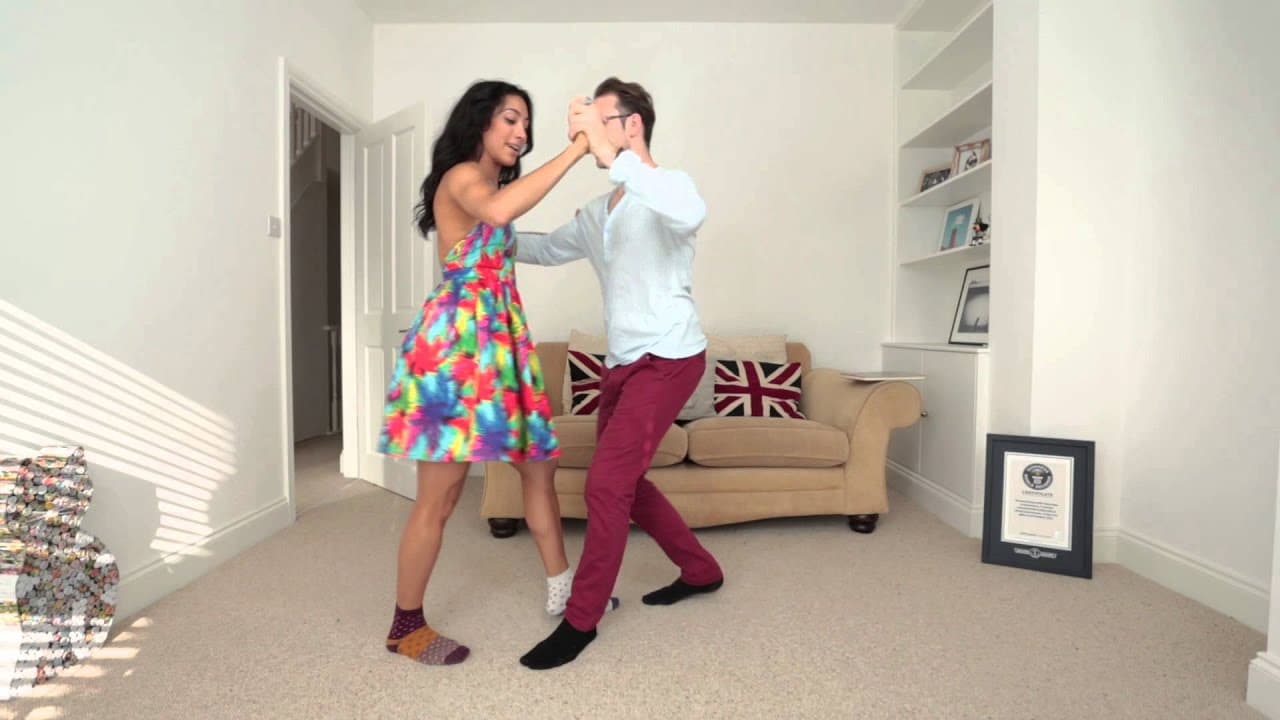
Best Salsa Dancing Lessons Online for Beginners: What the Course Should Cover
A beginner salsa program should establish a technical foundation before introducing complicated combinations.
An effective progression often includes:
| Stage | Skills |
|---|---|
| Stage 1 | Salsa rhythm, counting, posture, weight transfer |
| Stage 2 | Basic step, side basic, back basic |
| Stage 3 | Right and left turns |
| Stage 4 | Basic partner position and connection |
| Stage 5 | Cross-body lead and simple partnerwork |
| Stage 6 | Beginner shines and body movement |
| Stage 7 | Musicality and social dancing preparation |
| Stage 8 | Longer combinations and improvisation |
Beginners do not need dozens of patterns.
Knowing five movements well is more useful on the social dance floor than knowing thirty patterns poorly.
How Much Space Do You Need to Learn Salsa at Home?
You do not need a large dance studio.
For basic salsa footwork, a relatively small area is usually enough.
You should be able to take several steps forward, backward, and sideways without hitting furniture.
Partnerwork naturally requires more space.
Before practicing turns, make sure the floor is clear of objects, rugs, cables, or furniture that could create a tripping hazard.
A smooth, stable surface is generally preferable to thick carpet for turning.
What Shoes Should You Wear for Online Salsa Lessons?
Beginners do not immediately need professional salsa shoes.
Comfortable footwear that stays securely on the foot can work well during early practice.
However, the amount of friction matters.
Shoes that grip the floor excessively can make turning difficult, while extremely slippery footwear may reduce control.
Dance shoes become more useful when students begin training turns regularly or attending salsa socials.
Avoid practicing complicated spins in socks on slippery flooring simply because it makes turning easier. Good turning technique should come from balance and body control.
Best Time to Practice Salsa Dancing Lessons Online
There is no specific season required to learn salsa.
Unlike many outdoor activities, online salsa training can continue throughout the entire year.
What matters more is consistency.
| Practice Frequency | Recommended Session | Best For |
|---|---|---|
| 2 times per week | 30–45 minutes | Casual beginners |
| 3–4 times per week | 20–40 minutes | Consistent progress |
| 5+ short sessions | 10–30 minutes | Footwork, timing and muscle memory |
| Weekly only | 45–60 minutes | Slower progress or maintenance |
Short, frequent practice sessions are often more productive than one very long session followed by several days without dancing.
The nervous system benefits from repeated exposure.
For example, 20 minutes of focused salsa practice four times per week can be more useful than one two-hour session every weekend.
How Long Does It Take to Learn Salsa Online?
The answer depends on what “learn salsa” means.
A complete beginner can often understand the basic step and simple turns relatively quickly.
Feeling comfortable at a salsa social usually takes longer because social dancing requires timing, connection, confidence, pattern recognition, and adaptability.
Progress depends heavily on:
- Practice frequency
- Quality of instruction
- Musical experience
- Coordination
- Partner practice
- Social dancing frequency
- Previous dance experience
Instead of measuring progress only by weeks or months, dancers should track specific skills.
For example:
Can you maintain the basic step through an entire song?
Can you stay on time without watching an instructor?
Can you execute a turn without losing balance?
Can you recognize the beginning of a musical phrase?
Can you dance several basic movements comfortably with a partner?
These are more useful indicators than simply counting how many classes you have completed.
How to Practice Salsa at Home Effectively
Watching salsa videos is not the same as training.
An effective practice session should include active repetition.
A simple structure is:
5 minutes: rhythm and basic timing
10 minutes: technique or footwork
10 minutes: one specific movement
5–10 minutes: practice with music
Filming yourself can also be extremely useful.
A movement may feel correct but look different when reviewed on video.
Look for posture, balance, timing, unnecessary tension, and whether your weight is transferring completely.
Learn Salsa Online With or Without a Partner?
You can begin learning salsa without a partner.
In fact, developing strong individual technique before focusing heavily on partnerwork can be beneficial.
Solo training can improve:
- Rhythm
- Balance
- Footwork
- Turns
- Body movement
- Coordination
- Musicality
If you have a partner, you can also practice connection, leading, following, and partner combinations.
However, avoid becoming dependent on only one partner.
Every dancer moves differently.
Eventually dancing with multiple people helps develop adaptable social dancing skills.
Common Mistakes When Learning Salsa Online
Learning Too Many Patterns
Beginners are often attracted to long combinations because they look impressive.
However, memorizing choreography without developing timing and balance creates fragile dancing.
Prioritize fundamentals first.
Looking at Your Feet Constantly
Checking foot position can be useful when first learning a step, but continuously staring down creates poor posture and makes partner connection difficult.
Gradually practice looking forward.
Taking Steps That Are Too Large
Large steps can make salsa slow, unstable, and difficult to control.
Most social salsa movements work better with relatively compact steps.
Ignoring the Music
Some dancers become so focused on remembering patterns that they stop listening to the song.
Timing should remain the foundation.
Practicing Only Choreography
Choreography can improve coordination and memory, but social salsa also requires improvisation.
Practice individual movements separately so you can combine them in different ways.
Rushing Into Fast Music
Speed often hides technical problems.
Learn movements slowly first.
Once balance and timing are consistent, gradually increase the music speed.
Salsa Music for Beginners
Beginner dancers often benefit from practicing with songs that have a clear rhythm and moderate tempo.
Instead of trying to identify every percussion instrument immediately, start by learning to maintain a consistent count.
Count:
1, 2, 3 — 5, 6, 7
Once that becomes automatic, begin listening for musical phrases, percussion patterns, breaks, and changes in energy.
Developing a relationship with salsa music away from dance lessons also helps.
Listening regularly can make the rhythm feel more familiar when you start dancing.
How Online Salsa Lessons Prepare You for Social Dancing
The ultimate goal for many students taking salsa dancing lessons online is dancing comfortably with other people.
Before attending your first salsa social, you do not need an enormous vocabulary of moves.
You should ideally understand:
- Your basic step
- Your timing
- A few turns
- Basic partner connection
- One or two simple partner movements
- Basic salsa etiquette
Beginners sometimes assume experienced dancers expect complicated patterns.
In reality, clear timing, comfortable connection, and control usually create a better dance than excessive complexity.
Salsa Social Dancing Etiquette
Social dancing involves shared responsibility.
Ask someone to dance rather than assuming they want to.
Either person can decline a dance.
During the dance, avoid movements that require more space than the floor safely allows.
Leaders should not force turns or movements.
Followers should avoid anticipating patterns and should maintain their own balance whenever possible.
At the end of the song, thank your partner.
Salsa communities differ around the world, but respect, communication, and floor awareness are universal principles.
Online Group Salsa Classes vs. Private Online Salsa Lessons
Online students usually have three primary options.
Recorded Salsa Courses
Recorded courses provide maximum flexibility.
They are particularly effective for:
- Beginners
- Technical review
- Footwork
- Musicality
- Body movement
The disadvantage is limited personal feedback.
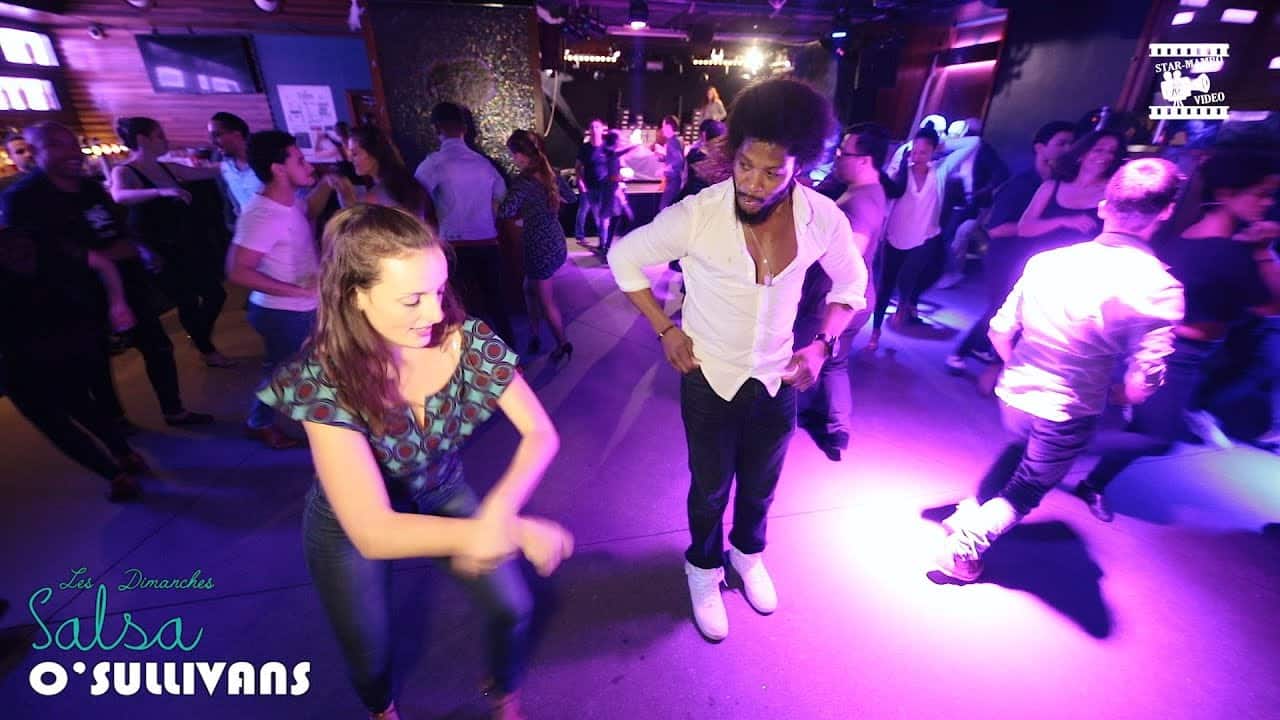
Live Online Group Classes
Live classes provide structure and allow students to interact with the instructor.
They may also create more motivation because students have a scheduled class time.
Private Online Salsa Lessons
Private virtual lessons can be particularly effective for dancers who want personalized corrections.
An instructor can observe timing, posture, turns, footwork, and movement through video and provide specific adjustments.
Private instruction is also useful for dancers preparing for events, performances, travel, or salsa festivals.
When Should You Move From Online Salsa Lessons to In-Person Dancing?
You do not need to “finish” an online course before attending an in-person class or social.
In fact, real-world practice can begin early.
After learning basic timing, steps, and turns, students can benefit from dancing with other people.
Online training and social practice can then develop together.
A productive cycle is:
Learn → practice alone → practice with a partner → social dance → identify weaknesses → return to online training.
This feedback loop makes online instruction much more useful.
Salsa Dancing Lessons Online for Travelers
Online salsa training is particularly practical for travelers.
Salsa communities exist in cities throughout Latin America, North America, Europe, Asia, and other regions.
Knowing the fundamentals can make it easier to participate in social events while traveling.
However, salsa culture varies by destination.
One city may predominantly dance Cuban salsa, while another may have a strong On1 or On2 scene.
Travelers should research the local style before attending classes or socials.
Learning more than one style over time can make international salsa experiences much more enjoyable.
Beginner Salsa Lessons Online for Couples
Couples often choose online salsa lessons because they can practice together without committing to a studio schedule.
This can work very well, but each partner should still develop individual technique.
Both dancers should understand their own:
- Timing
- Balance
- Footwork
- Turns
- Weight transfer
Partner dancing becomes much easier when neither person is relying on the other for balance.
Couples should also avoid turning practice into constant correction.
Follow the instructor’s method, switch between focused training and relaxed dancing, and remember that both partners are learning.
How to Progress Beyond Beginner Salsa
Once the fundamentals feel comfortable, progress should involve improving quality rather than simply collecting harder moves.
Intermediate training can include:
- More advanced footwork
- Turn technique
- Spin preparation
- Musicality
- Styling
- Body isolation
- Afro-Cuban movement
- Partner connection
- Improvisation
- Timing variations
At this stage, dancers should also increase the amount of time spent dancing with different partners.
Technical knowledge becomes most useful when it can be applied spontaneously.
How to Know If Your Online Salsa Lessons Are Working
Improvement should become visible in practical skills.
You may notice that you can hear salsa timing more easily, maintain your basic step without thinking about it, recover faster after mistakes, execute turns with better balance, or dance through an entire song with fewer interruptions.
Another sign of progress is needing fewer complicated patterns.
Experienced social dancers often create enjoyable dances from relatively simple movements because their timing, connection, musicality, and movement quality are developed.
The goal is not simply to know more salsa moves.
The goal is to dance better.
Practical Tips for Learning Salsa Online Faster
To get more from salsa dancing lessons online:
- Choose one primary salsa style at first.
- Practice timing before complicated combinations.
- Keep your basic steps relatively compact.
- Repeat lessons instead of constantly starting new ones.
- Film yourself periodically.
- Practice both with and without music.
- Listen to salsa outside your lessons.
- Train solo footwork even if you have a partner.
- Attend social dancing events when you feel ready.
- Return to beginner technique regularly.
Advanced dancing is built from increasingly refined fundamentals.
Frequently Asked Questions About Salsa Dancing Lessons Online
Can beginners learn salsa online?
Yes. Beginners can learn basic salsa timing, steps, turns, footwork, body movement, and introductory partnerwork online. Combining online instruction with eventual in-person dancing provides the most complete experience.
Do I need a partner for online salsa lessons?
No. Many important salsa skills can be practiced alone, including timing, footwork, turns, balance, body movement, and musicality.
How often should I practice salsa?
Practicing three or four times per week for short sessions can produce consistent progress. Even 15–30 focused minutes can be useful when practiced regularly.
Which salsa style is easiest for beginners?
There is no universal easiest style. LA-style On1 is commonly taught to beginners in many locations because its timing structure is straightforward, while Cuban salsa can also be very accessible depending on the teacher and local dance community.
Can I learn salsa without going to a dance studio?
You can learn a substantial amount at home, but salsa is a partner and social dance. Eventually dancing with other people is important if your goal is to become a confident social dancer.
How long before I can go salsa dancing socially?
You do not need to wait until you are advanced. Once you understand basic timing, steps, turns, and simple partner connection, beginner-friendly socials can become part of your learning process.
Are online salsa lessons good for intermediate dancers?
Yes. Intermediate dancers often benefit significantly from online training because technical topics such as footwork, musicality, body movement, turns, and styling can be studied repeatedly.
Conclusion: Are Salsa Dancing Lessons Online Worth It?
For many students, salsa dancing lessons online are one of the most flexible ways to begin learning salsa or improve existing skills.
They allow dancers to study timing, footwork, turns, body movement, musicality, and partnerwork concepts without being restricted by location or studio schedules.
The most effective online salsa training focuses on fundamentals rather than simply teaching increasingly complicated combinations.
Start with rhythm and weight transfer. Develop clean basic steps. Practice turns slowly. Learn to hear the music. Add partnerwork progressively.
Then take those skills onto the dance floor.
Online training gives you the ability to study salsa anywhere. Social dancing gives you the experience of applying what you have learned with real people and real music.
Combined, the two can create a practical path from taking your first salsa step at home to confidently joining salsa communities around the world.
Also you are interested

Cabo Pulmo diving
Ready to dive into the depths of Cabo Pulmo’s underwater wonderland? Welcome to the stunning underwater world of Cabo Pulmo diving! Located in the East

Best things to do in Cancun for couples
Best things to do in Cancun for couples Discover the best things to do in Cancun for couples. With its swaying palm trees, beautiful white-sand

Private room in Puerto Morelos
Awesome Location – Great Price Private room in Puerto Morelos Private room in Puerto Morelos puerto morelos economic accommodation puerto morelos house rentals Budget room
