

Freediving Certification in Mexico: Learn to Dive Safely on One Breath
A freediving certification teaches you how to explore underwater safely, efficiently and with greater confidence. Rather than simply trying to hold your breath longer, you learn how breathing, relaxation, equalization, movement and safety procedures work together.
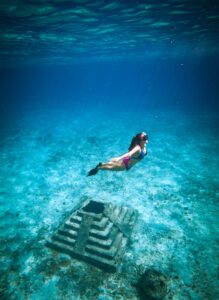
The Mexican Caribbean provides remarkable environments for completing a freediving course. Training may combine classroom instruction, confined-water practice and open-water sessions in the Caribbean Sea or selected cenotes.
With MExplor, your freediving experience can be adapted to your current level, personal objectives and travel itinerary.
What Is a Freediving Certification?
A freediving certification is a formal training program that teaches the theoretical knowledge, practical techniques and safety procedures required to practice freediving responsibly.
A complete certification course commonly includes:
- Freediving theory
- Breathing and relaxation exercises
- Equalization techniques
- Confined-water training
- Open-water sessions
- Duck-diving and finning techniques
- Recovery breathing
- Buddy procedures
- Rescue practice
- Performance requirements
- Final evaluation
After successfully completing the required skills and assessments, participants may receive a certification recognized through the training organization providing the course.
Why Get Certified in Freediving?
Freediving without proper instruction can expose participants to risks they may not recognize. Certification helps you understand how the body responds to pressure, breath-holding and changing oxygen levels.
Professional training can help you:
- Develop safer diving habits
- Improve equalization
- Use energy more efficiently
- Understand personal limits
- Recognize signs of trouble
- Perform buddy supervision
- Practice rescue procedures
- Improve recovery breathing
- Progress gradually in depth
- Become more comfortable underwater
Certification is not only about reaching a particular depth. Its primary value is learning how to train and explore safely.
Freediving Certification vs. Introductory Experience
An introductory freediving session offers a basic look at the discipline. It may include breathing exercises, safety information and supervised shallow dives.
A certification course is more comprehensive and requires participants to demonstrate specific knowledge and practical skills.
| Introductory experience | Certification course |
|---|---|
| Short introduction to freediving | Structured training program |
| Basic breathing and safety information | Detailed theory and practical instruction |
| Supervised recreational practice | Confined and open-water training |
| No formal qualification | Certification after completing requirements |
| Suitable for curious beginners | Suitable for those who want continued progression |
An introductory experience can help you decide whether you want to continue with formal training.

What You Learn During a Freediving Course
Breathing and Relaxation
Freediving begins before entering the water. You learn how to prepare calmly without dangerous breathing practices.
Training may cover:
- Natural breathing patterns
- Relaxation techniques
- Breathing preparation
- Mental focus
- Recovery breathing
- Avoiding hyperventilation
The objective is to reduce unnecessary effort while maintaining safe habits.
Equalization Techniques
As you descend, increasing pressure affects your ears and sinus spaces. Equalization balances this pressure.
During the course, you learn to:
- Equalize before discomfort begins
- Equalize gently and frequently
- Recognize common problems
- Maintain proper head and body position
- Stop the descent when equalization is unsuccessful
Never continue descending through ear pain.
Efficient Underwater Movement
Good technique helps conserve oxygen and reduces unnecessary effort.
Your instructor may help you improve:
- Body position
- Streamlining
- Duck diving
- Finning
- Turning at depth
- Free immersion
- Controlled ascent
- Surface recovery
Static and Dynamic Apnea
Depending on the course structure, confined-water training may include static and dynamic disciplines.
Static apnea involves holding the breath while remaining still at the surface under direct supervision.
Dynamic apnea involves swimming horizontally underwater in a pool or confined-water environment.
Both exercises require trained supervision and specific safety procedures.
Open-Water Freediving
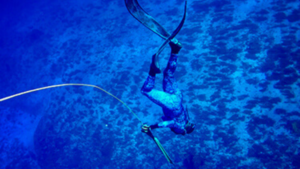
Open-water sessions introduce depth while using a buoy and line system.
Participants may practice:
- Constant weight
- Free immersion
- Equalization during descent
- Body positioning
- Turning at depth
- Controlled ascent
- Surface protocols
- Buddy supervision
Depth progression should always be gradual and based on comfort, technique and safety.
Freediving Safety and Rescue Training
Safety is one of the most important parts of certification.
Participants learn how to supervise another freediver and respond if that person experiences difficulty near or at the surface.
Training may include:
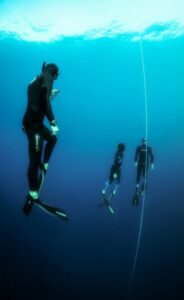
- One-up, one-down buddy procedures
- Direct observation during ascent
- Surface support
- Recognizing a loss of motor control
- Blackout response
- Airway protection
- Rescue simulations
- Post-dive supervision
- Emergency planning
Freediving must never be practiced alone, regardless of certification or experience.
Common Freediving Certification Levels
Course names and performance requirements vary between training organizations, but certification pathways generally follow a progressive structure.
Beginner Certification
The first level introduces the fundamentals of freediving, including theory, breathing, equalization, confined-water skills, open-water technique and safety procedures.
Best for: New freedivers who want formal training.
Intermediate Certification
Intermediate courses develop greater technical control and introduce more advanced equalization, depth progression and safety skills.
Best for: Certified freedivers who already have consistent fundamental techniques.
Advanced Certification
Advanced training focuses on greater independence, more refined technique, deeper diving and complex safety procedures.
Best for: Experienced freedivers who have completed previous certification levels.
Instructor Training
Instructor programs prepare advanced freedivers to teach courses, evaluate students and manage training sessions.
Instructor certification requires extensive experience, advanced rescue skills and successful completion of the agency’s professional standards.
Requirements for Freediving Certification
Requirements vary according to the course level and certification organization.
Participants may need:
- A minimum required age
- Basic swimming ability
- Comfort in open water
- A completed medical questionnaire
- Parental authorization for minors
- Previous certification for advanced courses
- Successful completion of knowledge reviews
- Demonstration of practical skills
- Completion of required performance standards
You do not need to be an elite athlete. However, you should be comfortable in the water and able to follow safety instructions.
Medical Considerations
Freediving involves breath-holding and changes in pressure. Certain medical conditions may require evaluation before participating.
Inform the instructor about:
- Ear or sinus conditions
- Respiratory problems
- Cardiovascular conditions
- Neurological conditions
- Recent surgeries
- Current medications
- Pregnancy
- Previous pressure-related injuries
A physician’s authorization may be required depending on your answers and the course provider’s policies.
How Long Does a Freediving Certification Take?
The duration depends on the certification level, class format, weather and student progression.
A beginner course generally takes place over multiple sessions and includes:
- Theory and knowledge development
- Breathing and relaxation instruction
- Confined-water training
- Open-water practice
- Safety and rescue evaluation
- Performance assessment
Students who do not complete every requirement during the original schedule may need additional training sessions before receiving certification.
Certification should be based on demonstrated ability, not simply course attendance.
Where Can You Complete Your Training?
Swimming Pool
A pool provides a controlled environment for learning breathing, static apnea, dynamic apnea and safety procedures.
Cenotes
Selected cenotes offer calm freshwater and excellent visibility. They can provide suitable conditions for line training when access, depth and local regulations permit it.
Caribbean Sea
Ocean training introduces participants to open-water conditions such as waves, currents, changing visibility and boat movement.
The final location depends on the course, student experience and environmental conditions.
Freediving Equipment
A certification course may use:
- Low-volume mask
- Snorkel
- Freediving fins
- Wetsuit
- Weight belt
- Dive computer
- Surface buoy
- Diving line
- Bottom weight
- Lanyard for appropriate line sessions
- Safety and signaling equipment
Some programs include equipment, while others offer rentals or require students to bring their own. Confirm the equipment list before booking.
Frequently Asked Questions
Do I need experience to begin a freediving certification?
No. Entry-level courses are designed for beginners, although participants should have basic swimming ability and feel comfortable in the water.
How deep do I need to dive?
Depth requirements depend on the certification organization and course level. Safe technique and comfort are more important than forcing a particular depth.
Can I fail a freediving course?
Certification is awarded after completing the required knowledge and practical skills. If you do not complete every requirement, additional training may be needed.
Is equipment included?
This depends on the package. Confirm whether the course includes a mask, snorkel, fins, wetsuit, weights and open-water training equipment.
Can I train in a cenote?
Selected courses may include cenote sessions when the location, conditions and access regulations are appropriate.
Is freediving certification permanent?
Certification records generally do not expire, but skills can decline without practice. A refresher is recommended after a long period without training.
Can I practice alone after certification?
No. Certification does not make solo freediving safe. Always train with a properly prepared freediving buddy.
Begin Your Freediving Journey in Mexico
A freediving certification gives you more than a qualification. It provides the knowledge, techniques and safety awareness needed to explore the underwater world responsibly.
The Mexican Caribbean offers the opportunity to learn in pools, cenotes and tropical open water while experiencing one of Mexico’s most extraordinary aquatic regions.
Contact MExplor to learn about available freediving courses and personalized training packages in the Mexican Caribbean.
